



Recalibrating Europe’s Security: Building Partnerships in an Era of ‘Wrecking-Ball Politics
The 2026 Munich Security Conference report observes that “the world has entered a period of wrecking-ball politics.” Indeed, the era of Western predominance, dependable alliances and capable multilateral institutions has given way to shifting balances of power and deepening uncertainty.
Rethinking Global Imbalances
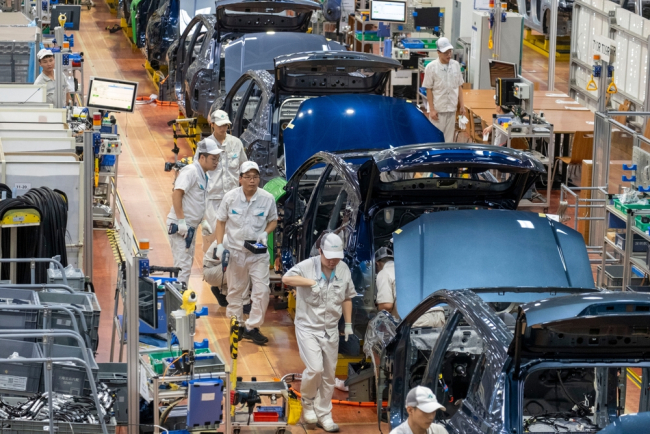
Today’s global imbalances, starting with China's massive trade surplus, are not simply the result of poor macroeconomic coordination. Rather, they reflect long-term strategic thinking and a departure from the bias toward openness on which the postwar trade order was built.
Fragmented Europe: Dealing with China as a technology and innovation power
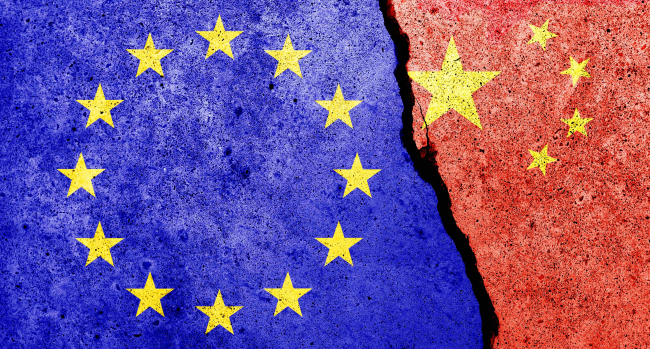
How is Europe navigating China’s ascension as a technological power? The latest report by the European Think-tank Network on China (ETNC) provides a nuanced account of a converging, yet still fragmented approach across 22 countries.
France and EU Enlargement: From Strategic Hesitation to a Geopolitical Shift
Paris has come a long way in its approach to enlarging the European Union. However, French support remains fragile, due in part to a lack of public support.
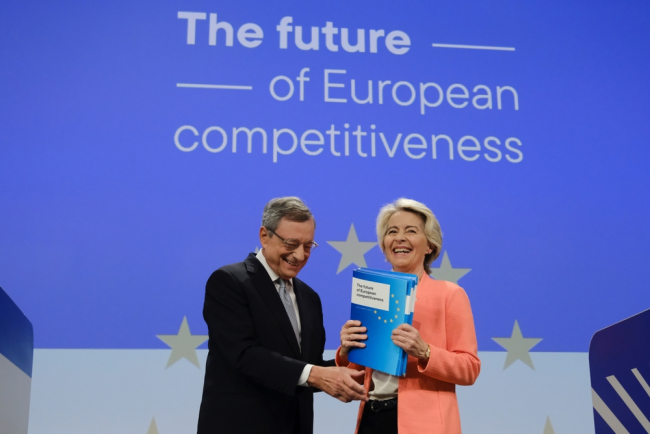
Under construction: Europe’s economic repositioning in a fragmented international order
„Under Destruction“– this was this year’s motto at the Munich Security Conference. A motto that applies both to security and economy in an increasingly fragile international system. In 2024, Mario Draghi’s report on the EU’s competitiveness rang the alarm bell: Europe is slipping behind the US and China, European companies struggle with Brussels' bureaucracy, and the internal market is too fragmented. However, two years later only about 15 % of his recommendations were implemented: the wake-up call was not heard.

What Do Companies Fear? The New Geography of Geopolitical Risk
Geopolitical risk has established itself, within the space of a few years, as a central variable in corporate strategy.
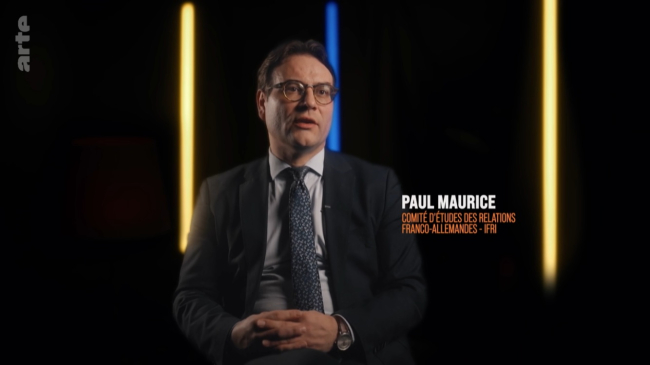
Macron-Merz: Power Behind the Scenes
French German relations have been very close for decades as key partners in driving forward European integration within the EU. Can the current leaders President Emmanuel Macron and Chancellor Friedrich Merz reforge the relationship and build a Europe fit for the challenges of our times and the future? This documentary follows the two men across Europe and the world and observes their common goals as well as their differences.

Securing critical raw material (CRM) value chains – a prerequisite for Europe’s technological resilience
At the heart of economic security, technological resilience is a backbone of the European Union’s (EU) competitiveness. The EU’s energy and digital transitions depend on critical raw materials (CRM).
Reconciling competitiveness and demographic change: a Franco-German imperative
France and Germany are facing parallel demographic shifts that could reshape the future of their economies and their social models. These shifts reflect broader European patterns but are magnified by the central role both nations play in EU governance and competitiveness.
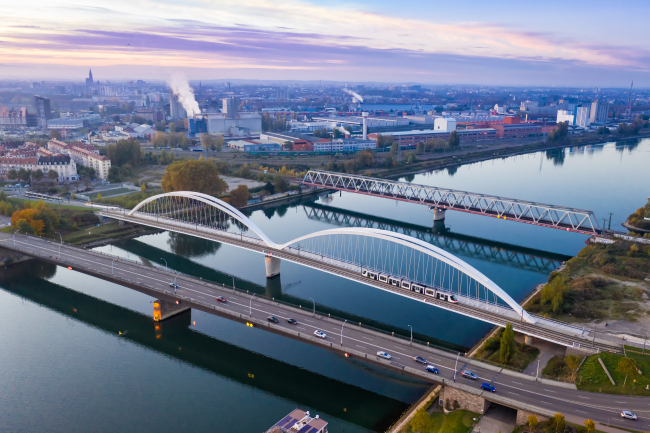
Imaginary and Reality of the Franco-German border: a Laboratory for Europe of tomorrow
In Europe, the question of borders is a central issue. According to the European Parliament, border regions cover around 40% of the European Union (EU) territory, concentrate 30% of its population and produce nearly a third of its gross domestic product.
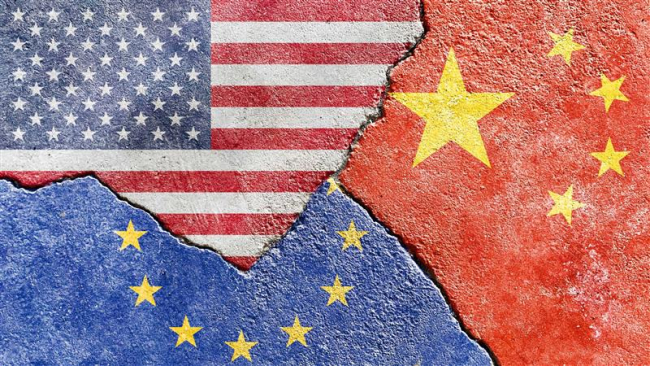
Quest for Strategic Autonomy? Europe Grapples with the US - China Rivalry
Building on the 2020 European Think Tank Network on China (ETNC) report, which assessed Europe’s positioning amid the strategic rivalry between the United States and China, this edition re-examines the geopolitical landscape in light of the Covid-19 pandemic, Russia’s war in Ukraine and Donald Trump’s return to the White House. This report features 22 national chapters and one dedicated to the EU, analysing the evolution of Europe’s relations with Washington and Beijing, the range of approaches to dealing the US-China rivalry and how these are expected to evolve.
quoted by Leila Abboud in the Financial Times
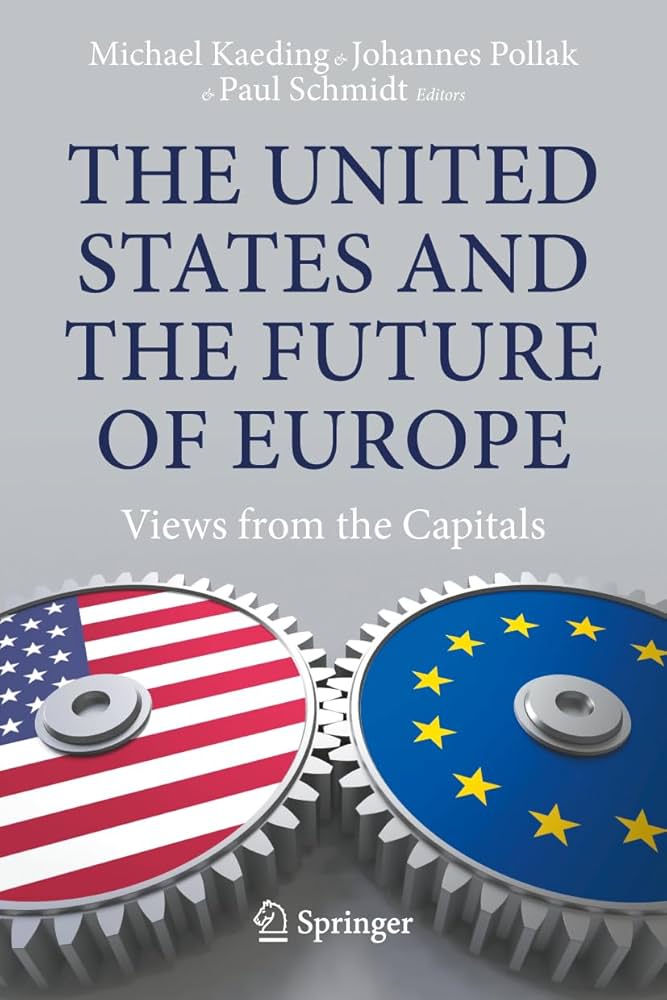
France, the U.S.' Oldest and Most Complicated Ally: A Stubborn Defender of a Truly European Industrial and Defence Policy
France, the U.S.’ oldest ally, is also the EU country which most stubbornly defends genuinely European industrial and defence policies. It calls for ‘strategic autonomy’ in all political domains, a position increasingly difficult to hold against a hardening international climate.
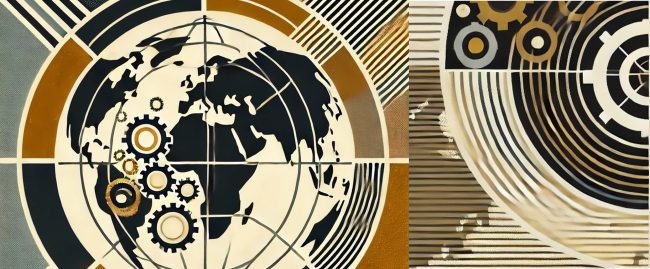
Manufacturing Risk: Geopolitical Doxa and the Corporate World
The evolving power dynamics between the United States, China, and Russia are creating new geopolitical realities that businesses can no longer evade. Geopolitical risk has become unavoidable, yet many companies remain unprepared to navigate its complexities. Corporate leaders can no longer afford to overlook its implications.

AI showcase pays off for France, but US tech scepticism endures
France is staking its claim as an AI powerhouse. At the AI Action Summit in Paris this week, global leaders, tech innovators, and policymakers converged to chart the future of artificial intelligence - backed by major investments and bold ambitions for Europe’s leadership in the field. RFI breaks down the key takeaways.
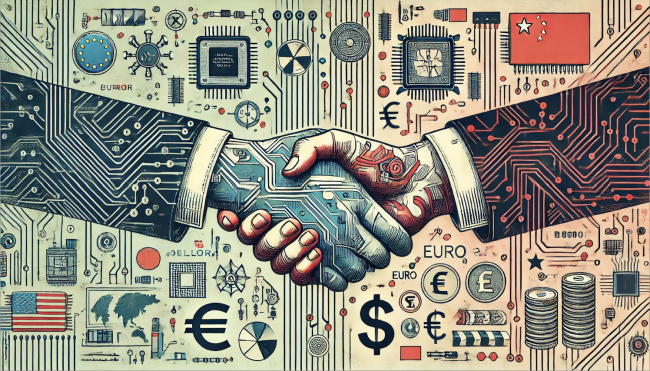
Funding A Rival: When the United States and Europe Invest in Chinese Tech
Outbound investments into rival powers are receiving increasing political attention on both sides of the Atlantic, as competition between the United States and China intensifies. The concern lies with American and European investments in certain Chinese technologies - such as artificial intelligence, biotechnology, semiconductors, or quantum computing - which could enable China to enhance its military capabilities and thus may pose risks to national and international security.
The Future of Europe in the Context of Sino-American Competition - Foreword
In this special issue of Politique étrangère devoted to the proceedings of the conference organized by Ifri on April 10, 2019, in the Grand Amphitheater of the Sorbonne, on the occasion of its fortieth anniversary, discover the speech by Bruno Le Maire, Minister of Economy and Finance.
The Future of Europe in the Context of Sino-American Competition - Foreword
In this special issue of Politique étrangère devoted to the proceedings of the conference organized by Ifri on April 10, 2019, in the Grand Amphitheater of the Sorbonne, on the occasion of its fortieth anniversary, discover the speech by Bruno Le Maire, Minister of Economy and Finance.
Recalibrating Europe’s Security: Building Partnerships in an Era of ‘Wrecking-Ball Politics
The 2026 Munich Security Conference report observes that “the world has entered a period of wrecking-ball politics.” Indeed, the era of Western predominance, dependable alliances and capable multilateral institutions has given way to shifting balances of power and deepening uncertainty.
Fragmented Europe: Dealing with China as a technology and innovation power
How is Europe navigating China’s ascension as a technological power? The latest report by the European Think-tank Network on China (ETNC) provides a nuanced account of a converging, yet still fragmented approach across 22 countries.
France and EU Enlargement: From Strategic Hesitation to a Geopolitical Shift
Paris has come a long way in its approach to enlarging the European Union. However, French support remains fragile, due in part to a lack of public support.
Under construction: Europe’s economic repositioning in a fragmented international order
„Under Destruction“– this was this year’s motto at the Munich Security Conference. A motto that applies both to security and economy in an increasingly fragile international system. In 2024, Mario Draghi’s report on the EU’s competitiveness rang the alarm bell: Europe is slipping behind the US and China, European companies struggle with Brussels' bureaucracy, and the internal market is too fragmented. However, two years later only about 15 % of his recommendations were implemented: the wake-up call was not heard.
What Do Companies Fear? The New Geography of Geopolitical Risk
Geopolitical risk has established itself, within the space of a few years, as a central variable in corporate strategy.
Securing critical raw material (CRM) value chains – a prerequisite for Europe’s technological resilience
At the heart of economic security, technological resilience is a backbone of the European Union’s (EU) competitiveness. The EU’s energy and digital transitions depend on critical raw materials (CRM).
Reconciling competitiveness and demographic change: a Franco-German imperative
France and Germany are facing parallel demographic shifts that could reshape the future of their economies and their social models. These shifts reflect broader European patterns but are magnified by the central role both nations play in EU governance and competitiveness.
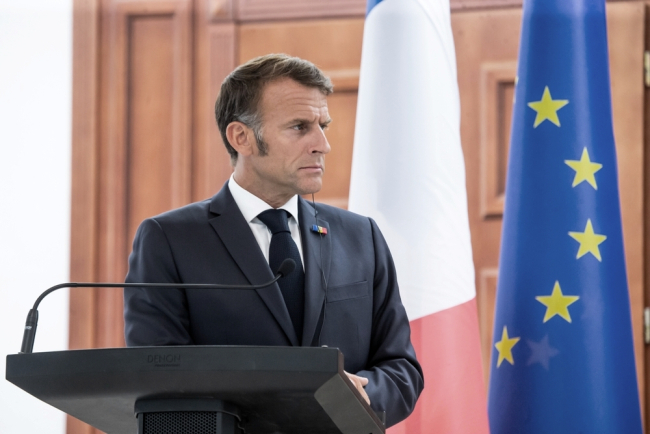
Taking the Pulse: Does France's Political Crisis Weaken Europe's Geopolitical Hand?
While the EU tries to navigate a myriad international challenges, France is experiencing historic political disarray. What impact will instability in Paris have on Europe's geostrategic capacity?
Imaginary and Reality of the Franco-German border: a Laboratory for Europe of tomorrow
In Europe, the question of borders is a central issue. According to the European Parliament, border regions cover around 40% of the European Union (EU) territory, concentrate 30% of its population and produce nearly a third of its gross domestic product.
Quest for Strategic Autonomy? Europe Grapples with the US - China Rivalry
Building on the 2020 European Think Tank Network on China (ETNC) report, which assessed Europe’s positioning amid the strategic rivalry between the United States and China, this edition re-examines the geopolitical landscape in light of the Covid-19 pandemic, Russia’s war in Ukraine and Donald Trump’s return to the White House. This report features 22 national chapters and one dedicated to the EU, analysing the evolution of Europe’s relations with Washington and Beijing, the range of approaches to dealing the US-China rivalry and how these are expected to evolve.
France, the U.S.' Oldest and Most Complicated Ally: A Stubborn Defender of a Truly European Industrial and Defence Policy
France, the U.S.’ oldest ally, is also the EU country which most stubbornly defends genuinely European industrial and defence policies. It calls for ‘strategic autonomy’ in all political domains, a position increasingly difficult to hold against a hardening international climate.
Manufacturing Risk: Geopolitical Doxa and the Corporate World
The evolving power dynamics between the United States, China, and Russia are creating new geopolitical realities that businesses can no longer evade. Geopolitical risk has become unavoidable, yet many companies remain unprepared to navigate its complexities. Corporate leaders can no longer afford to overlook its implications.
The Future of Europe in the Context of Sino-American Competition - Foreword
In this special issue of Politique étrangère devoted to the proceedings of the conference organized by Ifri on April 10, 2019, in the Grand Amphitheater of the Sorbonne, on the occasion of its fortieth anniversary, discover the speech by Bruno Le Maire, Minister of Economy and Finance.
The Future of Europe in the Context of Sino-American Competition - Foreword
In this special issue of Politique étrangère devoted to the proceedings of the conference organized by Ifri on April 10, 2019, in the Grand Amphitheater of the Sorbonne, on the occasion of its fortieth anniversary, discover the speech by Bruno Le Maire, Minister of Economy and Finance.
Rethinking Global Imbalances
Today’s global imbalances, starting with China's massive trade surplus, are not simply the result of poor macroeconomic coordination. Rather, they reflect long-term strategic thinking and a departure from the bias toward openness on which the postwar trade order was built.
quoted by Leila Abboud in the Financial Times
AI showcase pays off for France, but US tech scepticism endures
France is staking its claim as an AI powerhouse. At the AI Action Summit in Paris this week, global leaders, tech innovators, and policymakers converged to chart the future of artificial intelligence - backed by major investments and bold ambitions for Europe’s leadership in the field. RFI breaks down the key takeaways.
Macron-Merz: Power Behind the Scenes
French German relations have been very close for decades as key partners in driving forward European integration within the EU. Can the current leaders President Emmanuel Macron and Chancellor Friedrich Merz reforge the relationship and build a Europe fit for the challenges of our times and the future? This documentary follows the two men across Europe and the world and observes their common goals as well as their differences.
AI showcase pays off for France, but US tech scepticism endures
France is staking its claim as an AI powerhouse. At the AI Action Summit in Paris this week, global leaders, tech innovators, and policymakers converged to chart the future of artificial intelligence - backed by major investments and bold ambitions for Europe’s leadership in the field. RFI breaks down the key takeaways.
Ifri, a foundation recognized as being of public utility, relies largely on private donors – companies and individuals – to guarantee its sustainability and intellectual independence. Through their funding, donors help maintain the Institute's position among the world's leading think tanks. By benefiting from an internationally recognized network and expertise, donors refine their understanding of geopolitical risk and its consequences on global politics and the economy. In 2026, Ifri partners with over 90 French and international companies and organizations.

quoted by Leila Abboud in the Financial Times