




France
Although France's demographic and economic weight in the world is tending to decline, it nevertheless retains important attributes of power. Its diplomacy and defense policy bear witness to this.
Related Subjects
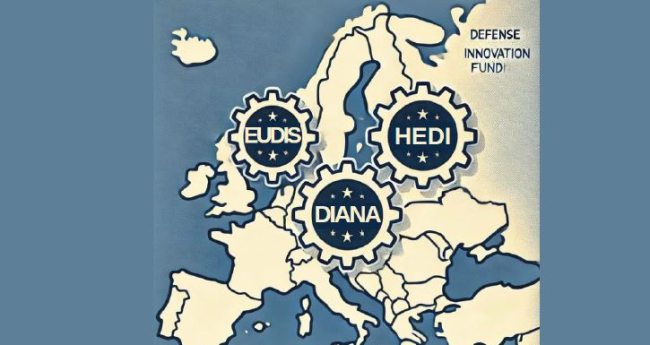
EUDIS, HEDI, DIANA: What's behind Three Defense Innovation Acronyms?
In Europe, with Russia’s war of aggression against Ukraine showing little sign of abating, a persistent gap remains between security needs and defense spending. According to a 2006 commitment enshrined at the 2014 Wales NATO summit, the North Atlantic Treaty Organization (NATO) members should disburse no less than 2% of their national gross domestic product (GDP) on defense, out of which 20% is to be spent on equipment and research and development. In 2024, only 23 Allies out of 32 are expected to meet or exceed this target, though a significant improvement from only three in 2014. This total includes the United States (US) devoting 3.38% of its GDP to defense, constituting almost 70% of all NATO member defense spending combined.

The integrated territorial approach (ITA). Hopes and limits of local stabilisation in the Sahel
Since the fall of the Berlin Wall and the attacks of 11 September 2001, the proliferation of local conflicts and the partitioning of certain states (Yugoslavia, Somalia) have given rise to external interventions, both bilateral and multilateral, in which the military element has been combined with civil action in innovative ways.

France Adapts to an Era of Strategic Competition With China
Macron’s China Policy: Dropping Illusions and Bringing Back Realpolitik
One may regret that France has not upgraded its China policy sooner, but it seems that the French president is now clear-eyed that it is not enough to only have a good relationship with Beijing, it is also necessary to reinstate the balance of power.

Europe faces up to China's EV dominance as carbon-zero targets loom
As Xi travels through EU this week, automakers weigh whether to fight or team up with cheaper Chinese rivals.

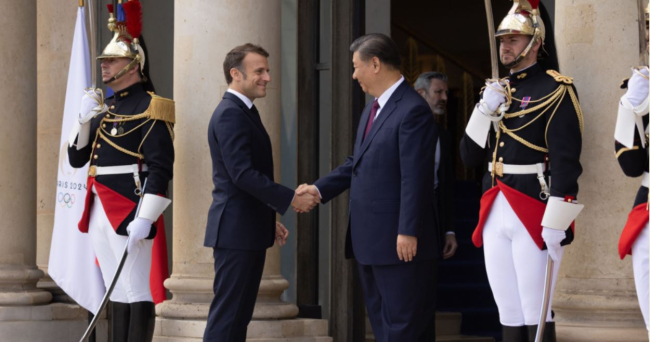
Macron accused of rolling out red carpet for ‘dictator’ Xi
Xi Jinping's trip to Europe to center on trade as challenges 'pile up'
Chinese President Xi Jinping is set to embark on his first European diplomatic tour in five years, starting in France before traveling on to Serbia and Hungary.
EU turns up the heat on China as Xi Jinping readies for 3-nation tour, with fiery Paris talks on the cards
-
European Commission chief Ursula von der Leyen to meet Chinese President Xi and his French counterpart Emmanuel Macron in Paris to discuss China ties
-
Xi’s trip comes amid barrage of EU trade and competition tools mostly targeting Chinese firms, including dramatic raids in the Netherlands and Poland
Presidents Emmanuel Macron and Xi Jinping are meeting in Paris on Monday at a time of fragile relations between Europe and China.
Chinese President Xi Jinping is set to embark on his first European diplomatic tour in five years, starting in France before traveling on to Serbia and Hungary.
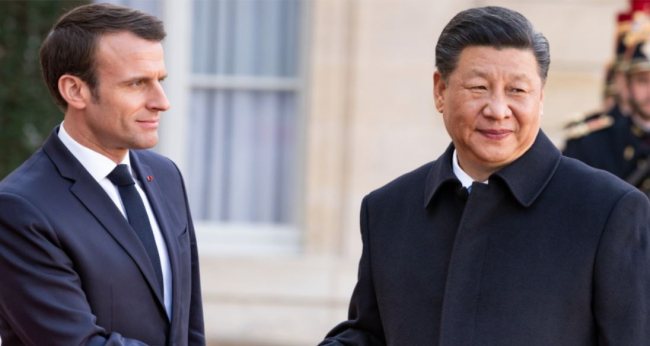
Xi Jinping’s Visit to France: Stumbling Blocks Pile Up on the Path of Bilateral Cooperation
On May 6 and 7, Chinese President Xi Jinping will pay a state visit to France, his first to Europe since 2019 and the Covid-19 pandemic. Emmanuel Macron and Xi Jinping will celebrate Franco-Chinese friendship and the sixtieth anniversary of the establishment of diplomatic relations between their two countries. It comes at a time when the bilateral relationship is officially perceived as positive on both sides, especially after the French President’s visit to China in April 2023.
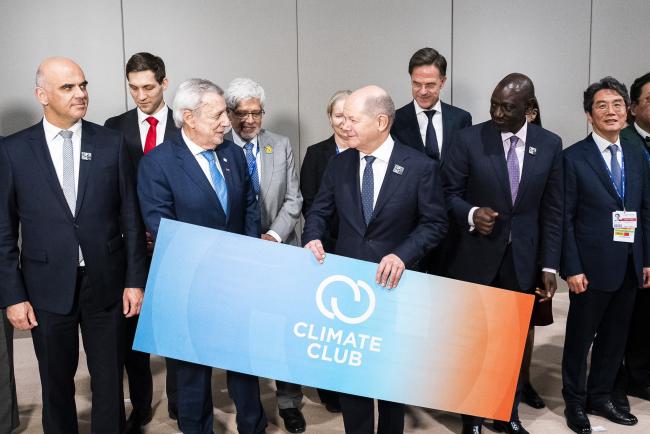
Germany’s Strategy on Climate Foreign Policy: Balancing Sustainable Development and Energy Security
With the war in Ukraine, Germany’s “traffic light” coalition government has had to adapt its climate policy to the upheavals caused by this war, which has turned its economic, energy, and military model upside down. Against a backdrop of high energy costs and increasing calls for reshoring in Europe, German industry is looking at how to maintain its competitiveness while decarbonizing its industry.
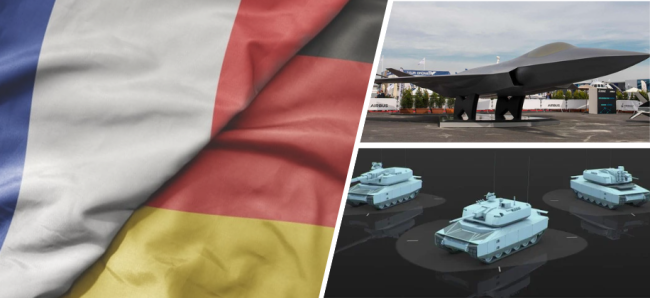
Troubled Twins: The FCAS and MGCS Weapon Systems and Franco-German Co-operation
The FCAS (Future Combat Air System) and the MGCS (Main Ground Combat System) represent the latest chapter in a more than seven decades-long history of Franco-German defense co-operation.

France in the Indo-Pacific: The Need for a Pragmatic Strategic Posture
As US-China rivalry reaches its peak and the likelihood of a high-intensity conflict in the region seems greater than ever, this report advocates for a pragmatic recalibration of France’s strategic posture in the Indo-Pacific. This adjustment should be grounded in a realistic reframing of ambitions and an analysis of France’s core interests and the threats it faces.
Zeitenwende: The Bundeswehr’s Paradigm Shift
Russia’s invasion of Ukraine on February 24, 2022, marked a turning point in German defense policy. After thirty years of military downsizing, the Bundeswehr found itself at an extremely low capability level just as a high-intensity war involving a great power was breaking out on Europe’s doorstep for the first time since 1945. Chancellor Olaf Scholz’s response was to embrace this “turning point” (Zeitenwende) by launching a major program to reequip Germany’s armed forces.

Macron is not giving up France's role as a Pacific player
President offers 'alternative' for states squeezed between U.S. and China
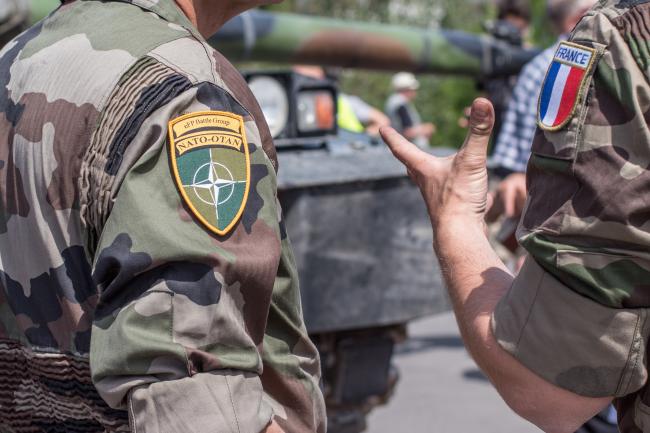
France’s Place Within NATO: Toward a Strategic Aggiornamento?
With a rapidly deteriorating security environment, a chaotic withdrawal from Afghanistan, internal disputes exploding into public view, and questions being raised about the scope of its security responsibilities, the North Atlantic Treaty Organization (NATO) seemed to be in dire straits at the time of Russia’s invasion of Ukraine on February 24, 2022.
Macron's Taiwan comments expose muddled China policy
French President Emmanuel Macron's call for Europe to steer clear of a Taiwan conflict -- rooted in France's pride and deep-seated resistance to following America's lead -- has raised questions about where he and Paris really stand on China.


Does Macron's stance on Taiwan weaken G7 deterrence against China?
One of Prime Minister Fumio Kishida’s top goals for next month’s Group of Seven summit in Hiroshima is to create a united front on issues like China and Ukraine. But finding a unified approach to dealing with Beijing’s assertiveness might have just become harder.
France’s Macron Renews Call for a Sovereign Europe Less Reliant on Foreign Powers
French president’s remarks follow criticism over his warning that Europe should steer clear of U.S.-China tensions over Taiwan
Europe is ‘counting on China’ to end Russia’s war in Ukraine, leaders tell Xi Jinping in Beijing
European Commission chief Ursula von der Leyen and French President Emmanuel Macron deliver united message to Chinese president during visit ; but as French leader signed over 20 business deals on China trip, EU chief took sterner line with Xi on economic grievances, human rights and Taiwan
Ifri, a foundation recognized as being of public utility, relies largely on private donors – companies and individuals – to guarantee its sustainability and intellectual independence. Through their funding, donors help maintain the Institute's position among the world's leading think tanks. By benefiting from an internationally recognized network and expertise, donors refine their understanding of geopolitical risk and its consequences on global politics and the economy. In 2026, Ifri partners with over 90 French and international companies and organizations.
