




Shaping Eurasia: What Convergence between China's New Silk Road and the Eurasian Union?

Practical information
As geo-strategic and geo-economic balances evolve across the Eurasian continent, two initiatives – the Chinese-led “Silk Road Economic Belt” and the Eurasian Economic Union – promise to shape the region’s emerging geo-political landscape.

While agreements have been made at the political level to highlight the complementarities of these two strategies, areas of tension lie beneath the surface. In an effort to assess their ability to impact change at regional and global levels, this workshop will flesh out the details of both projects, analyze their underlying assumptions, and discuss where they converge and where they compete.
09:00 – 09:15 Welcoming remarks - Tatiana KASTOUEVA-JEAN, Head, Russia/NIS Center, Ifri
09:15 – 10:30 OBOR and the Eurasian Union: Interests and strategies of key actors
- Timofei BORDATCHEV, Director, Center for Comprehensive European and International Studies, National Research University–Higher School of Economics, Russia
- YANG Cheng, Associate Professor of International Relations, Deputy Director, Center for Russian Studies, School of Advanced International and Area Studies, East China Normal University
- Rakhim OSHAKBAYEV, Central Asia-Caucasus Institute Silk Road Studies Program, Kazakhstan
- Nicu POPESCU, Senior Analyst, European Union Institute for Strategic Studies (EUISS)
Chair: Françoise NICOLAS, Director, Center for Asian Studies, Ifri
10:30-10:45 Coffee break
10:45 – 12:30 What complementarities, what competition?
- Roundtable discussion with speakers from first session, commented and moderated by
Bobo LO, Associate Research Fellow with Ifri’s Russia/NIS Center
12:30 - 13:30 Lunch (by invitation only)
Other events
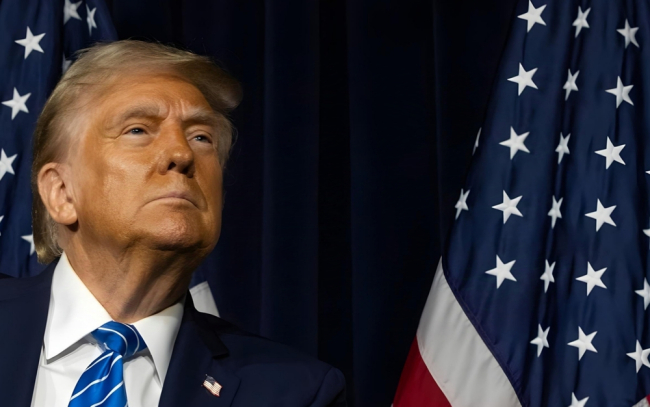
One Month Ahead of the Midterms: Where Is Trump’s America Headed?
The 24th edition of the Ifri Americas Programme Annual Conference will examine the dynamics at play in the United States and their implications for Europe and the transatlantic relationship. will examine the dynamics at play in the United States and their implications for Europe and the transatlantic relationship.
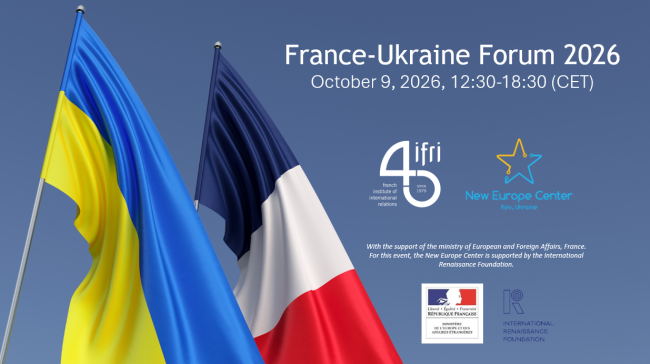
France-Ukraine Forum 2026
More than four and a half years after the start of the full-scale war launched by Russia against Ukraine, the 2026 France-Ukraine Forum will bring together policymakers, experts, academics, and civil society representatives from both countries to discuss three main topics: the formats and conditions for a lasting diplomatic settlement; Ukraine’s Euro-Atlantic integration, encompassing both the EU accession process and closer ties with NATO; and the societal transformations of postwar Ukraine, as well as its prospects for reconstruction.
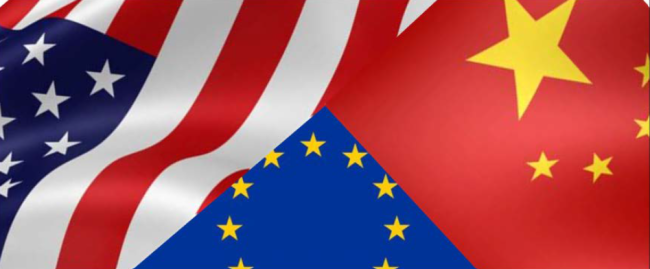
The EU in a World of Economic Warfare: Trade, Geopolitics, and the Battle for Economic Sovereignty
The international trading system has become a primary theatre of geopolitical competition. Tariffs, sanctions, and technology controls have replaced dialogue as the default instruments of economic relations.