





Practical information
Registration for this event is now closed.
After more than two years of conflict, more than 100,000 deaths, two million refugees and five million displaced people, the pace of events in Syria has accelerated over the summer. What are the diplomatic perspectives following the U.S.- Russian deal on the dismantling of Syrian chemical weapons? How will the internal conflict develop, whose outcome looks ever more uncertain? This seminar aims to grasp a better understanding of the relevant stakeholders" positions, and to shed light on the potential diplomatic and military options.
Programme:
14.00-15.30: External Actors: France, Turkey and Russia in the Syrian crisis
France: too adamant for Europe? Philippe Setton, Representative to the Political and Security Committee (PSC), Permanent Representation of France to the EU
Turkey: death of a brilliant diplomacy? Dorothée Schmid, Head of the Contemporary Turkey Programme, Ifri
Russia: an unshakable consistency? Julien Nocetti, Research Fellow in the Russia/NIS Centre, Ifri
Chair: Vivien Pertusot, Head of Ifri Brussels
15.30-15.45: Coffee break
15.45-17.00: Which ways out of the crisis?
Diplomatic negotiations: any chance of success? Denis Bauchard, Special Adviser for the Middle East, Ifri
Is the military option still on the table? Etienne de Durand, Director of the Security Studies Centre, Ifri
Chair: Dominique David, Executive Vice-President, Ifri
Ifri has recently published two Notes de l'Ifri on Syria:
Syrie: la bascule diplomatique, Denis Bauchard, Mansouria Mokhefi, Philippe Moreau Defarges, Laurence Nardon, Julien Nocetti, Vivien Pertusot, Dorothée Schmid, Note de l'Ifri, September 2013
Syrie, l'option militaire reste-t-elle ouverte? Corentin Brustlein, Etienne de Durand, Guillaume Garnier, Marc Hecker, Elie Tenenbaum, Note de l'Ifri, September 2013
The event will be held in French. Participants will be able to ask questions in both French and English.
Other events
One Month Ahead of the Midterms: Where Is Trump’s America Headed?
The 24th edition of the Ifri Americas Programme Annual Conference will examine the dynamics at play in the United States and their implications for Europe and the transatlantic relationship. will examine the dynamics at play in the United States and their implications for Europe and the transatlantic relationship.
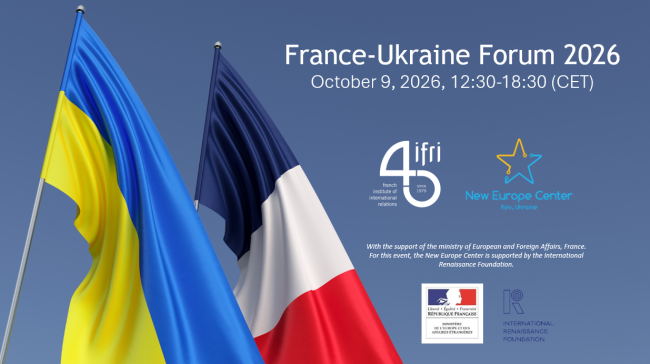
France-Ukraine Forum 2026
More than four and a half years after the start of the full-scale war launched by Russia against Ukraine, the 2026 France-Ukraine Forum will bring together policymakers, experts, academics, and civil society representatives from both countries to discuss three main topics: the formats and conditions for a lasting diplomatic settlement; Ukraine’s Euro-Atlantic integration, encompassing both the EU accession process and closer ties with NATO; and the societal transformations of postwar Ukraine, as well as its prospects for reconstruction.
The EU in a World of Economic Warfare: Trade, Geopolitics, and the Battle for Economic Sovereignty
The international trading system has become a primary theatre of geopolitical competition. Tariffs, sanctions, and technology controls have replaced dialogue as the default instruments of economic relations.