







The Enlargement of the European Union: A Strategic Choice? France, the Western Balkans and the EU in an Uncertain Geopolitical Context
Practical information
Accessibility
Themes and regions
Related centers and programs
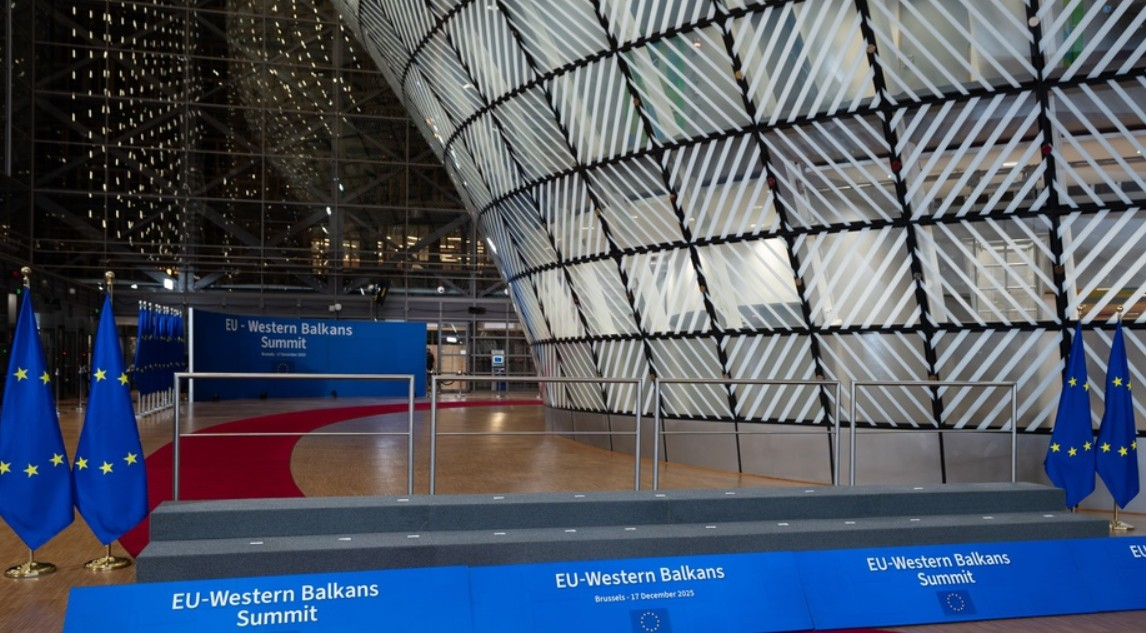
Russia’s war against Ukraine has brought the enlargement of the European Union back to the centre of European strategic debates. In this context, the Western Balkans have regained heightened visibility in discussions on the continent’s security, at a time when the international environment is marked by a growing number of destabilising factors.
Destabilisation efforts attributed to Russia, China’s increasing use of economic instruments for influence, and a United States posture perceived as more transactional, unpredictable, and at times disruptive all contribute to complicating Europe’s strategic choices. Against this backdrop, France’s position appears to be evolving toward a more explicitly strategic approach to enlargement, no longer viewed solely as a project of political integration but also as a potential lever for stability and credibility for the Union. This shift nonetheless raises a number of questions.
To what extent can enlargement genuinely strengthen the EU’s geopolitical resilience without undermining its institutional, political, and budgetary balances? How can short-term geopolitical imperatives be prevented from overshadowing the requirements of internal coherence and the long-term sustainability of the European project?
10h00 | Welcome Remarks
Dominique David, Advisor to Chairman of Ifri, President of the Austro-French Centre for Rapprochement in Europe (CFA)
10h05 | Keynote
Benjamin Haddad, Minister Delegate for Europe, attached ti the Minister for Europe and Foreign Affairs
10h15 | Discussion
Pierre Vimont, senior fellow at Carnegie Europe, former Executive Secretary-General, European External Action Service
Jovana Marović, former Deputy Prime Minister and Minister for European Affairs of Montenegro, BiPAG member
Nikola Dimitrov, former Deputy Prime Minister for European Affairs and Minister of Foreign Affairs of North Macedonia, BiPAG member
Doris Wydra, Senior Scientist and Executive Director of the Salzburg Centre of European Union Studies
Chair:
Florent Marciacq, Deputy Secretary General of the Austro-French Centre for Rapprochement in Europe (CFA), and Research associate at the Ifri
This conference is organised in cooperation with the European Fund for the Balkans (EFB) and Balkans in Europe Policy Advisory Group (BiEPAG)

Replay
Contact
Barbara DELANSOY
CRM and Relations with Individual Members Officer

Related Subjects
Other events
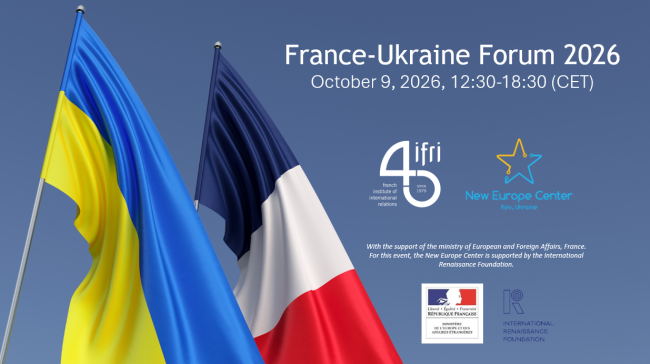
France-Ukraine Forum 2026
More than four and a half years after the start of the full-scale war launched by Russia against Ukraine, the 2026 France-Ukraine Forum will bring together policymakers, experts, academics, and civil society representatives from both countries to discuss three main topics: the formats and conditions for a lasting diplomatic settlement; Ukraine’s Euro-Atlantic integration, encompassing both the EU accession process and closer ties with NATO; and the societal transformations of postwar Ukraine, as well as its prospects for reconstruction.
The EU in a World of Economic Warfare: Trade, Geopolitics, and the Battle for Economic Sovereignty
The international trading system has become a primary theatre of geopolitical competition. Tariffs, sanctions, and technology controls have replaced dialogue as the default instruments of economic relations.
The Road to 27 Electrification Action Plans: Planning and Investing in Europe’s Electric Future
The European Commission’s Electrification Action Plan places the continent on an electric path to structurally reduce dependence on fossil fuel imports and boost the energy transition in industry, transport and buildings.