




Towards Vladimir Putin’s Fourth Term as President: Challenges and Prospects

Practical information
This event is dedicated to the Russia/NIS Centre Corporate supports. By personal invitation only.
A closed-door seminar with Marlène LARUELLE, Professor and Associate Director, Institute for European, Russian and Eurasian Studies (IERES), George Washington University, co-director of PONARS Eurasia, and Alexander COOLEY, Professor of Political Science and Director of Columbia University's Harriman Institute.
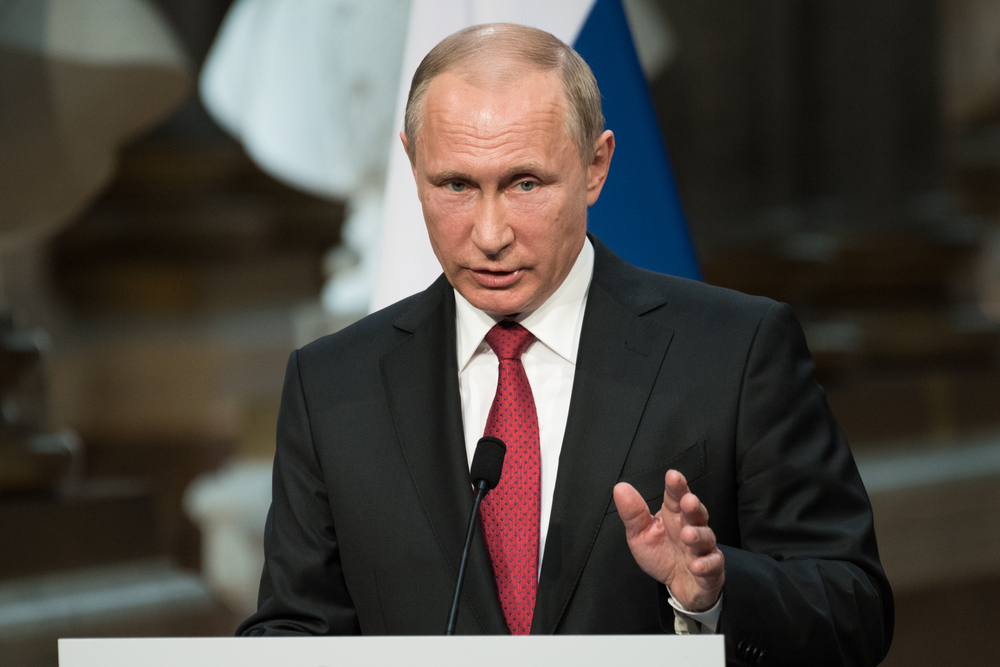
The March 2018 presidential elections will very probably enshrine Vladimir Putin's hold on power for a fourth presidential term. Domestically, the upcoming challenges are significant, from the economic and social fragilities to the preparations for the 2024 transition of power. On the international stage, Russia's return as a global power is measured by the state of its relations with the United States; yet President Trump's room for manoeuvre is precisely hampered by the "Russian issue". What strategies will the Kremlin adopt to tackle these challenges, and with what consequences on the national and international stages?
Chair : Tatiana KASTOUÉVA-JEAN, Head of Ifri’s Russia/NIS Center
This seminar will be held in French (M. Laruelle) and English (A. Cooley) under the Rule of Chatham House.
This event will be held within the framework of the “Observatoire Russie, Europe orientale et Caucase” with the support of DGRIS (Directorate General for International Relations and Strategy), French Ministry of Defence.
Other events
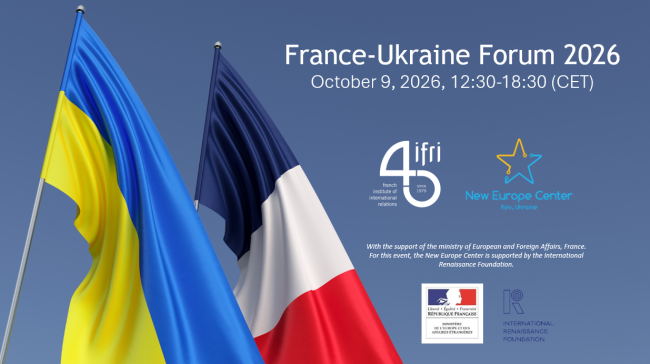
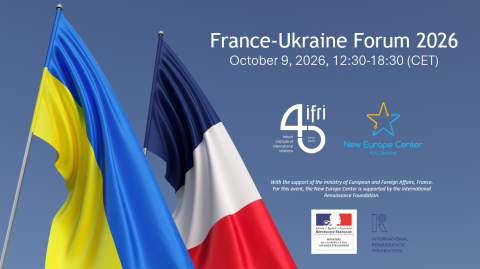
France-Ukraine Forum 2026
More than four and a half years after the start of the full-scale war launched by Russia against Ukraine, the 2026 France-Ukraine Forum will bring together policymakers, experts, academics, and civil society representatives from both countries to discuss three main topics: the formats and conditions for a lasting diplomatic settlement; Ukraine’s Euro-Atlantic integration, encompassing both the EU accession process and closer ties with NATO; and the societal transformations of postwar Ukraine, as well as its prospects for reconstruction.
The EU in a World of Economic Warfare: Trade, Geopolitics, and the Battle for Economic Sovereignty
The international trading system has become a primary theatre of geopolitical competition. Tariffs, sanctions, and technology controls have replaced dialogue as the default instruments of economic relations.
The Road to 27 Electrification Action Plans: Planning and Investing in Europe’s Electric Future
The European Commission’s Electrification Action Plan places the continent on an electric path to structurally reduce dependence on fossil fuel imports and boost the energy transition in industry, transport and buildings.