





Practical information
The UK general election on 7 May 2015 promises to be exciting, with a more fragmented political landscape on the horizon. Divisions no longer just concern the Labour-Conservative divide, but also national identity and EU membership.
At this event, the French Institute of International Relations, Open Europe and the Friedrich Naumann Foundation for Freedom are bringing together experts and policy makers from France, Germany and the UK. They will explore what David Cameron may request from his EU partners in terms of EU reform, if re-elected and if a UK referendum on British EU membership is scheduled. They will also discuss how British EU policy will look like if Ed Miliband enters 10 Downing Street and what the possible reaction in France, Germany and other member states could be.
Welcome
Hans H. Stein, Director, European and Transatlantic Dialogue, Friedrich Naumann Foundation for Freedom
Speakers
Mats Persson, Director, Open Europe
Syed Kamall MEP, Member of European Parliament for the UK, Chairman of the European Conservatives and Reformists Group (ECR)
Stefani Weiss, Director Program Europe’s Future, Bertelsmann Stiftung, Brussels
Sylvie Goulard MEP, Member of European Parliament for France, Group of the Alliance of Liberals and Democrats (ALDE) (tbc)
Moderator
Vivien Pertusot, Head of Brussels office, French Institute of International Relations
Please click here to register.
Find out more
Other events
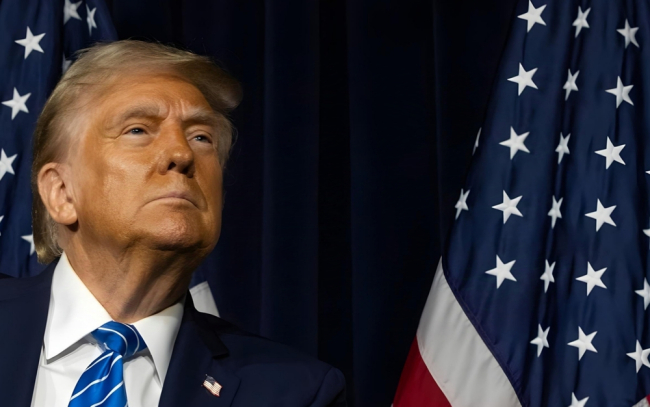
One Month Ahead of the Midterms: Where Is Trump’s America Headed?
The 24th edition of the Ifri Americas Programme Annual Conference will examine the dynamics at play in the United States and their implications for Europe and the transatlantic relationship. will examine the dynamics at play in the United States and their implications for Europe and the transatlantic relationship.
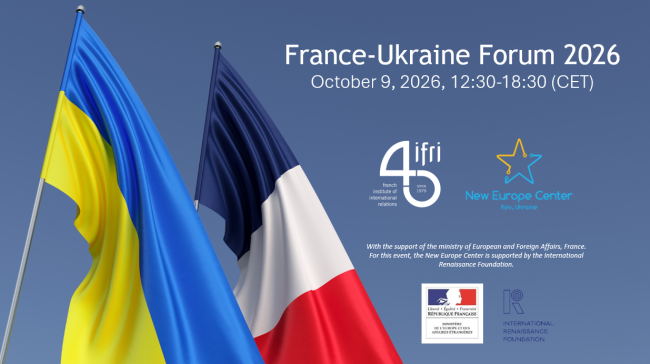
France-Ukraine Forum 2026
More than four and a half years after the start of the full-scale war launched by Russia against Ukraine, the 2026 France-Ukraine Forum will bring together policymakers, experts, academics, and civil society representatives from both countries to discuss three main topics: the formats and conditions for a lasting diplomatic settlement; Ukraine’s Euro-Atlantic integration, encompassing both the EU accession process and closer ties with NATO; and the societal transformations of postwar Ukraine, as well as its prospects for reconstruction.
The EU in a World of Economic Warfare: Trade, Geopolitics, and the Battle for Economic Sovereignty
The international trading system has become a primary theatre of geopolitical competition. Tariffs, sanctions, and technology controls have replaced dialogue as the default instruments of economic relations.