






Practical information
Founded in 2008 by Thierry de Montbrial, Chairman of the French Institute of Foreign Relations (Ifri), the World Policy Conference (WPC) holds its eleventh edition from October 26th to 28th, 2018, in Rabat, Morocco.

The WPC's mission is to reflect upon and to come up with solutions to the constant upheavals of our contemporary world and to create lasting bonds between the participants. This international conference gives a voice to political, economic, academic and media players from over 40 countries - from major powers to medium and small countries, including emerging countries, thus ensuring a diversity and plurality of debates.
The event has become a not-to-be-missed forum on the global governance agenda and has ranked 3rd best Think Tank Conference in 2017 according to The Think Tanks and Civil Societies Program (TTCSP) at the Lauder Institute, University of Pennsylvania '2017 Global Go To Think Tank Index Report'.
More than 250 international leading figures participate, including: Jean-Paul Agon (Chairman and CEO of L’Oréal), Olivier Blanchard (Former economic counselor and director of the Research Department, IMF), Josep Borrell (Minister of Foreign Affairs, Spain ), Nasser Bourita (Minister of Foreign Affairs and International Cooperation, Morocco), Karl Brauner (Deputy Director-General at the WTO), Patrick de Castelbajac (Head of Airbus Strategy and International), Ronnie Chan (Chairman, Hang Lung Properties Limited), Chang Dae-whan (Chairman & Publisher, Maekyung Media Group), Amadou Gon Coulibaly (Prime Minister of Côte d'Ivoire), Tsakhia Elbegdorj (Former president of Mongolia), Laurent Fabius (Chairman of the French Constitutional Council, former Minister of Foreign Affairs of France ), Ichiro Fujisaki (President of Nakasone Peace Institute), Carlos Ghosn (Chairman and CEO of Renault-Nissan-Mitsubishi ), Jia Qingguo (Dean of the School of International Studies of Peking University), Salim Jreissati (Minister of Justice of Lebanon), Karin Kneissl (Minister of Foreign Affairs, Austria), Teodor Melescanu (Minister for Foreign Affairs of Romania), Staffan de Mistura (UN Spedial Envoy for Syria), Nobuo Tanaka (Former Executive Director of the International Energy Agency), Aminata Touré (former Prime Minister of Senegal), Jean-Claude Trichet (former President of the European Central Bank), László Trócsányi (Minister of Justice of Hungary), Hubert Védrine (Former French Minister of Foreign Affairs ), Wang Jisi (President of the Institute of the International and Strategic Studies, Peking University), Lionel Zinsou (former Prime Minister of Benin).
The following topics will be discussed:
- major economic challenges in the next five years,
- Russia's futures,
- the impact of a connected world on global governance,
- migration and the future of multiculturalism,
- the future of the euro,
- the consequences of Trump,
- the One Belt One Road initiative,
- the basic European strategic issues,
- the North Korean issue.
The work of this eleventh edition will also cover issues such as international trade, education, development in Africa, energy and climate , the state of the world economy and many further topics.
More information - www.worldpolicyconference.com
Opening speech of the 11th WPC, Thierry de Montbrial, 26 October 2018, Rabat, Morocco
Watch the World Policy Conference live from Rabat on youtube: https://www.youtube.com/watch?v=kvEp4qK9Q9k

Related Subjects
Other events
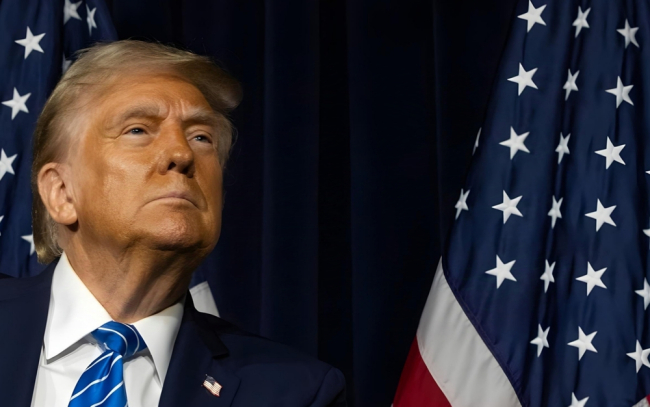
One Month Ahead of the Midterms: Where Is Trump’s America Headed?
The 24th edition of the Ifri Americas Programme Annual Conference will examine the dynamics at play in the United States and their implications for Europe and the transatlantic relationship. will examine the dynamics at play in the United States and their implications for Europe and the transatlantic relationship.
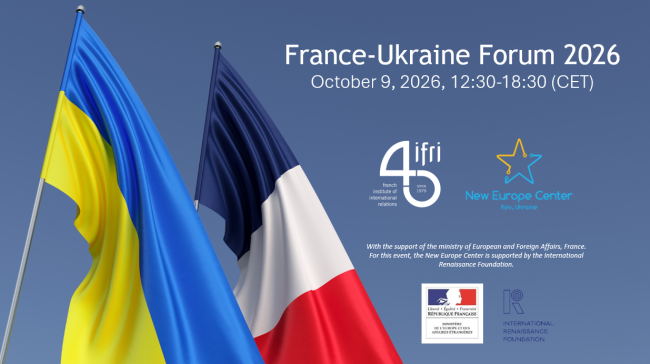
France-Ukraine Forum 2026
More than four and a half years after the start of the full-scale war launched by Russia against Ukraine, the 2026 France-Ukraine Forum will bring together policymakers, experts, academics, and civil society representatives from both countries to discuss three main topics: the formats and conditions for a lasting diplomatic settlement; Ukraine’s Euro-Atlantic integration, encompassing both the EU accession process and closer ties with NATO; and the societal transformations of postwar Ukraine, as well as its prospects for reconstruction.
The EU in a World of Economic Warfare: Trade, Geopolitics, and the Battle for Economic Sovereignty
The international trading system has become a primary theatre of geopolitical competition. Tariffs, sanctions, and technology controls have replaced dialogue as the default instruments of economic relations.