



Ahead of the G20 and G7 Summits: Debating Global Governance on Trade and Digital Affairs

Practical information
This year Japan hosts the G20 Summit that will take place in Osaka on June 28-29 and France chairs the G7 Summit, to be held in Biarritz end of August.These two meetings will be of crucial importance, as multilateralism is undermined by unilateral and protectionist practices and new technologies pose governance challenges
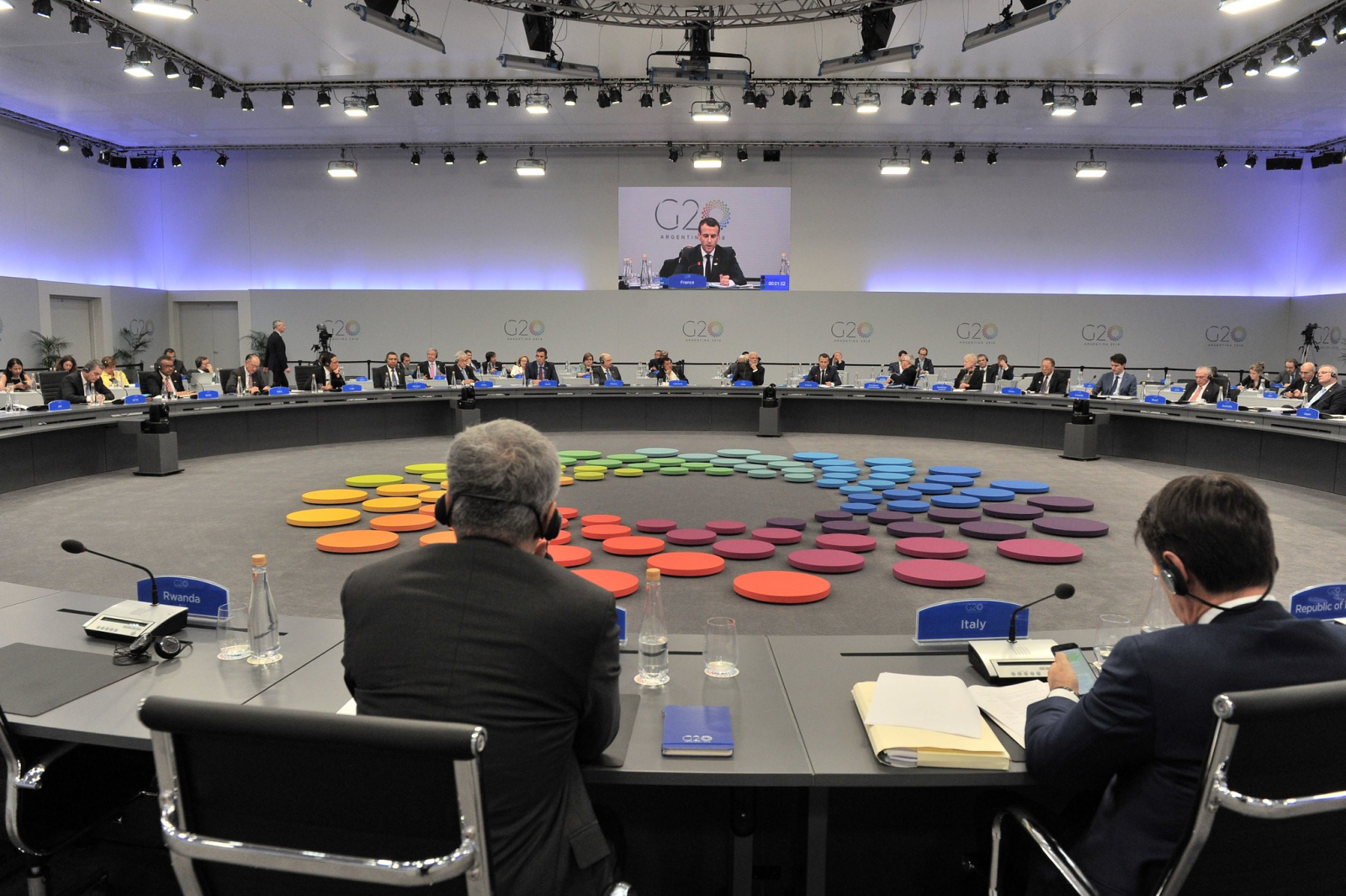
This conference brings together Japanese and French speakers to discuss, before the G7 and G20 summits, two key issues for global governance: trade and digital issues. The first panel will address the question of how to restore a global governance for trade in a context of protectionism and unilateralism. The second panel will focus on the issue of the Fourth Industrial Revolution and the need to establish a global governance for the use of new technologies.
Programme
9:30-9:45 – Welcome remarks: Martin-Pierre CHARLIAT, Desk Officer, G7 Task Force - 2019 French Presidency, French Ministry for Europe and Foreign Affairs
9:45-11:00 – Trade governance in the age of trade war: is a reset possible?
Chair: Sébastien JEAN, Director, CEPII
- Françoise NICOLAS, Director, Center for Asian Studies, Ifri
- Yoichi OTABE, Former Deputy Minister of Foreign Affairs, former sherpa G8/G20
- Akiko YAMANAKA, Special Advisor to the President of ERIA (Economic Research Institute for ASEAN and East Asia)
11:00-11:15- Coffee Break
11:15-12:30 – Governing the 4th industrial revolution: challenges for governments and companies
Chair: John SEAMAN, Research fellow, Center for Asian Studies, Ifri
- Yuko HARAYAMA, Former Executive Member of the Council for Science, Technology and Innovation of the Cabinet Office, Government of Japan
- Henri VERDIER, France’s Ambassador for Digital Affairs
- Patrick NICOLET, Group Chief Technology Officer - Member of the Group Executive Board, Capgemini
Related Subjects
Other events

Reinventing Coordination in an Age of Fragmentation 3rd Paris Geoeconomic Dialogue
The world economy is being reordered. The certainties of the post-Cold War era, open trade, dollar centrality, predictable multilateral coordination, are giving way to a landscape shaped by rivalry between the United States and China, the weaponization of interdependence, and a scramble to secure supply chains, technologies and critical resources. What once looked like a stable architecture now appears fragile, contested, and in places actively being dismantled.