






"Research Universities": outlook and challenges for the future. Comparing Russian and French experiences

Practical information
Depuis quelques années, l'enseignement supérieur russe est en pleine restructuration. Le gouvernement russe a lancé la création des "universités nationales de recherche", leaders dans leurs domaines respectifs, et des "universités fédérales", à vocation régionale. L'Ifri accueille quatre de ces nouvelles universités pour discuter dans un cadre bilatéral des sujets comme:
- Les tendances communes dans l'évolution de l'enseignement supérieur russe et français.
- La recherche dans les universités. Tendances, expériences, difficultés.
- Commercialisation des résultats de la recherche et la coopération entre l'université, l'Etat et les milieux d'affaires.
- Internationalisation de l'enseignement supérieur et l'importance de la coopération internationale dans le développement des Universités de recherche.
Reports
Irina Arzhanova, Common trends and problems in Higher Education Development. Russia and France
Catherine Paradeise, Higher education in the French public sector: Permanence and change
Stephan Vincent-Lancrin, Trends and challenges in university research Irina Dezhina, Research in Russian Universities
Irina Dezhina, Research in Russian Universities
Maxime Khomiakov, Internationalization: Minding the Gaps
Evgueni Khenner, Commercialization of research: collaboration of the university, government and business
Konstantin Protassov, Relations Université - Entreprise, exemple de l'Université de Grenoble 1
Other events
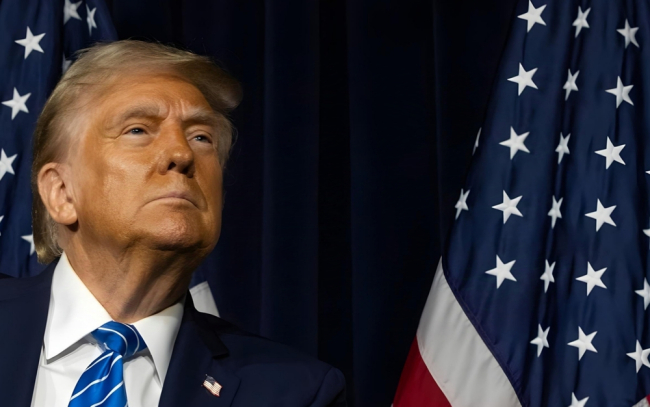
One Month Ahead of the Midterms: Where Is Trump’s America Headed?
The 24th edition of the Ifri Americas Programme Annual Conference will examine the dynamics at play in the United States and their implications for Europe and the transatlantic relationship. will examine the dynamics at play in the United States and their implications for Europe and the transatlantic relationship.

The EU in a World of Economic Warfare: Trade, Geopolitics, and the Battle for Economic Sovereignty
The international trading system has become a primary theatre of geopolitical competition. Tariffs, sanctions, and technology controls have replaced dialogue as the default instruments of economic relations.
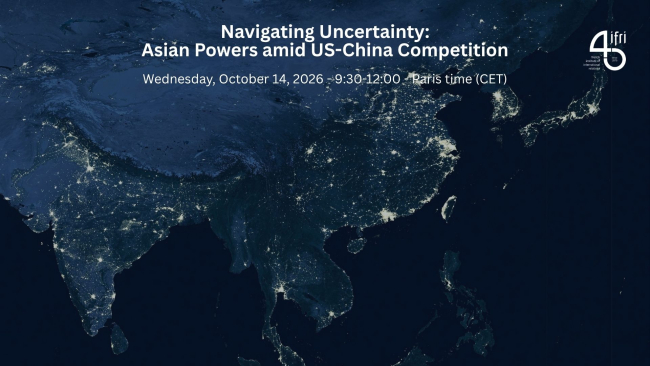
Navigating Uncertainty: Asian Powers amid US-China Competition
As relations between China and the United States oscillate between hardening competition and strategic stability, regional powers in Asia must adapt to greater uncertainty. The increasing weaponization of trade and economic dependencies, the rise of disruptive technologies, and the ever-growing risk of armed conflict are among the destabilizing factors shaping the region’s trajectory.