



The EU in a World of Economic Warfare: Trade, Geopolitics, and the Battle for Economic Sovereignty
Practical information
Accessibility
Themes and regions
Related centers and programs
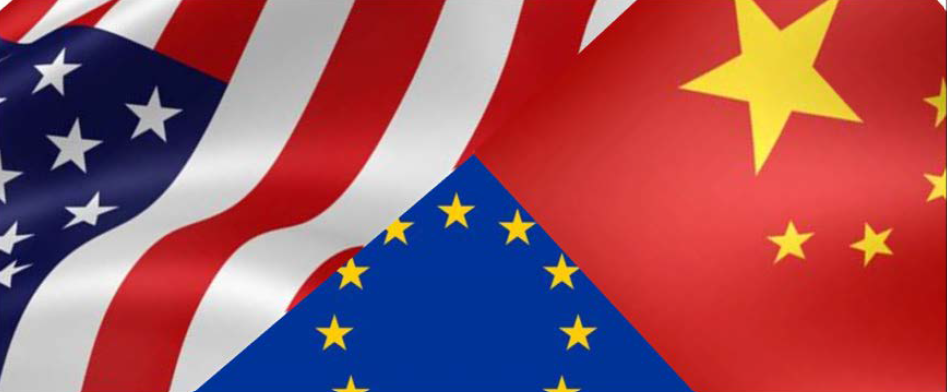
The international trading system has become a primary theatre of geopolitical competition. Tariffs, sanctions, and technology controls have replaced dialogue as the default instruments of economic relations.
And the EU finds itself caught between two simultaneous pressures: a more assertive China competing aggressively in key industrial sectors, and a United States that can no longer be taken for granted as a partner committed to open, rules-based trade. As the transatlantic relationship is tested and the WTO increasingly sidelined, the EU faces a defining question: can it defend its economic interests and pursue strategic autonomy without abandoning the multilateral order it has long championed - and without being forced to choose sides?
10h00 | Discussion
Elvire Fabry, Director of the Trade and Economic Security programme at the Jacques Delors Institute, Paris
Alicia García-Herrero, Senior Fellow at Bruegel, Brussels
Maaike Heijmans, Programme Lead Geopolitics of Technology and Digitalisation and Research Fellow at Clingendael, The Hague
Mario Holzner, Executive Director at the Vienna Institute for International Economic Studies (wiiw), Vienna
Moderation: Dietmar Schweisgut, Secretary General of the Austro-French Centre for Rapprochement in Europe
11h30 | End of the discussion
Our partners

Related Subjects
Other events
COP31 in Antalaya: State of the Global Climate Governance, Issues, Perspectives
COPs have become a year-end marathon to revigorate a world now entering the era of climate overshoot. While Türkiye exhibits the largest coal-fired power generation in OECD Europe, it has embraced the electrification agenda and aims at joining forces with Australia on fostering action and implementation. This is an unusual de facto co-presidency arrangement, but one that could yield promising results. This webinar will take stock of what climate governance has achieved and of the issues still to be negotiated, and explore what impetus this Turkish–Australian partnership could provide.
A New Moment for Central Europe? Regional Cooperation in a Time of European Strategic Choices
Recent political developments in Central Europe have revived the debate about the future of regional cooperation and the Visegrád Group. Changes in Hungary, Poland, the Czech Republic and Slovakia, together with Austria’s growing interest in closer cooperation with its neighbours, could create new opportunities for dialogue and coordination around shared priorities.
China’s Nuclear Buildup: Developments, Drivers, and Implications for Major-Power Relations and Arms Control
China has been steadily expanding its nuclear arsenal for several years amid levels of geopolitical tension unseen since the end of the Cold War, marked by a resurgence in nuclear proliferation and a broader, global arms race.