



Practical information
Accessibility
Themes and regions
Related centers and programs
This is a private event.
Learn more about our corporate support packages
2025 is already characterized by the accelerated erosion of the West and global fragmentation on energy and climate policies, security, trade and governance. Ten years after the Paris Agreement, greenhouse gas emissions continue to rise and the United States is once more preparing to exit the global climate governance, while coal has again passed another consumption record in 2024. Yet annual clean sector investments are finally nearing the 2 trillion $ mark, notably driven by energy security and industrial policies.
In this highly volatile and uncertain context, Ifri is gathering four leading energy economists from four leading energy companies representing a combined 670 billion EUR revenues in 2024 alongside a member of the Executive Committee of Europe’s largest infrastructure fund to discuss the consequences of the various shocks and clashes affecting energy markets, trade, services, and transatlantic relations.
Amidst these uncertainties, what is actually a given, and what are the implications for energy sector investment and policies?
Program:
8:30-9:00: Welcome coffee & breakfast
9:00-9:10: Introduction - The energy transitions torn between war and energy security.
- Marc-Antoine Eyl-Mazzega, Director, Center for Energy and Climate, Ifri
9:10-10:15: The chief economists roundtable
- Laszlo Varro, Vice President Strategy, Insights & Scenarios, Shell
- Marion Calcine, Chief Investment Officer, Infrastructure, Ardian
- Pierre-Laurent Lucille, Chief Economist, Engie
- Thomas-Olivier Léautier, Chief Economist, TotalEnergies
- Charles Weymuller, Chief Economist, EDF
10:15-11:15: Discussion
Please note that the event is by invitation only and will be held in English without translation.
Our partners
Speakers

Our team
Find out more
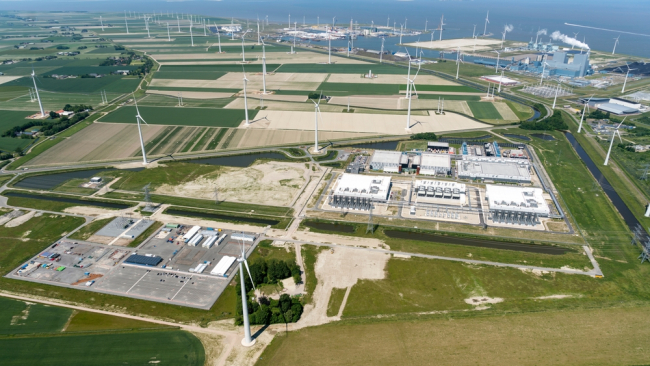
The Strategic Dimension of Power System Flexibility: Opportunities in Europe
The European Union has embarked on an energy transition aimed primarily at replacing fossil fuels by electrifying demand.
Related Subjects
Other events
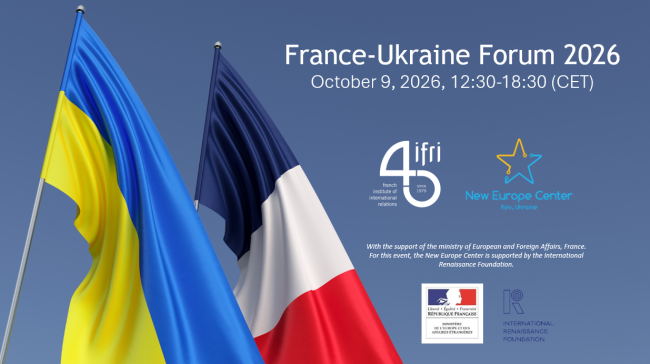
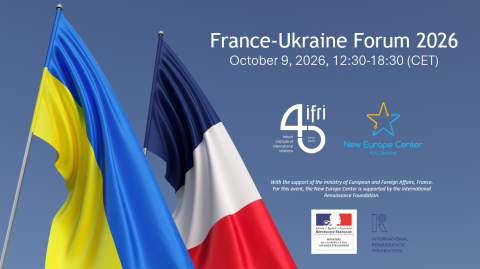
France-Ukraine Forum 2026
More than four and a half years after the start of the full-scale war launched by Russia against Ukraine, the 2026 France-Ukraine Forum will bring together policymakers, experts, academics, and civil society representatives from both countries to discuss three main topics: the formats and conditions for a lasting diplomatic settlement; Ukraine’s Euro-Atlantic integration, encompassing both the EU accession process and closer ties with NATO; and the societal transformations of postwar Ukraine, as well as its prospects for reconstruction.
The EU in a World of Economic Warfare: Trade, Geopolitics, and the Battle for Economic Sovereignty
The international trading system has become a primary theatre of geopolitical competition. Tariffs, sanctions, and technology controls have replaced dialogue as the default instruments of economic relations.
The Road to 27 Electrification Action Plans: Planning and Investing in Europe’s Electric Future
The European Commission’s Electrification Action Plan places the continent on an electric path to structurally reduce dependence on fossil fuel imports and boost the energy transition in industry, transport and buildings.