




Energy Policies
How can the Green Deal be implemented at all levels and synchronized with global governance? How are power strategies evolving, and under what conditions can they converge?
Related Subjects
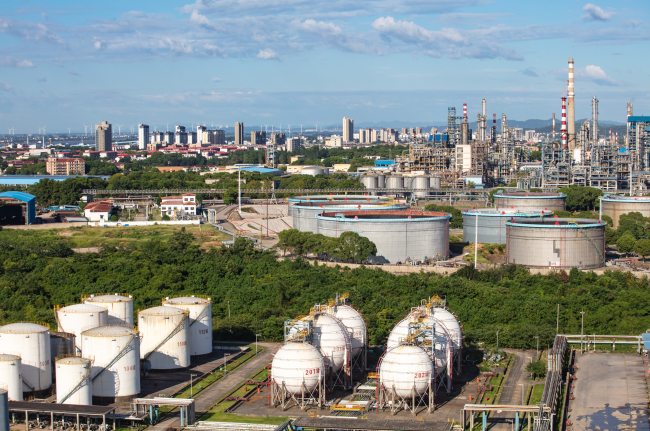
China’s Hydrogen Economy Five Years On
China’s hydrogen sector is not new. It is the world’s largest industrial hydrogen system, rooted in ammonia, methanol, refining, coal chemicals and by-product gas streams.
Japan’s Energy Policy after Hormuz. Security, Competitiveness, and Decarbonization
The 2026 Hormuz crisis has strengthened rather than weakened the rationale for Japan’s decarbonization strategy, contrary to what might have been expected. Rather than energy policy supplanting climate policy, the two should actually be viewed as inseparable.
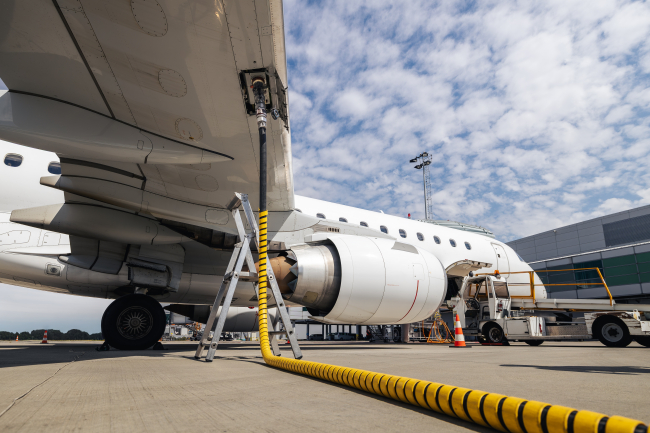
How to Make European e-SAF Production under RefuelEU Aviation Fly?
Three and a half years before the scheduled entry into force of the European regulation ReFuelEU Aviation (RFEUA), which requires aviation fuel suppliers at Union airports to offer a sustainable synthetic alternative (e-SAF), no sizeable commercial production unit (greater than 10,000 tons per year) is active within Europe yet, nor has it even passed the Final Investment Decision (FID). Is a major step in the European Union (EU) plans for decarbonizing air transport at risk of not happening, or at least being postponed for several years? Is Europe losing its bet to create a market for e-SAF? Under what conditions can this bet still be won? Could sovereignty and energy security preoccupations unlock necessary public support and help to overcome economic, financial, logistical or administrative obstacles?
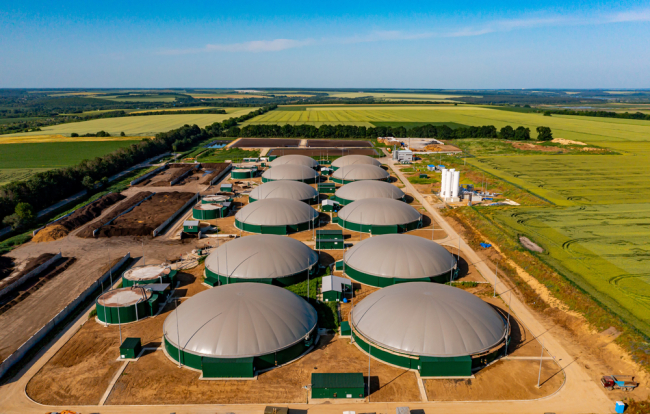
The European Biomethane Sector at a Critical Juncture: Stronger Policy Alignment Will Matter
The European biomethane sector is at a critical juncture.
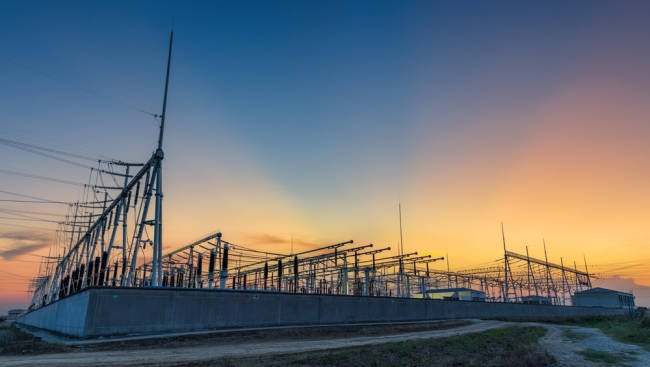
Europe’s Power Grid Challenge: A Make-or-Break for Accelerating Electrification
In April 2023, The Economist published an article pointing to the vast amounts of electricity infrastructure needed to reach energy transition goals.

How smaller EU states are reshaping Europe’s power structure
Changing economic and trans-Atlantic conditions have led to power restructuring in the 27-nation European Union, opening doors for more negotiating power for many smaller central and former Eastern European nations such as Hungary.

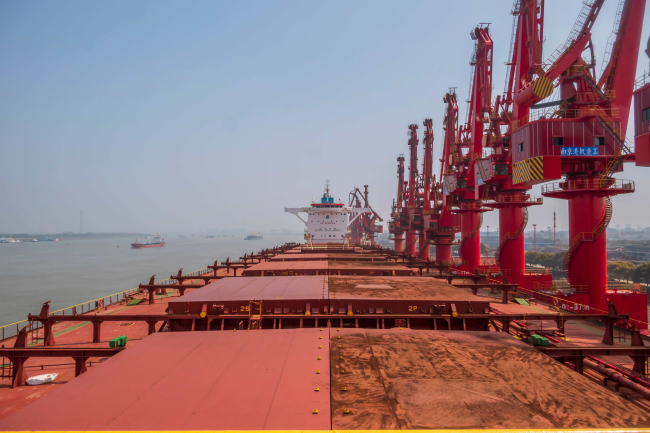
Geoeconomics: 'All dependencies, minerals, currencies and semiconductors, are now being weaponized'
According to geopolitics expert Marc-Antoine Eyl-Mazzega, the competition for control over minerals, logistics and the flow of raw materials is benefiting the US and China. Europe lags behind in this geoeconomic race, with a tangible impact on how major powers are reshaping their defense capabilities.
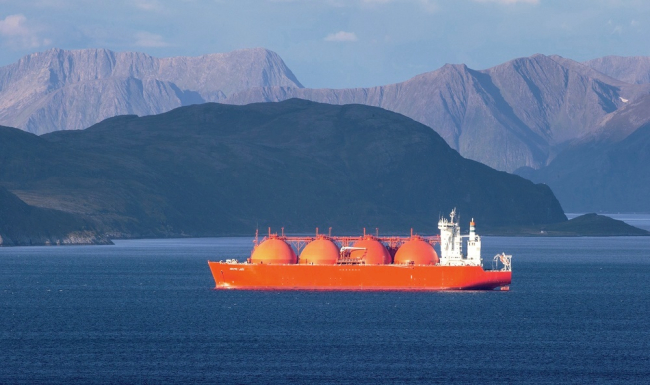
Norway’s Energy Policy Dilemmas and Debates: In or Out?
2026 may prove to be the end of the Norwegian exception. Norway has long prided itself on the successful combination of fossil fuel extraction with a strong social democracy.
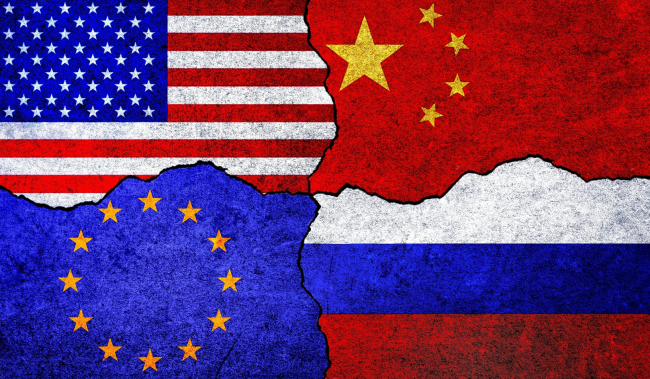
Placing the EU on a Warfare Footing: Energy and Raw Materials Priorities for 2026
The year 2025 has confirmed that one must prepare for much worse in the field of geopolitics and geoeconomics as the intensity and frequency of shocks increase and as the European Union (EU) has no more stable flanks now that crises with the United States (US) become so frequent and reveal a systemic rift. In the world, barriers to trade multiply and dependencies are weaponized.

Securing critical raw material (CRM) value chains – a prerequisite for Europe’s technological resilience
At the heart of economic security, technological resilience is a backbone of the European Union’s (EU) competitiveness. The EU’s energy and digital transitions depend on critical raw materials (CRM).

COP30: An Inflection Point for Climate Action and Governance
The 30th Conference of the Parties (COP30), opening in Belém, Brazil, on November 10th 2025, convenes at a perilous moment.

The Strategic Dimension of Skills in the Clean Industrial Deal
In the competitiveness and energy transition battles, the European Union (EU) must master a determinant factor: skills.
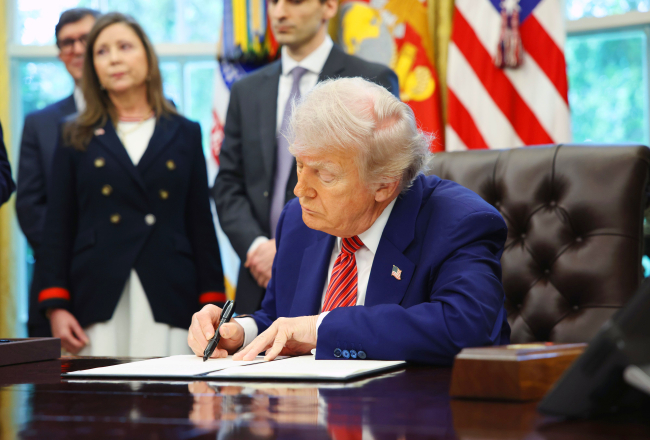
The New US Energy Policy: Energy Dominance or Fallback?
Since taking office, President Trump has defined and started to implement a new energy strategy for the United States (US), aimed at supporting fossil fuels, the nuclear industry, and the critical minerals sector.
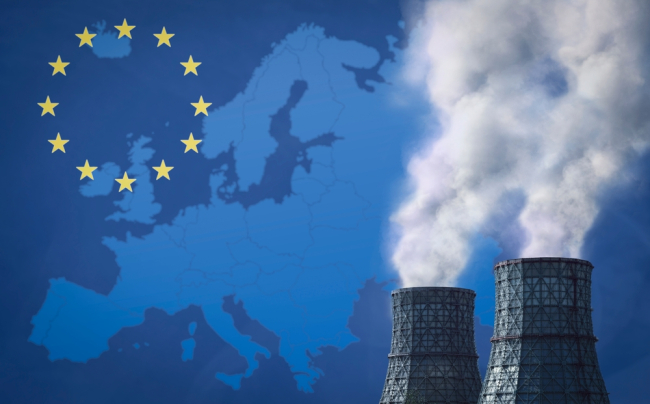
Reconnecting With Europe's Nuclear DNA: a Political Question
As Europe's main source of low-carbon electricity, nuclear power is a strategic asset for tackling climate and geopolitical challenges.
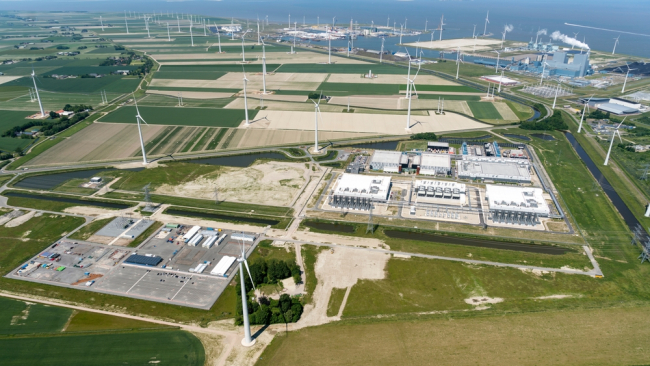
The Strategic Dimension of Power System Flexibility: Opportunities in Europe
The European Union has embarked on an energy transition aimed primarily at replacing fossil fuels by electrifying demand.
Geopolitics of Climate Change - World Policy Conference 2024 (Plenary Session)
Plenary session 6: Geopolitics of Climate Change. Friday, December 13, 2024 - 17th edition of the World Policy Conference in Abu Dhabi, United Arab Emirates.
From Crisis Hotspots to Convening Powers. African Cities Launch Diplomacy to Create Climate Mobility Partnerships
African local governments cannot afford to turn into climate mobility hotspots without taking proactive action – drawing on local knowledge, convening power and access to affected communities.

Can carbon markets make a breakthrough at COP29?
Voluntary carbon markets (VCMs) have a strong potential, notably to help bridge the climate finance gap, especially for Africa.
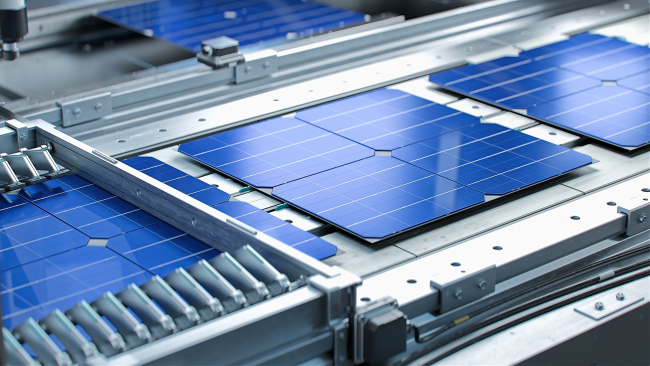
European Solar PV Manufacturing: Terminal Decline or Hope for a Rebirth?
While solar photovoltaic (PV) installations are booming in Europe (and in other parts of the world), the local industry is closing down. Over the past two years, the European installed solar PV capacity has been multiplied by two. On the other hand, the remaining European manufacturers of solar PV panels are dying.
Global Gateway: Towards a European External Climate Security Strategy?
Transport, energy, water and telecommunications infrastructures are vital for economic development. These infrastructures are also fundamental for the achievement of the 2030 Sustainable Development Goals (SDGs), which have suffered a setback notably due to the Covid-19 pandemic, wars, and weak economic performance. Based on the Global Infrastructure Outlook, the world needs 97 trillion dollars ($) in infrastructure investments (energy, water, airports, ports, rail, road, and telecommunications) over 2016-2040, and based on the current investment trends ($79 trillion over the given period), the cumulative global infrastructure investment gap amounts to $18 trillion.
China’s Hydrogen Economy Five Years On
China’s hydrogen sector is not new. It is the world’s largest industrial hydrogen system, rooted in ammonia, methanol, refining, coal chemicals and by-product gas streams.
Japan’s Energy Policy after Hormuz. Security, Competitiveness, and Decarbonization
The 2026 Hormuz crisis has strengthened rather than weakened the rationale for Japan’s decarbonization strategy, contrary to what might have been expected. Rather than energy policy supplanting climate policy, the two should actually be viewed as inseparable.
How to Make European e-SAF Production under RefuelEU Aviation Fly?
Three and a half years before the scheduled entry into force of the European regulation ReFuelEU Aviation (RFEUA), which requires aviation fuel suppliers at Union airports to offer a sustainable synthetic alternative (e-SAF), no sizeable commercial production unit (greater than 10,000 tons per year) is active within Europe yet, nor has it even passed the Final Investment Decision (FID). Is a major step in the European Union (EU) plans for decarbonizing air transport at risk of not happening, or at least being postponed for several years? Is Europe losing its bet to create a market for e-SAF? Under what conditions can this bet still be won? Could sovereignty and energy security preoccupations unlock necessary public support and help to overcome economic, financial, logistical or administrative obstacles?
The European Biomethane Sector at a Critical Juncture: Stronger Policy Alignment Will Matter
The European biomethane sector is at a critical juncture.
Europe’s Power Grid Challenge: A Make-or-Break for Accelerating Electrification
In April 2023, The Economist published an article pointing to the vast amounts of electricity infrastructure needed to reach energy transition goals.
Norway’s Energy Policy Dilemmas and Debates: In or Out?
2026 may prove to be the end of the Norwegian exception. Norway has long prided itself on the successful combination of fossil fuel extraction with a strong social democracy.
Placing the EU on a Warfare Footing: Energy and Raw Materials Priorities for 2026
The year 2025 has confirmed that one must prepare for much worse in the field of geopolitics and geoeconomics as the intensity and frequency of shocks increase and as the European Union (EU) has no more stable flanks now that crises with the United States (US) become so frequent and reveal a systemic rift. In the world, barriers to trade multiply and dependencies are weaponized.
Securing critical raw material (CRM) value chains – a prerequisite for Europe’s technological resilience
At the heart of economic security, technological resilience is a backbone of the European Union’s (EU) competitiveness. The EU’s energy and digital transitions depend on critical raw materials (CRM).
COP30: An Inflection Point for Climate Action and Governance
The 30th Conference of the Parties (COP30), opening in Belém, Brazil, on November 10th 2025, convenes at a perilous moment.
The Strategic Dimension of Skills in the Clean Industrial Deal
In the competitiveness and energy transition battles, the European Union (EU) must master a determinant factor: skills.
How smaller EU states are reshaping Europe’s power structure
Changing economic and trans-Atlantic conditions have led to power restructuring in the 27-nation European Union, opening doors for more negotiating power for many smaller central and former Eastern European nations such as Hungary.
Geoeconomics: 'All dependencies, minerals, currencies and semiconductors, are now being weaponized'
According to geopolitics expert Marc-Antoine Eyl-Mazzega, the competition for control over minerals, logistics and the flow of raw materials is benefiting the US and China. Europe lags behind in this geoeconomic race, with a tangible impact on how major powers are reshaping their defense capabilities.

Energy sector: outlook and opportunities
The recent energy crisis has highlighted our economies' dependence on energy resources. With fossil fuels becoming less available, and a necessary transition to more decarbonised alternatives, could tomorrow's energy not become more expensive and less certain in availability?

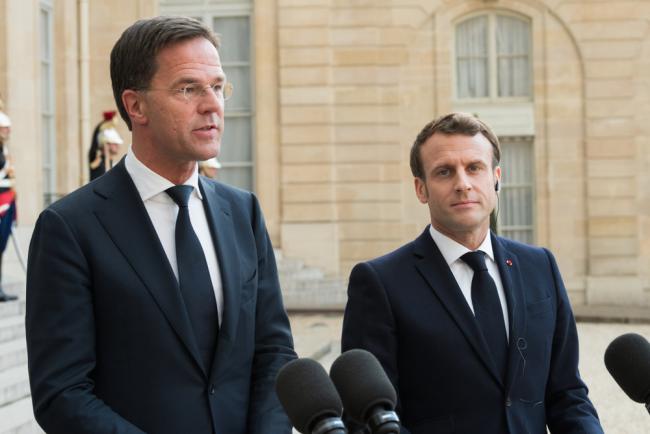
Macron and Rutte grow closer to each other through geopolitical shifts and a personal click
French President Emmanuel Macron will visit Prime Minister Mark Rutte in The Hague on Monday evening. He mainly hopes for Rutte's support for a European rebuttal to Biden's protectionist green industrial policy.


Super-synergies could arise from cross-border projects
Shared projects, shared tenders and joint R&D projects could see low-cost offshore windfarms and interconnectors criss-crossing the North Sea.
Geopolitics of Climate Change - World Policy Conference 2024 (Plenary Session)
Plenary session 6: Geopolitics of Climate Change. Friday, December 13, 2024 - 17th edition of the World Policy Conference in Abu Dhabi, United Arab Emirates.
The roots of anti-environmentalism in the U.S.
An interview with Peter Jacques, Professor of Political Science, University of Central Florida.
Ifri, a foundation recognized as being of public utility, relies largely on private donors – companies and individuals – to guarantee its sustainability and intellectual independence. Through their funding, donors help maintain the Institute's position among the world's leading think tanks. By benefiting from an internationally recognized network and expertise, donors refine their understanding of geopolitical risk and its consequences on global politics and the economy. In 2026, Ifri partners with over 90 French and international companies and organizations.
