






European security: from words to deeds - lessons from the Franco-Danish partnership
Practical information
Global power competition, growing unpredictability, mounting military pressures, hybrid threats and the persistence of terrorism... Europe is now facing a deterioration of its strategic environment.
The best way to respond to these challenges remains highly debated and the two main organisations responsible for European security and prosperity, NATO and the EU, are preparing new strategic visions to navigate the troubled waters in the next decade. This provides an opportunity to seek convergence of views among Europeans and chart a way forward.
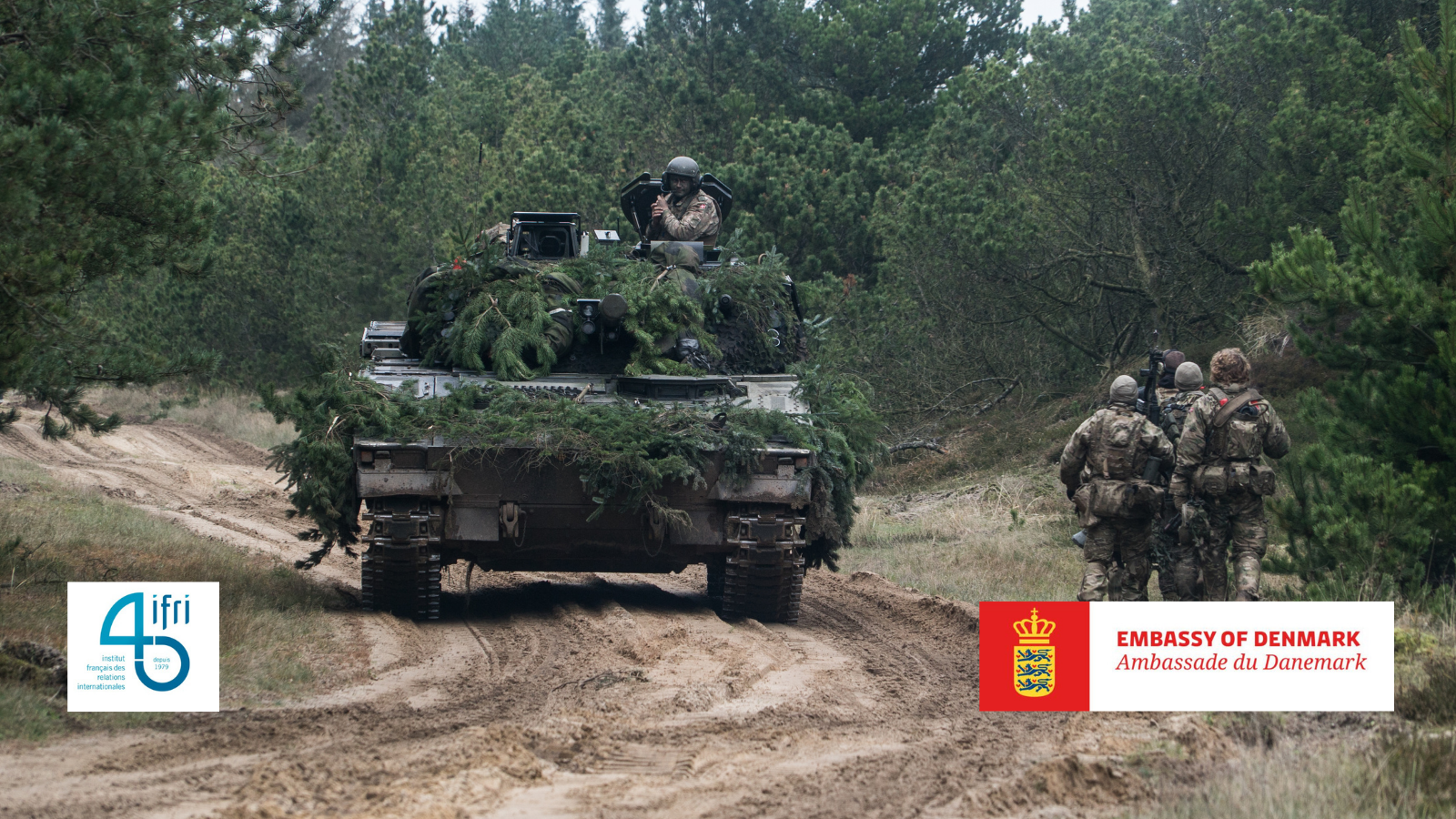
Denmark and France, members of both the EU and NATO, have different characteristics and approaches, but have managed to build a close cooperation in the field of security and defense. This is encapsulated in the Franco-Danish Declaration on European Security and is exemplified by joint actions in key strategic areas, such as Sahel or the Hormuz Strait.
This conference will bring together representatives of the Danish and French foreign ministries, and experts, to get to grips with the challenges ahead and how the two partners work together to ensure the security of Europe.
Introduction :
Michael Starbæk Christensen, Denmark's Ambassador to France
Participants :
- Christian Grønbech-Jensen, Director of Security Policy, Ministry of Foreign Affairs of Denmark
- Philippe Bertoux, Head of Directorate for Strategic Affairs, Security and Disarmament, Ministry of Europe and Foreign Affairs of France
- Peter Viggo Jakobsen, Associate Professor, Institute for Strategy, Royal Danish Defence College
- Alice Pannier, Research Fellow at IFRI’s Security Studies Center, Head of IFRI's Geopolitics of Technology Program
Présidence :
Thomas Gomart, Director of IFRI
This webinar will be held in English on Zoom. Please click on the pencil icon to register.
Related Subjects
Other events
France-Ukraine Forum 2026
More than four and a half years after the start of the full-scale war launched by Russia against Ukraine, the 2026 France-Ukraine Forum will bring together policymakers, experts, academics, and civil society representatives from both countries to discuss three main topics: the formats and conditions for a lasting diplomatic settlement; Ukraine’s Euro-Atlantic integration, encompassing both the EU accession process and closer ties with NATO; and the societal transformations of postwar Ukraine, as well as its prospects for reconstruction.
The EU in a World of Economic Warfare: Trade, Geopolitics, and the Battle for Economic Sovereignty
The international trading system has become a primary theatre of geopolitical competition. Tariffs, sanctions, and technology controls have replaced dialogue as the default instruments of economic relations.
The Road to 27 Electrification Action Plans: Planning and Investing in Europe’s Electric Future
The European Commission’s Electrification Action Plan places the continent on an electric path to structurally reduce dependence on fossil fuel imports and boost the energy transition in industry, transport and buildings.