





Practical information
The European Union has strongly committed to reduce greenhouse gases emissions for the next decades. In this perspective, renewable energy sources will constitute a great support, but natural gas is also expected to play a key role as a transition fuel to decarbonize the economy. In the context of a declining domestic production, diversification of gas supplies has been a key priority for the EU during the last few years. However, there are strong uncertainties on the potential future gas supplies to Europe coming from North African region or countries in the Mediterranean Basin.
The Institut Français des Relations Internationales (IFRI) and the Energy Chair of Orkestra- Basque Institute of Competitiveness, University of Deusto, are organizing a seminar to discuss the “Geopolitics of gas in the South of Europe”. The seminar will be held in English under Chatham House rule.
9.00-9.10: coffee and breakfast
9.10-9.15: Welcome address by Eloy Álvarez Pelegry, Director, Cátedra de Energía Orkestra, Instituto Vasco de Competitividad and Marie-Claire Aoun, Director, Center for Energy, Ifri
9.15-10.15: presentations
- Europe in the global geopolitical landscape of natural gas
Marie-Claire Aoun, Director, Center for Energy, Ifri
- The North African export potential to Europe
Gonzalo Escribano, Director of the Energy Programme, Real Instituto Elcano
- The perspective of the South corridor
Nicolo Sartori, Senior fellow and Coordinator of the Energy Programme, Istituto Affari Internazionali (IAI)
- What perspectives for the East Mediterranean resources
Didier Bougeard, Vice President Country Delegate Algeria, Total
- The views of the European Commission
Christopher Jones, Deputy Director General, DG Energy, European Commission
10.15 to 11. 20: Q&A, discussion
Conference moderated by Eloy Álvarez Pelegry, Director, Cátedra de Energía Orkestra, Instituto Vasco de Competitividad
11.20-11.30: coffee and networking
Other events
COP31 in Antalaya: State of the Global Climate Governance, Issues, Perspectives
COPs have become a year-end marathon to revigorate a world now entering the era of climate overshoot. While Türkiye exhibits the largest coal-fired power generation in OECD Europe, it has embraced the electrification agenda and aims at joining forces with Australia on fostering action and implementation. This is an unusual de facto co-presidency arrangement, but one that could yield promising results. This webinar will take stock of what climate governance has achieved and of the issues still to be negotiated, and explore what impetus this Turkish–Australian partnership could provide.
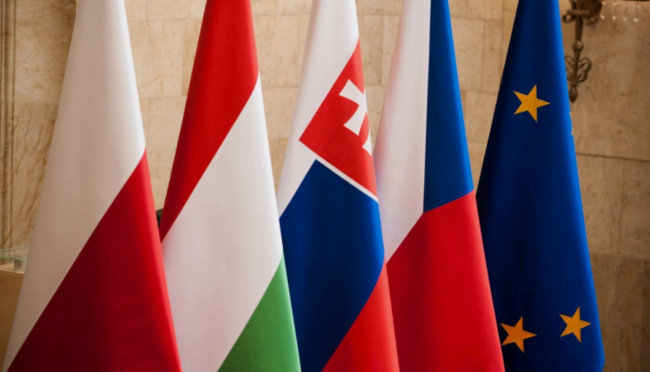
A New Moment for Central Europe? Regional Cooperation in a Time of European Strategic Choices
Recent political developments in Central Europe have revived the debate about the future of regional cooperation and the Visegrád Group. Changes in Hungary, Poland, the Czech Republic and Slovakia, together with Austria’s growing interest in closer cooperation with its neighbours, could create new opportunities for dialogue and coordination around shared priorities.