





Global cybersecurity challenges: Disentangling risks and opportunities in international politics

Practical information
International politics are increasingly intertwined with cyber-related issues. Cyberattacks are more and more frequent and sophisticated; their perpetrators, like their victims, may be governments or private actors.

Cyberconflict is a particularly difficult phenomenon to grasp, given the multiplicity of actors involved, the difficulty of attributing attacks to a specific actor, and the emergence of new forms of “information warfare”. Attempts to regulate cyberspace on a global scale have so far met with only limited results due to fierce international competition among cyber powers. The tremendous multiplication of connected, “smart” devices and the multifaceted expectations towards 5G networks increase the geopolitical risks. Key global powers now assert themselves with regard to the network’s infrastructure (Internet, submarine cables, telecommunications equipment), crossed by huge financial and national security stakes.
Agenda
09:00-09:15 Opening Remarks
Marc Hecker, Director of Publication & Research Fellow, Ifri (Paris)
Mohammed Loulichki, Senior Fellow, Policy Center for the New South (Morocco)
09:15-10:45 Cybersecurity
Cybersecurity has become one of the major stakes for governments, private actors and citizens. National strategies are being either sharpened, either elaborated, mostly blurring the lines between defensive and offensive actions in cyberspace. Proxies contribute to complicate the ‘game’, blending national security rationale with market-related motives. How do these players interact, and to what aim? Are any alliances to be expected in a twofold context of dire transatlantic relations and acute perception of the Chinese ‘threat’?
Chair
Stephanie Hare, Independent researcher and Broadcaster (London)
Speakers
Kevin Signé, Information Security Expert & Managing Partner, LMPS Group (Rabat)
Patryk Pawlak, Executive Officer, EUISS (Brussels)
Isabel Skierka, Research Analyst and Advisor, Digital Society Institute, ESMT (Berlin)
Joan Ali Beri, Lecturer on Cyber Criminality University of Buea and ENAM and an Expert in Cyber Security and Cyber Criminality (Douala)
10:45-11:00 Coffee Break
11:00-12:30 Artificial intelligence and 5G
Breakthrough technologies like artificial intelligence and 5G have clear ‘high politics’ stakes on the global stage. In this session speakers will stress that geopolitical dimension by focusing on key challenges: China’s ambitious strategies in AI and 5G and their implications for the West; the European Union’s answer(s) in these fields, and the global legal challenges posed by the dissemination of these technologies, as well as the impact of AI as a lever of development in Africa.
Chair
Alfredo Valladão, Senior Fellow, Policy Center of the New South (Rabat)
Speakers
Megan Lamberth, Research Assistant, Technology and National Security Program, Center for a New American Security (Washington DC)
Lucien Castex, Secretary-General, Internet Society France Chapter (Paris)
Jan-Peter Kleinhans, Project Director Security in the Internet of Things, Stiftung Neue Verantwortung (Berlin)
Jean-Christophe Noël, Associate Fellow, Security Studies Center, Ifri (Paris)
12:30-14:30 Lunch Break
14:30-15:45 Cyberspace Infrastructure
The infrastructure of the Internet is increasingly challenged by governments eager to assert their own “sovereigntization” over the network (in particular submarine cables, data centers, servers and routers), and decentralized initiatives aimed at bypassing traditional governmental prerogatives, such as cryptocurrencies. Speakers will highlight these multifaceted policies and stress the challenges for international politics.
Chair
Julien Nocetti, Research Fellow, Ifri (Paris)
Speakers
Jean-Luc Vuillemin, Executive VP International Networks, Infrastructures & Services, Orange (Paris)
Camille Morel, PhD Candidate, IRSEM (Paris)
Clément Jeanneau, Cofounder, Blockchain Partner (Paris)
Réda Berrehili, Founder, Ki Foundation (Paris)
15:45-16:00 Coffee Break
16:00-17:30 Comparative cyber approaches
The global cyber policy landscape is increasingly characterized by its splitting up; the United States and China have started a race for technological leadership in the XXIth century while Europe, and Africa, seem to act defensively, being subjected to offensive strategies. How do these policies materialize and interact, and how could the European and African continents assert themselves in the cyber realm?
Chair
Marc Hecker, Director of Publication & Research Fellow, Ifri (Paris)
Speakers
Julien Nocetti, Research Fellow, Ifri (Paris)
Douglas Gichuki, Scholar in Information law and technology based at Strathmore Law school and the University of Cape Town (Cape Town)
Alice Ekman, Head of China Research, Ifri (Paris)
Related Subjects
Other events
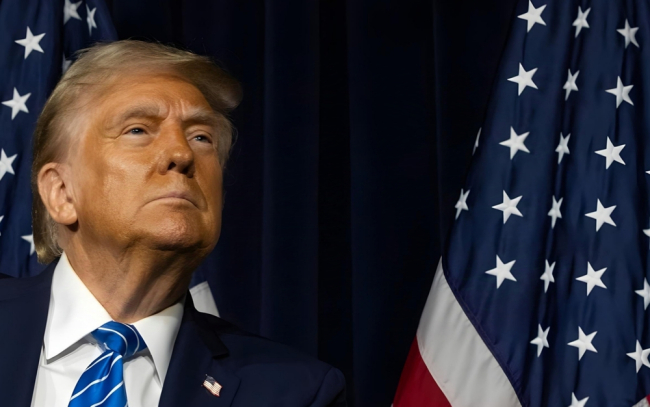
One Month Ahead of the Midterms: Where Is Trump’s America Headed?
The 24th edition of the Ifri Americas Programme Annual Conference will examine the dynamics at play in the United States and their implications for Europe and the transatlantic relationship. will examine the dynamics at play in the United States and their implications for Europe and the transatlantic relationship.
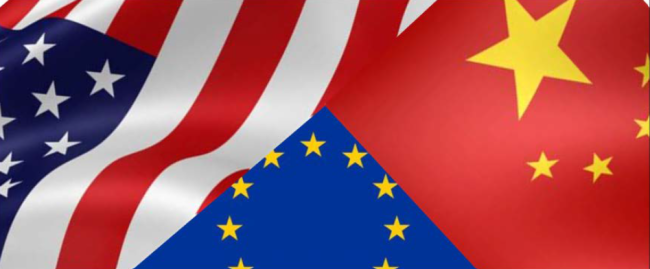
The EU in a World of Economic Warfare: Trade, Geopolitics, and the Battle for Economic Sovereignty
The international trading system has become a primary theatre of geopolitical competition. Tariffs, sanctions, and technology controls have replaced dialogue as the default instruments of economic relations.
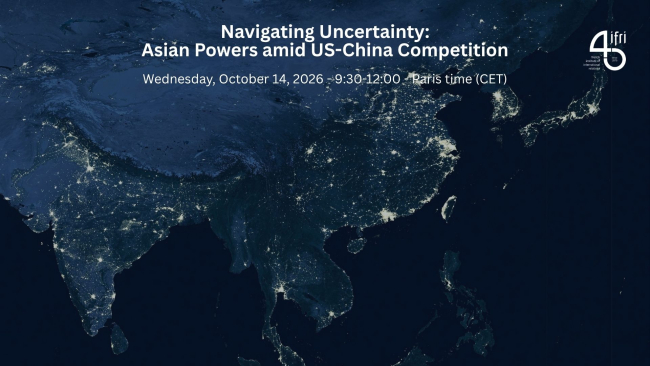
Navigating Uncertainty: Asian Powers amid US-China Competition
As relations between China and the United States oscillate between hardening competition and strategic stability, regional powers in Asia must adapt to greater uncertainty. The increasing weaponization of trade and economic dependencies, the rise of disruptive technologies, and the ever-growing risk of armed conflict are among the destabilizing factors shaping the region’s trajectory.