




Hungary, European Democracy and the Rule of Law in the Age of Geopolitics

Practical information
Related centers and programs
The outbreak of Russia’s war in Ukraine, with its international repercussions, has shaped new geopolitical realities and affected the continent in profound ways.
It has put the unity of the European Union to the test and bolstered Member states’ security agenda in all dimensions. But the war in Ukraine is also, and perhaps above all, an ideological front in the global struggle for democracy.
The world has indeed recorded a constant erosion of liberal democracy and worrisome surge of authoritarianism in the past ten years, including in Europe, where democratic values and the rule of law constitute the fundamental pillar upon which peace and cooperation have been built. With this ongoing war, the European Union is stepping in a world in which its role, its interests and ideals will have to be defended. How should the EU balance the need to uphold its fundamental principles with the will to act as a geopolitical actor? How should it square the circle of security and democracy? How can it advance the rule of law more effectively, including in those Member states that stand out for non-complying with its most essential norms? How can it better promote progressive values and democratic standards?
This public discussion, organized by the Austro-French Centre for Rapprochement in Europe (Vienna), the French Institute of International Relations (Paris), Political Capital Institute (Budapest), and the Central European University (Budapest) will gather experts from France, Hungary, and Austria.
Programme
6:00 pm :00 Welcome
Dietmar Schweisgut, Secretary General of the Austro-French Centre for Rapprochement in Europe
6:05 pm : Keynote speech
Peter Balazs, Emeritus Professor at the Central European University
6:20 pm Discussion
Jacques Rupnik, Research Professor at CERI-Sciences Po, Paris
Ursula Plassnik, former ambassador and Austrian Minister of Europe and Foreign Affairs, Vienna
Zsuzsanna Szelényi, Visiting fellow at the CEU Democracy Institute, former Member of Parliament, Hungary
Péter Krekó, Director of Political Capital Institute, Hungary
Moderation: Paul Lendvai, Head of European Studio (ORF), columnist, DerStandard, and author
7:45 pm End of the discussion
REGISTRATIONS ARE MANAGED BY THE AUSTRO-FRENCH CENTRE FOR RAPPROCHEMENT IN EUROPE IN VIENNA
https://form.jotform.com/231034315302337
Registered participants will receive the Livestream link before the event

Related Subjects
Other events
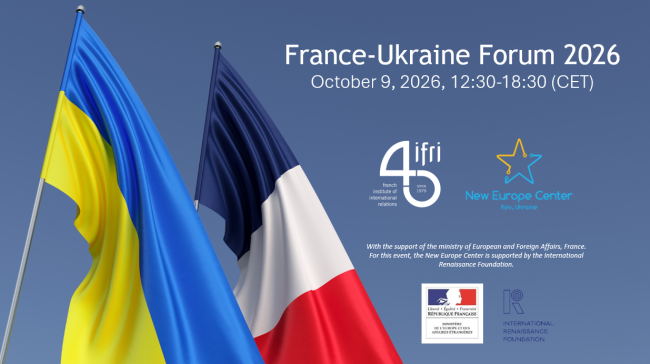
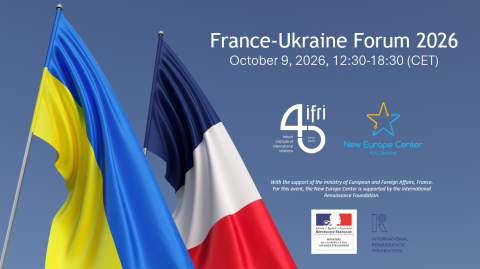
France-Ukraine Forum 2026
More than four and a half years after the start of the full-scale war launched by Russia against Ukraine, the 2026 France-Ukraine Forum will bring together policymakers, experts, academics, and civil society representatives from both countries to discuss three main topics: the formats and conditions for a lasting diplomatic settlement; Ukraine’s Euro-Atlantic integration, encompassing both the EU accession process and closer ties with NATO; and the societal transformations of postwar Ukraine, as well as its prospects for reconstruction.
The EU in a World of Economic Warfare: Trade, Geopolitics, and the Battle for Economic Sovereignty
The international trading system has become a primary theatre of geopolitical competition. Tariffs, sanctions, and technology controls have replaced dialogue as the default instruments of economic relations.
The Road to 27 Electrification Action Plans: Planning and Investing in Europe’s Electric Future
The European Commission’s Electrification Action Plan places the continent on an electric path to structurally reduce dependence on fossil fuel imports and boost the energy transition in industry, transport and buildings.