

The economic consequences of Tianjin’s explosions
Five days after Tianjin’s impressive explosions, Toyota announced a three-day stop in the production of its city’s sites. The Japanese company is far from being the only one concerned.
The region, also known as Beijing’s maritime gateway, is one of the most dynamic in the country. No less than 540 million tones of merchandise transit through its harbor every year, making it the fourth biggest in the world.
“Tianjin is one of the spearheads of the Chinese economy”, summarizes Claude Meyer. “This catastrophe concerns about 300 multinationals among the world’s most important ones”. What will be the impact of these explosions on the Chinese economy?

"The Yuan isn’t ready to replace the Dollar"
China’s ambition is to become a great financial power. But the necessary reform of its financial system and its will to act progressively could mean that it will be a long time before its exchange rate system is liberalized. Can the Yuan realistically become an international currency?
Devaluation of the Yuan: Claude Meyer answers Yves Bourdillon
Is the sudden devaluation of the Yuan a sign of some form of panic from Beijing following the slowed growth of the Chinese economy?
Does this decision create deflationary risks for the global economy?
What prospects for the Yuan’s international status?

Understanding China’s Financial Expansion
In this interview, Claude Meyer underlines the three major vulnerabilities of the Chinese economy, and describes the investments China has made since the early 2000’s to address them.

L'empire de la classe du milieu
Apparue en même temps que le miracle économique, la population des couches moyennes incarne un pays en pleine mutation : confort matériel, meilleure éducation, ouverture sur le monde... mais aussi rupture avec les valeurs traditionnelles.

Sécheresse en Corée du Nord : intox ou catastrophe réelle ?
Le régime de Pyongyang réclame de l'aide, mais les observateurs internationaux s'interrogent sur l'ampleur du phénomène.
Chine/Corée du Sud/Japon: un passé qui ne passe pas
Cet été marque le 70ème anniversaire de la fin de la deuxième guerre mondiale avec le largage des bombes atomiques sur Hiroshima et Nagasaki en Août 1945. Alors que les relations entre la Chine et la Corée du Sud sont au beau fixe, Pékin et Séoul entretiennent des rapports tendus avec Tokyo.

Le changement politique tente peu la classe moyenne chinoise
Michel de Grandi présente les conclusions de l'étude d'Alice Ekman sur les classes moyennes chinoises.
Why Putin Is Squaring Off With Tokyo Over Some Pacific Rocks
Disputed rocks and Beijing’s bad behavior in the South China Sea dominate the headlines these days. But there’s another showdown over disputed islands in the Pacific that is increasingly casting a shadow over Asia-Pacific security: a bitter fight between Japan and Russia over the Kurils...
China’s Emerging Middle Class: What Political Impact?
This research paper argues that, contrary to what is often believed, most of the Chinese middle class appears to be politically conservative, and may not challenge the current political order as much as is expected, for several reasons; first of all, because of its strong connection to the Communist Party of China and the civil service in broader terms. Nonetheless, Chinese middle households are increasingly voicing their concern about a set of issues directly affecting them, such as pollution, either in the street or online.
How Asia is transforming geopolitical situation and it is most affecting Taiwan today? Interview with Francis Yi-hua Kan
Francis Yi-hua Kan is an Associate Research Fellow at the Institute of International Relations, National Chengchi University.

What is China's vision in shaping cooperative frameworks? Interview with Richard W.X. Hu
Richard W.X. Hu, Professor in the Department of Politics and Public Administration at the University of Hong Kong, analyzed China's role in the regional economic integration process.
- What is China’s vision in shaping cooperative frameworks?
- What is China’s rationale behind setting up the Asian Infrastructure Investment Bank?
- What is your prognosis for the future of a China-Japan-Korea cooperative framework?
Click here to read the program of the conference.
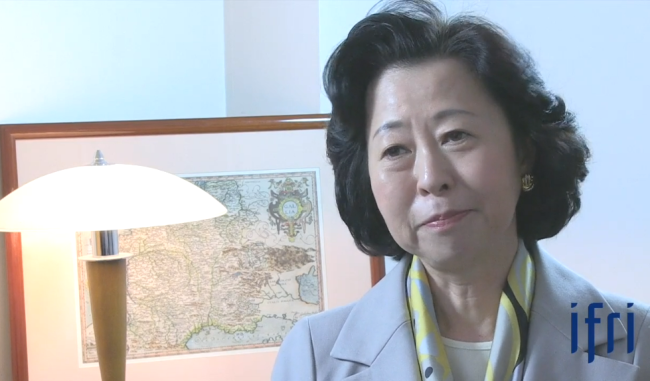
(Dis)integrating Asia? - Interview with Yukiko Fukagawa
Yukiko Fukagawa, Professor at the Graduate School of Economics, Waseda University, explained Japan's role in the regional integration process.

(Dis)integrating Asia? - Interview with GVC Naidu
GVC Naidu is a Professor of International Relations at the Jawaharlal Nehru University in New Delhi.
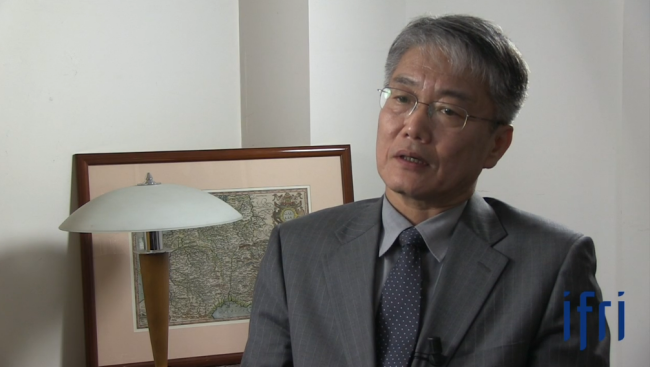
(Dis)integrating Asia? - Interview with Wook Chae
Wook Chae is a professor at the Graduate School of Pan-Pacific International Studies of Kyung Hee University and the former President (2008-2013) of the Korea Institute for International Economic Policy (KIEP).

(Dis)integrating Asia? - Interview with Euan Graham
Euan Graham, Senior Fellow in the Maritime Security Programme at Rajaratnam School of International Studies (RSIS), explained Australia's position vis-à-vis regional economic integration in Asia.

How is the geopolitical transformation of asia most affecting the United States? Interview with Christopher Johnso
Christopher Johnson, Senior Advisor and Freeman Chair in China Studies, Center for Strategic and International Studies (CSIS), and Managing Director for China, Bower Group Asia, expressed his views on the following questions:
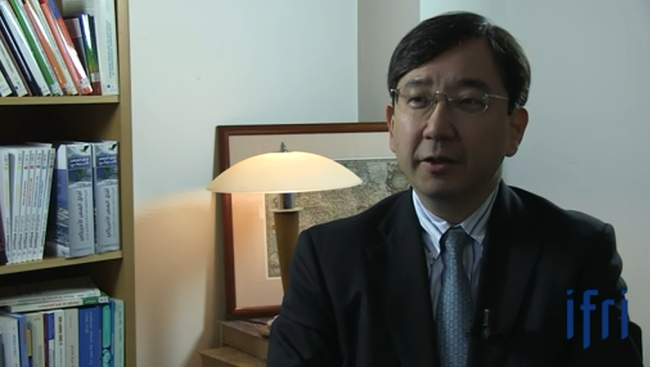
(Dis)integrating Asia? Interview with Toshiro Iijima
Toshiro Iijima, Deputy Director-General of the Japan Institute of International Affairs (JIIA), expressed his views on the following questions:
- How is the geopolitical transformation of Asie most affecting Japan?
- What is Japan's vision on shaping regional frameworks?
- Which regional entities should be the primary drivers in shaping regional frameworks?
Click here to read the program of the conference.
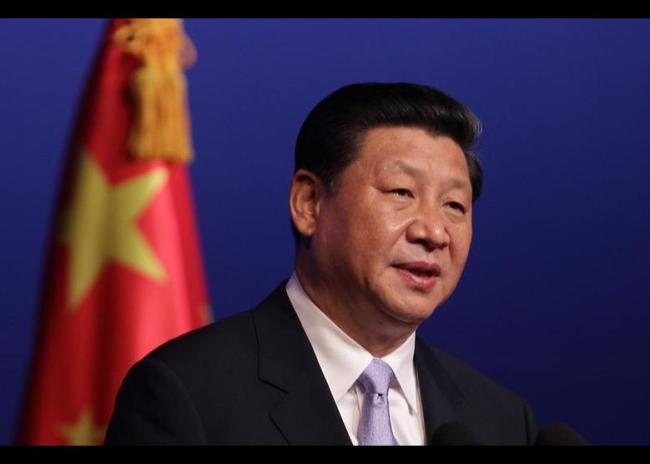
China in Asia: What is behind the new silk roads?
The Asia-Pacific region is now more than ever a priority for China’s foreign policy. The combined economic, energy and security interests concentrated in the region are of key importance for Beijing.
Ifri, a foundation recognized as being of public utility, relies largely on private donors – companies and individuals – to guarantee its sustainability and intellectual independence. Through their funding, donors help maintain the Institute's position among the world's leading think tanks. By benefiting from an internationally recognized network and expertise, donors refine their understanding of geopolitical risk and its consequences on global politics and the economy. In 2026, Ifri partners with over 90 French and international companies and organizations.