




Najib Razak’s Malaysia: A solid economy on a foundation of political tension
Najib Razak began his term as Prime Minister of Malaysia in 2009 amidst a severe global economic crisis, concern over spiraling public debt and fears the country would fall into the ominous “middle income trap”.


China Gets French Wine in Exchange for Chemicals on First Run by ‘New Silk Road’ Train
The first freight train from Wuhan, in China, to Lyon, in France, reached its destination Thursday, carrying a cargo of mechanical, electrical, and chemical products — goods that are generally transported between the two countries by ship.
Determinants of Japan’s ODA Allocation in Africa
The debate on emerging donors raises a question whether traditional donors really follow their own ODA (Official Development Assistance) policies or not. This paper addresses the question by investigating Japan’s adherence to its own ODA policies.

Tokyo face aux désastres naturels : leçons, enjeux et défis
While Tokyo prepares to welcome the 2020 Summer Olympic Games, the likelihood that a massive earthquake will occur in the capital city within the next thirty years is estimated at 70 %. This fact alone reflects the challenges that Japan must face in managing the risk of natural disasters.
Sustainable Electrification for Asia and Africa
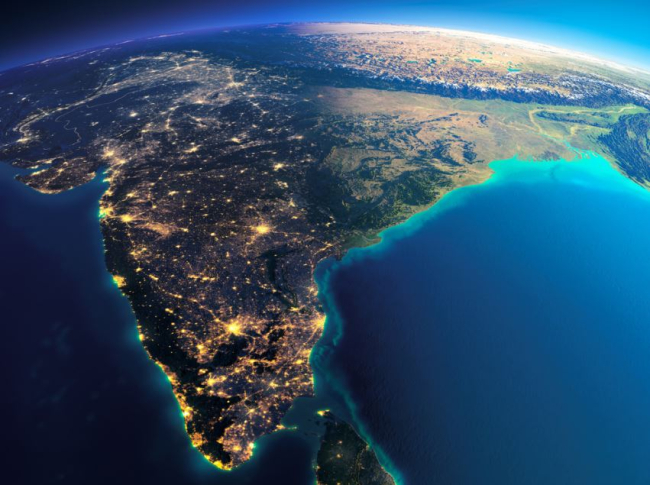
Complementary solutions to national grid extensions let hope for significant improvements in the field of energy access, consistent with current economic and environmental challenges. This Note explores the regulatory and economic prerequisites that must be enhanced in order to support the emergence of mini-grid and off-grid technologies.
Migrations in Africa: Another Look
Migration in Africa is a major concern, but largely for Africans alone. To adequately study the question of international migration, one must look beyond Europe’s current predicament. Through its dossier on “Migrations in Africa: Another Look”, this issue of Politique étrangère examines a number of factors that determine migration movements, how states in Africa attempt to manage the significant problem of internal migration, the difficulties of integrating migrant workers into their host societies, and the false pretenses of Euro-African agreements on readmission.
Japan and its Alliance with the US. Structure, Dynamics, Evolution to 2030
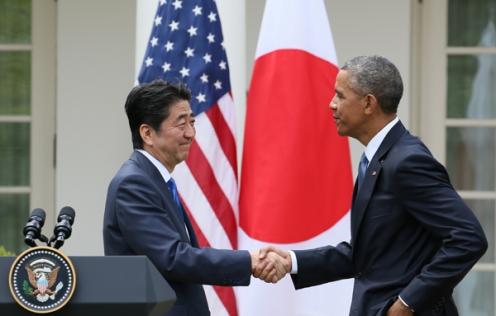
China’s rise, US rebalancing in Asia, historic defense reforms in Japan, the adoption of new Guidelines for bilateral cooperation: the Japan-US alliance has reached a turning point in its history.

Chinese missile crisis? Escalation over disputed China Sea islands
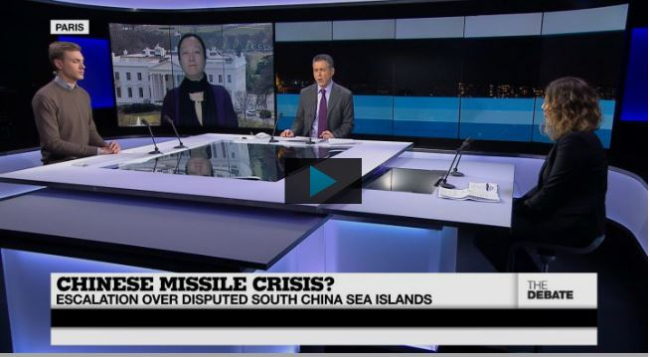
Reports have emerged that China has set up a missile launch base on Woody Island, part of an archipelago disputed with Taiwan and Vietnam. This comes just as the US President was wrapping up an ASEAN summit to strengthen ties after the recent Trans-Pacific Partnership trade deal. How will this shape policy not only among Washington's traditional allies in the region but also in countries like Vietnam? Once again, a war-weary US is being called upon and has to look at the broader picture.

Japan's Challenges in Public Diplomacy, An American Vision
Japan’s public diplomacy (PD) profile rests almost exclusively on the promotion of its cultural soft power. Today, in the complex geopolitical setting of Asia, in which national rivalries are reviving competing wartime history narratives and territorial disputes, this approach is no longer sufficient to advance Japan’s own national interests and gain favorable opinion abroad. Under the Prime Minister Abe, Japan has begun to transform and upgrade its public diplomacy. However, the country is still facing a number of challenges.
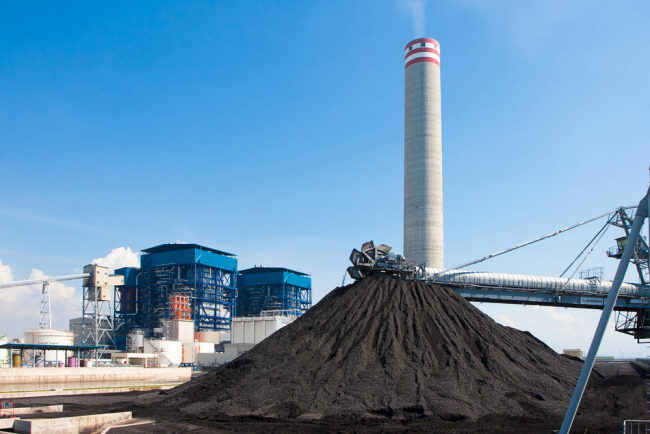
COP21 : Haro sur le charbon
Despite a landmark agreement on climate in December 2015, reducing the share of coal in the world energy mix will remain extremely difficult. This paper analyses five large consumers choices in terms of coal and clean coal technologies.

On the Campaign Trail in Taiwan
Taiwan remains a hyperactive democracy, where political rallies and gatherings of various types are being organized in all directions as the elections draw near. This photo essay shows photos mainly taken during political rallies in Taipei in December 2015, two to three weeks before the presidential and legislative elections on January 16, 2016.


China’s Difficult, but Necessary Bet on Climate
While China may be setting the bar high for itself in it's commitments for the COP21 climate negotiations this December, these ultimately serve to foster necessary progress on environmental issues and economic reforms at home.


Washington and Beijing, between competition and interdependence
During his state visit in the United States, the Chinese President Xi Jinping called for a new model of relations between the two countries. In Alice Ekman’s opinion, the notion of a “new type of major power relations” invoked by China implies the establishment of a relationship that would put the country on an equal footing with the United States.
India’s Approach to Climate Negotiations: From the South to the North?
India’s approach to climate negotiations results from the interplay of two distinct logics, an external one and an internal one. While the external logic is derived from quantitative attributes at the aggregate level, such as the overall size of India’s economy, the internal logic is derived from qualitative attributes at the individual level such as per person incomes and productivity. For three decades, from the early 1970s to the early 2000s, India’s internal and external logics overlapped.

El desfile militar pone a prueba las tensas relaciones entre China y Japón
Los actos que esta semana organiza China para conmemorar el 70 aniversario de su victoria ante Japón, coronados por un desfile militar en la plaza de Tiananmen, plantean un nuevo desafío a los lazos entre Pekín y Tokio, ya dañados en los últimos años por desavenencias históricas y territoriales.

The defense posture of China
Alice Ekman comments the defense posture of China as Beijing is holding a large military parade on September 3rd.
The “One Belt, One Road” – Strategic Implications of a Chinese Infrastructure Network in Eurasia
China’s “One Belt, One Road” project, also known as the “New Silk Road”, aims to create a vast infrastructure network connecting three continents, with China playing the central role.

Shanghai’s stock market woes hit European financial centers
Claude Meyer answers Jean-Baptiste Boursier’s questions in “le Grand Angle” on BFMTV.

China’s growth declines, stock markets fall: what consequences should we be worried about?
All the European stock exchanges declined on Monday, as concerned investors looked with pessimism at China’s slowing growth. Paris lost 5.35 %. Claude Meyer discusses what consequences can be expected.
Ifri, a foundation recognized as being of public utility, relies largely on private donors – companies and individuals – to guarantee its sustainability and intellectual independence. Through their funding, donors help maintain the Institute's position among the world's leading think tanks. By benefiting from an internationally recognized network and expertise, donors refine their understanding of geopolitical risk and its consequences on global politics and the economy. In 2026, Ifri partners with over 90 French and international companies and organizations.
