




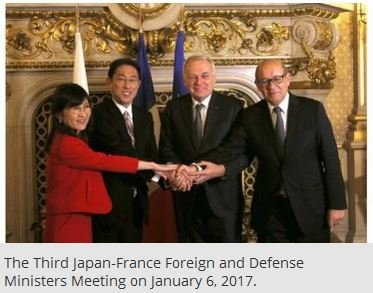
Japan and France: Slowly but Surely Moving Forward on Security Cooperation
Despite being geographically distant, France and Japan share a number of converging interests.
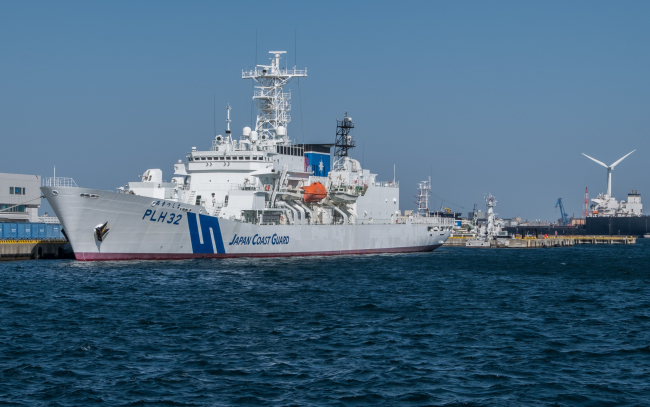
Japan’s Coast Guard and Maritime Self-Defense Force in the East China Sea: Can a Black-and-White System Adapt to a Gray-Zone Reality?
This essay examines the need for growing coordination between the Japan Coast Guard (JCG) and the Japan Maritime Self-Defense Force (JMSDF) to better cope with gray-zone situations.


What Does China's 'New Asian Security Concept' Mean for the US?
A closer look at China’s vision for remaking Asian security, and what the United States can do about it. In October, China hosted the seventh Xiangshan Forum in Beijing, during which Vice Foreign Minister Liu Zhenmin outlined a framework for a regional security architecture to meet the emerging challenges and opportunities of the 21st century.
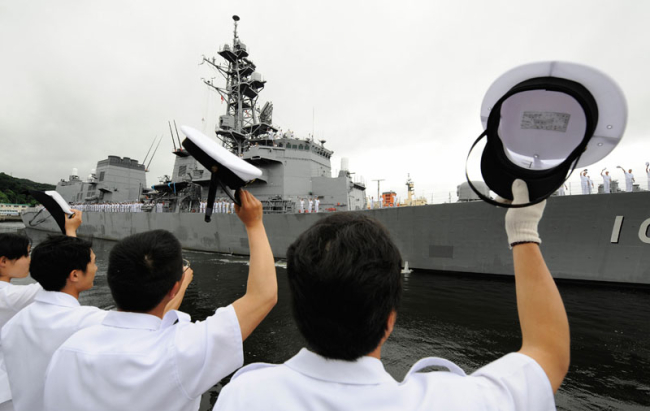
Japan’s Coast Guard and Maritime Self-Defense Force: Cooperation among Siblings
Coping with “gray zone” situations has in recent years become the core security challenge for Japan. Since September 2012, Beijing has been challenging Japan’s sovereign control of the Senkaku Islands by regularly sending law-enforcement vessels into Japanese territorial waters and contiguous zones.
China and Global Economic Order: A discreet yet undeniable contestation
Having long remained a passive presence within multilateral economic organisations, China recently changed its stance when the United States was faced with a major financial crisis.
India’s Act East policy: strategic implications for the Indian Ocean
Since the Modi government came to power in June 2014, it has invested diplomatic capital in announcing the transformation of India’s ‘Look East’ policy into a new ‘Act East’ policy.
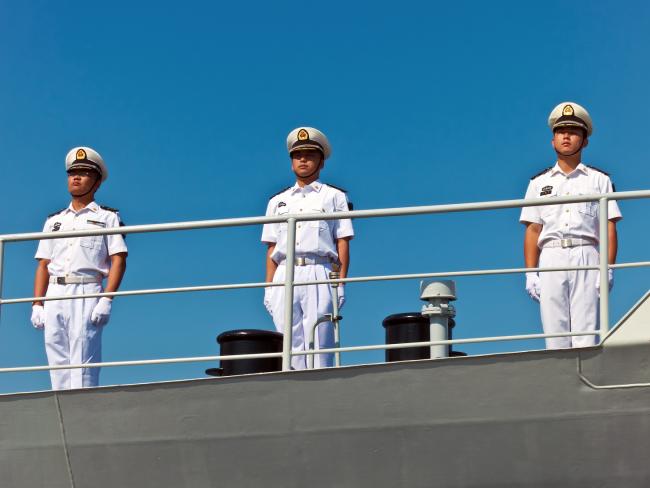
China’s Military Deployments in the Gulf of Aden: Anti-Piracy and Beyond
The reason for the deployment of a People’s Liberation Army Navy (PLAN) “anti-piracy task force” in the Gulf of Aden (GoA), a key area for the Chinese economy, was obvious in 2008. However, as the pirate activity has faded away since 2012, the objectives of the PLAN in GoA became unclear.
Japan's New Dual-Use Space Policy: The Long Road to the 21st Century
Japan’s latest space policy is designed to support a more proactive US-Japan alliance role in containing China, and robustly defend Japan against North Korean ballistic missile threats.
Asia: What impact of international politics and grand strategies on regional stability?
As the regional balance of power in East Asia continues to evolve and tensions in a number of hot spots - from the East and South China Seas to the Korean Peninsula and the Taiwan Strait - either simmer or intensify, the future of regional stability is increasingly uncertain.

Challenge of Making Smart Cities in India
The Indian government has launched the Smart Cities Mission in June 2015 with the aim of providing a better quality of life to the citizens in 100 cities of the country. This paper describes the main features of the Mission and attempts to explain the challenges in the way forward.

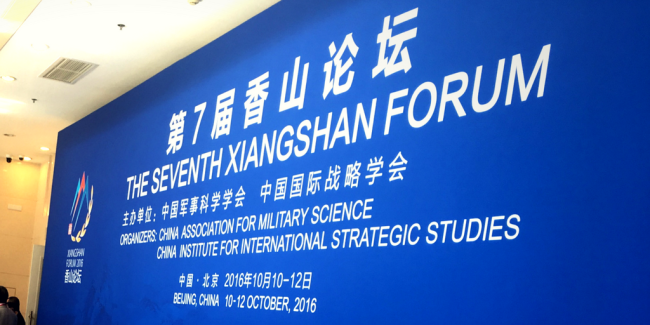
At the 2016 Xiangshan Forum, China Outlines a Vision for Regional Security Governance
Beijing has a plan for a new regional security architecture, and it’s not based around alliances.

RAMSES 2017. A Fragmented World
RAMSES 2017. A Fragmented World, prepared by IFRI’s research team and selected external experts, offers an in-depth and up to date analysis of global geopolitics.
This 35th edition focuses on three key issues: the spread of jihadist terrorism, the Middle East’s disintegration, and doubts about the European project. With the world’s balance of power and economic foundations shifting, the next few months are likely to be decisive for our future. The growing diversity and complexity of our world is startling, which is why it is important to rethink our analyses and means of action.
South China Sea and the Law of the Sea: Where is China’s Power Heading?
On Tuesday July 12th, after three years of deliberations, the Permanent Court of Arbitration finally delivered its verdict on the conflict opposing the Philippines and China over status of the Spratly Islands in the South China Sea. The judgment is historic, as it goes far beyond the expectations of the involved parties and observers.
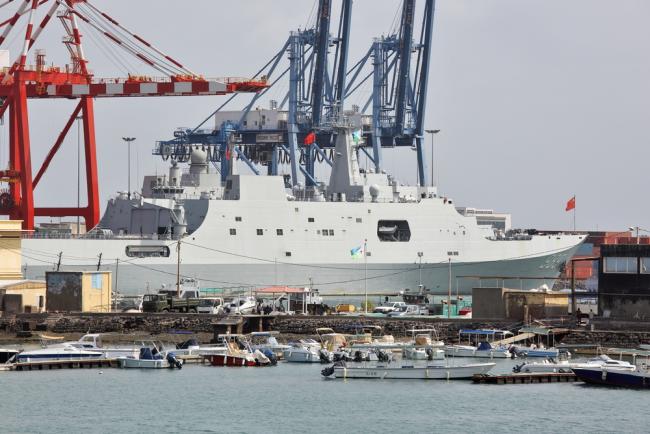
China in Djibouti: A military base with Chinese characteristics?
Last February, the Chinese Defense Ministry confirmed the launch of the construction of a Chinese military base in Djibouti. For a long time, Chinese officials had insisted that China would never build military bases or to station troops abroad.

The Role of Sub-National Actors in Climate Change Policy. The Case of Tokyo
Tokyo is known as a pioneer throughout the history of Japan’s environmental policy, often being compared to California in the United States or Paris in France. Following the global trend of growing local initiatives tackling climate change, Tokyo introduced a cap-and-trade scheme in 2010 ahead of a national implementation.
Russia's Asia Strategy: Bolstering the Eagle's Eastern Wing
Among Russia’s strategic priorities, Asia traditionally played a secondary role compared to the West. In the mid-1990s, then Foreign Minister Yevgeny Primakov initiated a rapprochement with China and India. Then, in 2014, deteriorating relations between Russia and the West prompted Moscow to begin its “great pivot to the East”.
Russia’s Asia Strategy: Bolstering the Eagle’s Eastern Wing
Among Russia’s strategic priorities, Asia traditionally played a secondary role compared to the West. In the mid-1990s, then Foreign Minister Yevgeny Primakov initiated a rapprochement with China and India. Then, in 2014, deteriorating relations between Russia and the West prompted Moscow to begin its “great pivot to the East”.
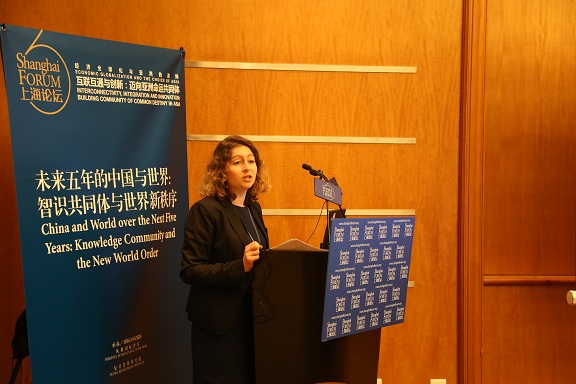
The International Development of Chinese Think Tanks
Alice Ekman gave her opinion on the international development of Chinese think tanks at a roundtable in Shanghai, organized by the Korea Foundation for Advanced Studies, Fudan University and Phoenix International Think Tank.
China’s rise: the view from South Korea
Monitoring China-South Korea relations is key for the EU, as both countries have been designated strategic partners. Moreover, the Union has important economic ties to both, and signed a free trade agreement (FTA) with the Republic of Korea (ROK) in 2011.

Beijing tightens control of foreign NGOs
The Chinese government recently passed a law to bring foreign NGOs under stricter control.
Ifri, a foundation recognized as being of public utility, relies largely on private donors – companies and individuals – to guarantee its sustainability and intellectual independence. Through their funding, donors help maintain the Institute's position among the world's leading think tanks. By benefiting from an internationally recognized network and expertise, donors refine their understanding of geopolitical risk and its consequences on global politics and the economy. In 2026, Ifri partners with over 90 French and international companies and organizations.
