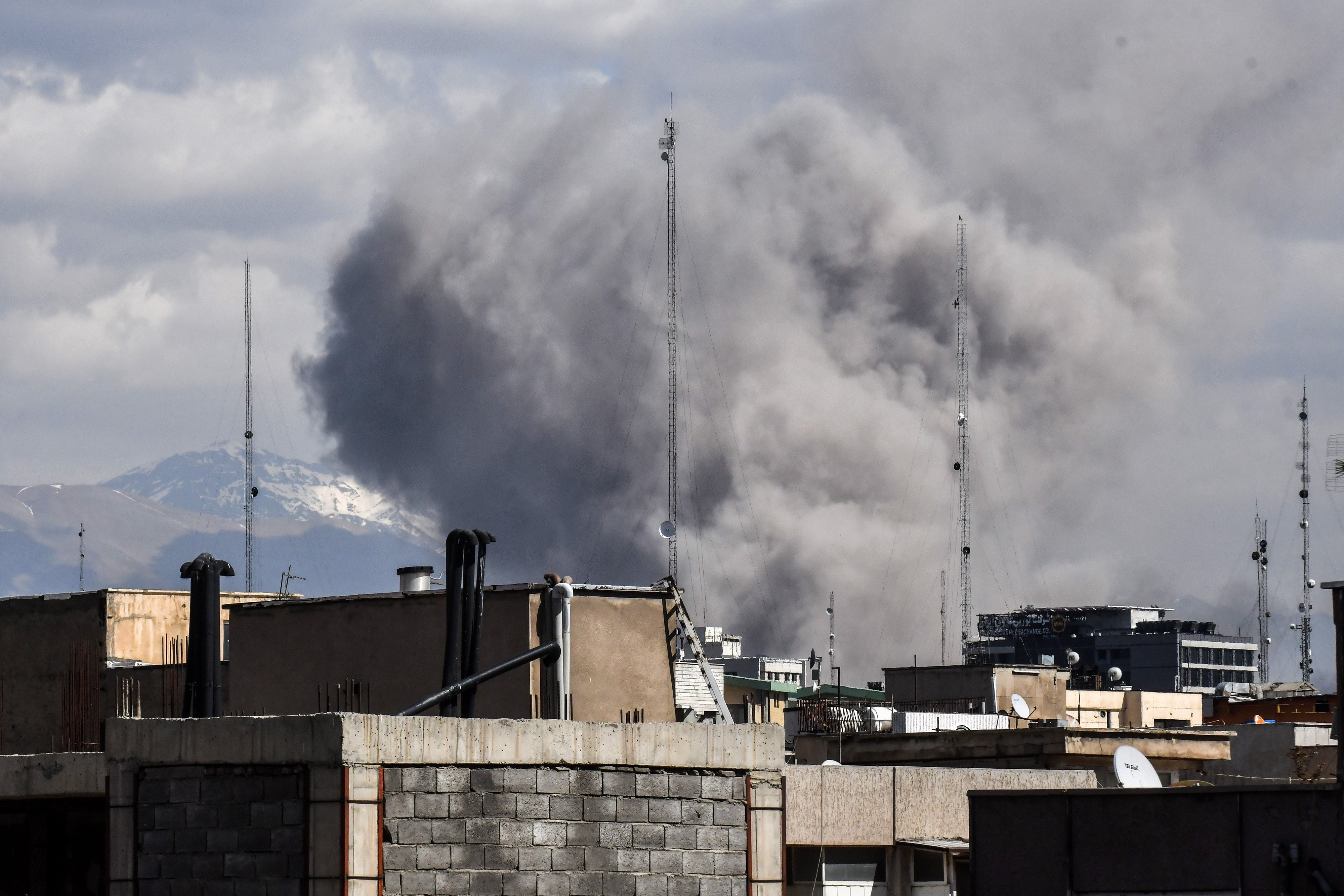



Iran
The joint military operations led by the United States and Israel of February 28, 2026 resulted in the death of Iranian Supreme Leader Ali Khamenei and triggered massive reprisals across the Gulf. Ifri analyzes the strategic implications of this shift: while the regime is faltering, lasting change would require ground support and popular mobilization backed by part of the security apparatus. Between military escalation, the threat of blocking the Strait of Hormuz, and international terrorist risk, the Middle East faces unprecedented instability that threatens the balance of the entire Arabian Peninsula and the Near East.
Related Subjects
A New Era of Oil Abundance?
From 2014 to 2015, the price of oil fell.
RAMSES 2016. Climat : une nouvelle chance ?
Written by Ifri's research team and its network of associates, the new RAMSES 2016 analyses geopolitics on a worldwide scale. The major theme of this 34th edition is Climate: A new chance? In addition, RAMSES 2016 tackles the insertion of Africa in globalization and the uncertainties of democracy today in post-industrial societies, but also in the South.
USA and the negociations with Iran 2/2 : U.S. views on the true nature of the Iranian regime
Robert Litwak from the Wilson Center joined Ifri on April 22, 2015 for a seminar on the U.S.-Iranian nuclear negotiations. In this video, he analyzes the different views on Iran and its regime.
Robert Litwak is the Vice President for Scholars and Director of International Security Studies at the Woodrow Wilson International Center for Scholars.
USA and the negociations with Iran 1/2 : How does each side understand nuclear diplomacy?
Robert Litwak is the Vice President for Scholars and Director of International Security Studies at the Woodrow Wilson International Center for Scholars.
Syria: Ankara versus Tehran?
Turkish leaders would like to turn their country into the leader of the Middle East. However, they are in competition with another of the region’s key players: Iran.
John Kerry in the Middle East: from Weak to Hopeful Diplomacy?
In 2013, Barak Obama and John Kerry managed, not without difficulty, to steer Israeli and Palestinian leaders back to peace negotiations. At the same time, Washington re-established dialogue with Tehran in talks aimed at finding a solution to the Iranian nuclear problem.
Command and Control in a Nuclear-Armed Iran
In the long standoff regarding its nuclear ambition, Iran has cultivated ambiguity and been loath to reliably assure the international community of its ultimate intentions, complicating Western efforts to understand, let alone constrain, Tehran’s endeavors.
Iran's Presidential Election: a Distorted Western Perspective?
The election of a religious leader at the presidency of the Islamic Republic of Iran contradicts many of the analyses of western media and experts on Iranian politics.
Reading Rouhani Right
Poll numbers are the life blood of politics these days. Anything expressed in digits has a claim to truth that assertions without digits cannot make. They inspire confidence - especially among those aspiring to public office - that they actually understand what public sentiment is. If you lived between nuclear-armed Israel and Pakistan and had as many world class enemies as Iran has accumulated - would you give up your pursuit of a nuclear weapon?
Support independent French research
Ifri, a foundation recognized as being of public utility, relies largely on private donors – companies and individuals – to guarantee its sustainability and intellectual independence. Through their funding, donors help maintain the Institute's position among the world's leading think tanks. By benefiting from an internationally recognized network and expertise, donors refine their understanding of geopolitical risk and its consequences on global politics and the economy. In 2026, Ifri partners with over 90 French and international companies and organizations.