





Iraq after Daesh
Going beyond the numerous claims of rupture, is Trump overturning the international order and the place occupied in it by the United States?
La guerre nucléaire limitée : un renouveau stratégique américain
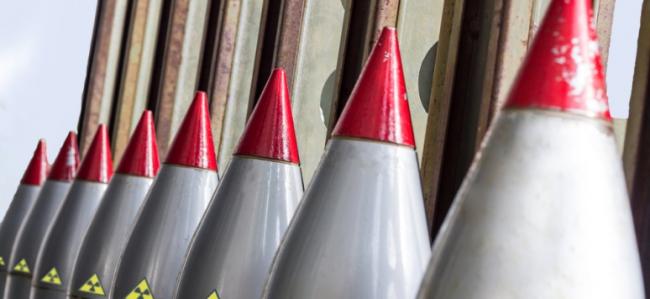
Over the past few years, a debate on possible scenarios of limited nuclear weapons use has surfaced again in the United States. Russian nuclear saber-rattling since 2014 and the growing tensions in the Korean peninsula have led Washington to reassess its own ability to deter, or respond to, such a limited use of nuclear weapons.
U.S. Visions of China: From Henry Kissinger to Donald Trump
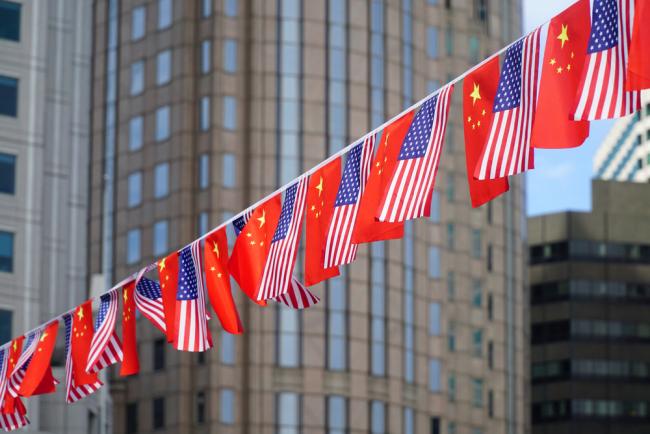
Chinese power continues to grow both militarily and economically: its disputed territorial gains in the South China Sea are complemented by its extensive investment initiative in the New Silk Roads through the Eurasian continent.
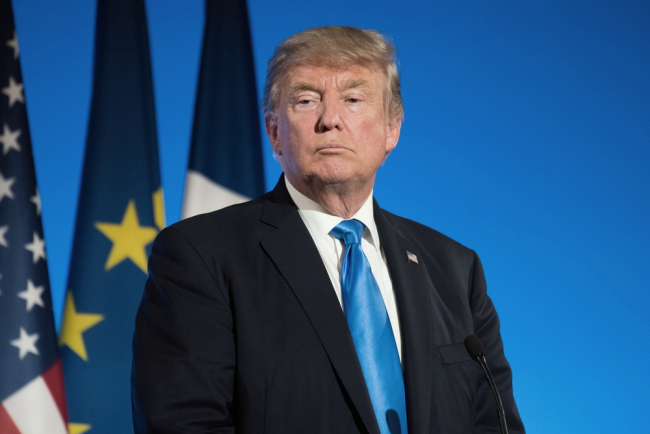
Trump, un an après. Un monde à l'état de nature ?
In the week following Trump’s election, Ifri published a study to identify the likely changes in U.S. foreign policy. From the outset, this election appeared as a change in the U.S.’ trajectory, with consequences on the power relations and functioning of the international system.
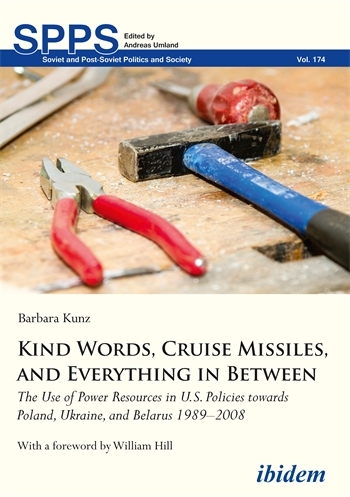
Kind Words, Cruise Missiles, and Everything in Between. The Use of Power Resources in U.S. Policies towards Poland, Ukraine, and Belarus 1989–2008
According to realist premises, the United States has an interest in remaining the world's only superpower, thus creating the need to manage and maintain unipolarity. The pursuit of this grand strategy, however, required the U.S. to adapt its various strategies to individual states. Poland, Ukraine, and Belarus have played very different roles.
Where is the U.S. nuclear arsenal headed?
An interview with Jon WOLFSTHAL, nonresident scholar, Nuclear Policy Program, Carnegie Endowment for International Peace

Trump : enough is enough?
The provocative, contemptuous and threatening style of the American president even irritate Republicans. Facing his overflows at the national and international levels, what mechanisms could limit the potential damages ?
Corée du Sud, la septième armée du monde ?
As Democratic Republic of Korea’s (DPRK) continuous development of non-conventional weapons and challenges of the international community reaches a new level, Republic of Korea (ROK) appears more than ever as the frontline state on which most of North-East Asia security depends.
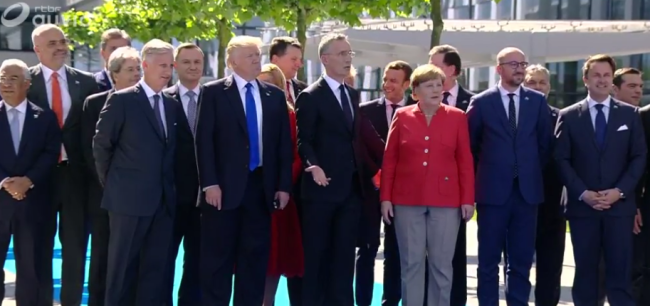
New Appointments Give Clues on Trump's European Policy: Wess Mitchell nominated for Assistant Secretary of State for European and Eurasian Affairs
Benjamin Haddad, research fellow at Hudson Institute in Washington D.C., reviews Wess Mitchell’s nomination for Assistant Secretary of State for European and Eurasian affairs. According to Haddad, as U.S. President Donald Trump struggles to appoint leaders to his administration, Wess Mitchell, who awaits the U.S. Senate’s confirmation, could be a wise choice.
The Resurgence of Shale Oil
This study addresses the resilience factors of the American production of light tight oil, in particular regarding the evolution of the financial model, and the regulatory changes with the authorisation of exports for crude oil. The paper also evaluates the development perspectives of the production on the medium and long term.
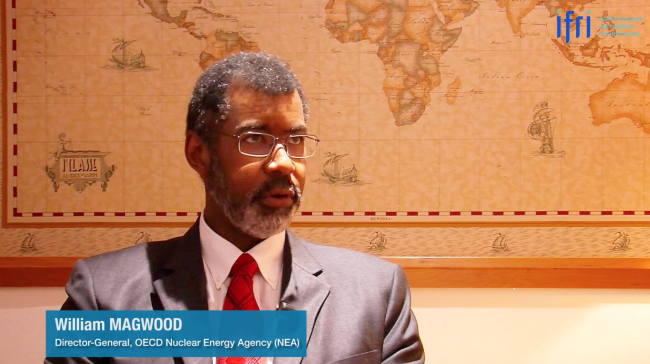
Nuclear Energy in the United States: an Appraisal
An interview with William D. Magwood, IV, Director-General of the OECD Agency for Nuclear Energy
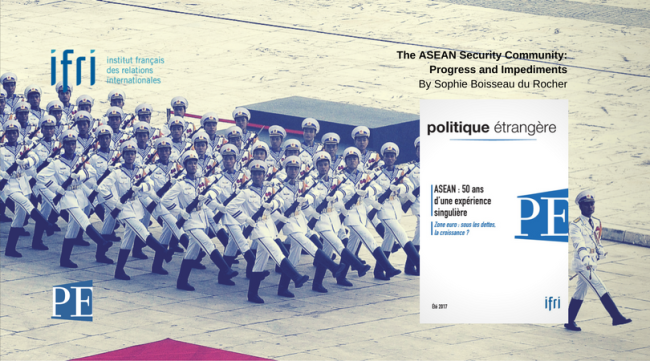
The ASEAN Security Community: Progress and Impediments
The Association of Southeast Asian Nations (ASEAN) strives to deal with security problems in an inclusive and flexible way. In 2003 it established a Security Community which has since expanded through several institutions and partnerships.
ASEAN at 50: Half a Century of Unique Experience
In its fifty-year existence, the Association of Southeast Asian Nations (ASEAN) has developed a complex, progressive and balanced approach to regional integration. Rather than the European Union’s far-reaching statements of ever-closer union, ASEAN combines highly diverse economic and political strategies of different States whose main priority is to safeguard sovereignty.
What Perspectives on the US Oil Policy ?
This Edito highlights how oil, since its discovery in 1859, has played a major role in the US international policy and economy throughout decades, becoming a key tool of the american leadership.
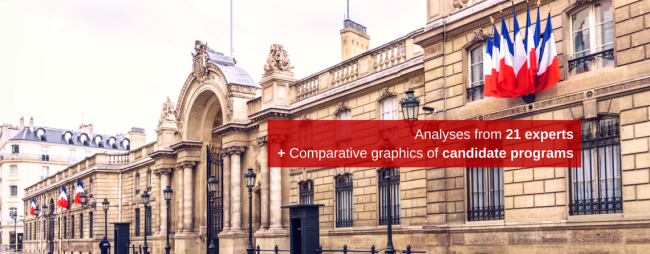
Foreign Policy Challenges for the Next French President
France’s current presidential campaign has created an unprecedented situation fuelled by revelations and a total absence of restraint, but it has not truly taken account of the disruptions of the last year: Brexit, the attempted coup in Turkey, the election of Donald Trump, the recapturing of Aleppo by Bashar al-Assad, Xi Jinping’s declarations about “economic globalization”, or the behavior of North Korea. The debate, or rather its absence, can be looked at in two ways.
North Korea's Nuclear Posture: an Evolving Challenge for U.S. Deterrence
A more capable, nuclear-armed, North Korea will pose very substantial challenges to the U.S. deterrence posture.

Trump and the Crisis of American Democracy
Trump’s victory in the 2016 presidential election is an expression of the crisis of American democracy.

Allies Fear Trump Is Eroding America’s Moral Authority
PARIS — When the State Department released its annual human rights report last week, it contained many of the usual tough American judgments of other countries. Iran was criticized for restricting freedom of religion and the media; Russia for discriminating against minorities; Eritrea for using torture; Bulgaria for violence against migrants and asylum seekers. The list went on.
Democratic Deconstructions
Today’s democratic governments appear less legitimate and their longevity less assured than ever.
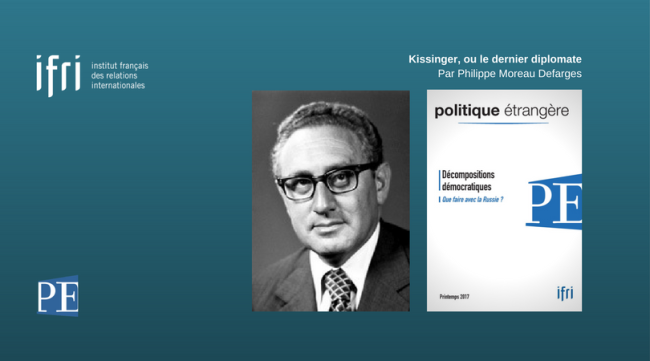
Kissinger, or the Last Diplomat
In the second half of the 20th century, Kissinger evokes the fundamental choices underpinning American diplomacy.
Ifri, a foundation recognized as being of public utility, relies largely on private donors – companies and individuals – to guarantee its sustainability and intellectual independence. Through their funding, donors help maintain the Institute's position among the world's leading think tanks. By benefiting from an internationally recognized network and expertise, donors refine their understanding of geopolitical risk and its consequences on global politics and the economy. In 2026, Ifri partners with over 90 French and international companies and organizations.
