




China’s Mature Node Overcapacity: Unfounded Fears
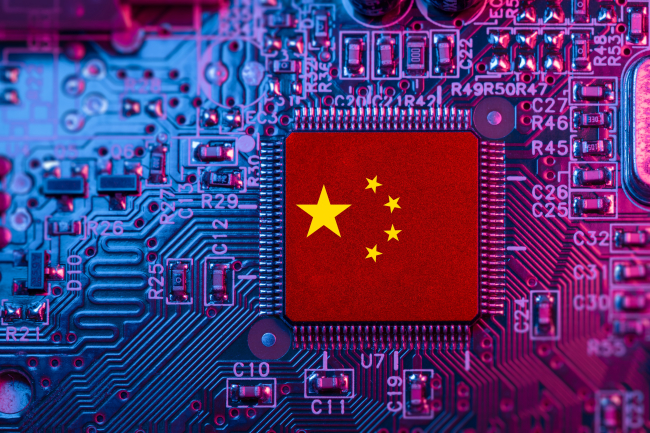
China is decoupling from, not flooding, the global mature-node semiconductor market. As China increasingly pursues industrial policies encouraging domestic chip production, its own growing chip demand will prevent a direct flood of cheap Chinese chips on foreign shores. However, as Beijing achieves its goal of decreasing the reliance of domestic downstream manufacturers on foreign chips, European and American mature-node semiconductor companies will feel the ripple effects of an increasingly “involuted” Chinese chip ecosystem.

Kamala Harris's Economic Program
Since receiving the Democratic nomination in the wake of President Joe Biden’s decision to step aside in the 2024 American presidential race, Vice-President Kamala Harris has been striving to define her own policy platform to attract voters in the limited time remaining before the November 5th election. Since the economy is a central issue for American voters, Harris developed several propositions in that area.
NATO: 75 Years of Strategic Solidarity (replay)
The war in Ukraine, burden-sharing between Allies, U.S. disengagement from Europe, new areas of conflict... At a time when the Alliance has just celebrated its 75th anniversary and the Stoltenberg era is drawing to a close after ten years at the head of the organization, NATO's agenda bears witness to the diversity of its areas of action, as well as to the different perceptions of the Allies on these issues.
In the wake of the Washington summit, this conference of diplomats, military officers and researchers aims to analyze the short- and medium-term prospects for the Atlantic Alliance.
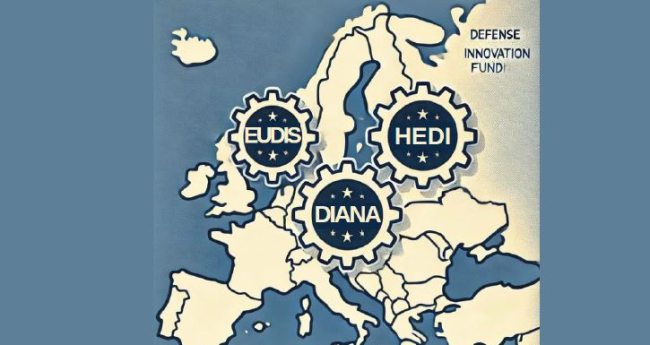
EUDIS, HEDI, DIANA: What's behind Three Defense Innovation Acronyms?
In Europe, with Russia’s war of aggression against Ukraine showing little sign of abating, a persistent gap remains between security needs and defense spending. According to a 2006 commitment enshrined at the 2014 Wales NATO summit, the North Atlantic Treaty Organization (NATO) members should disburse no less than 2% of their national gross domestic product (GDP) on defense, out of which 20% is to be spent on equipment and research and development. In 2024, only 23 Allies out of 32 are expected to meet or exceed this target, though a significant improvement from only three in 2014. This total includes the United States (US) devoting 3.38% of its GDP to defense, constituting almost 70% of all NATO member defense spending combined.
Global Financial Shifts: The Impact of Dollar Sanctions and Frozen Russian Assets
An interview with Brad Setser, Whitney Shepardson Senior Fellow (Council on Foreign Relations) led at Ifri on September 24, 2024.
Dollar-based financial sanctions have been increasing, particularly since the beginning of the century. Is this phenomenon likely to significantly alter the international role of the dollar?
There is a lot of controversy about the in which way frozen assets from Russia’s central bank should be treated, regarding both the assets themselves and the associated revenues. What consequences do you foresee for the international financial system?
2024 Election: What's Next for U.S. International Economic Policy?
An interview with Emily Blanchard, Tuck School of Business at Dartmouth College and CEPR.
How does she see the prospects for U.S. international economic policy, depending on who wins the election in November 2024?
Can U.S. Export Controls Stop China’s Tech Rise?
An interview with Kevin Wolf, Partner, Akin, led at Ifri on September 24, 2024. For years, Kevin Wolf has played a key role elaborating and implementing export controls within the U.S. administration. How does he evaluate the efficiency of these controls? Are they likely to reach the stated objective of maintaining the biggest lead possible between the U.S. and China, particularly for semiconductors? How could existing controls and regulations be altered to improve their efficiency?
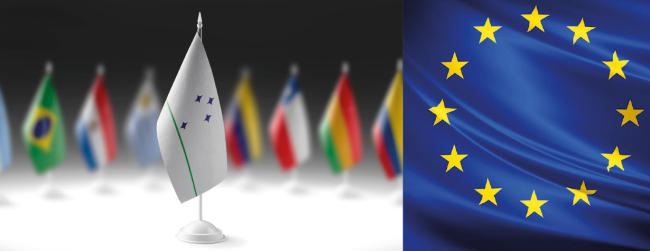
Between „Strategic Autonomy” and „Zeitenwende”: The Importance of Trade Between The EU and Mercosur
This policy paper analyses the geopolitical and economic significance of the EU-Mercosur agreement for the European Union (EU) in the context of the EU’s new European Economic Security Strategy.
Artificial Intelligence, or The Race for Power
Artificial intelligence (AI) is here to stay, and its use is spreading at a rate that is difficult to comprehend.
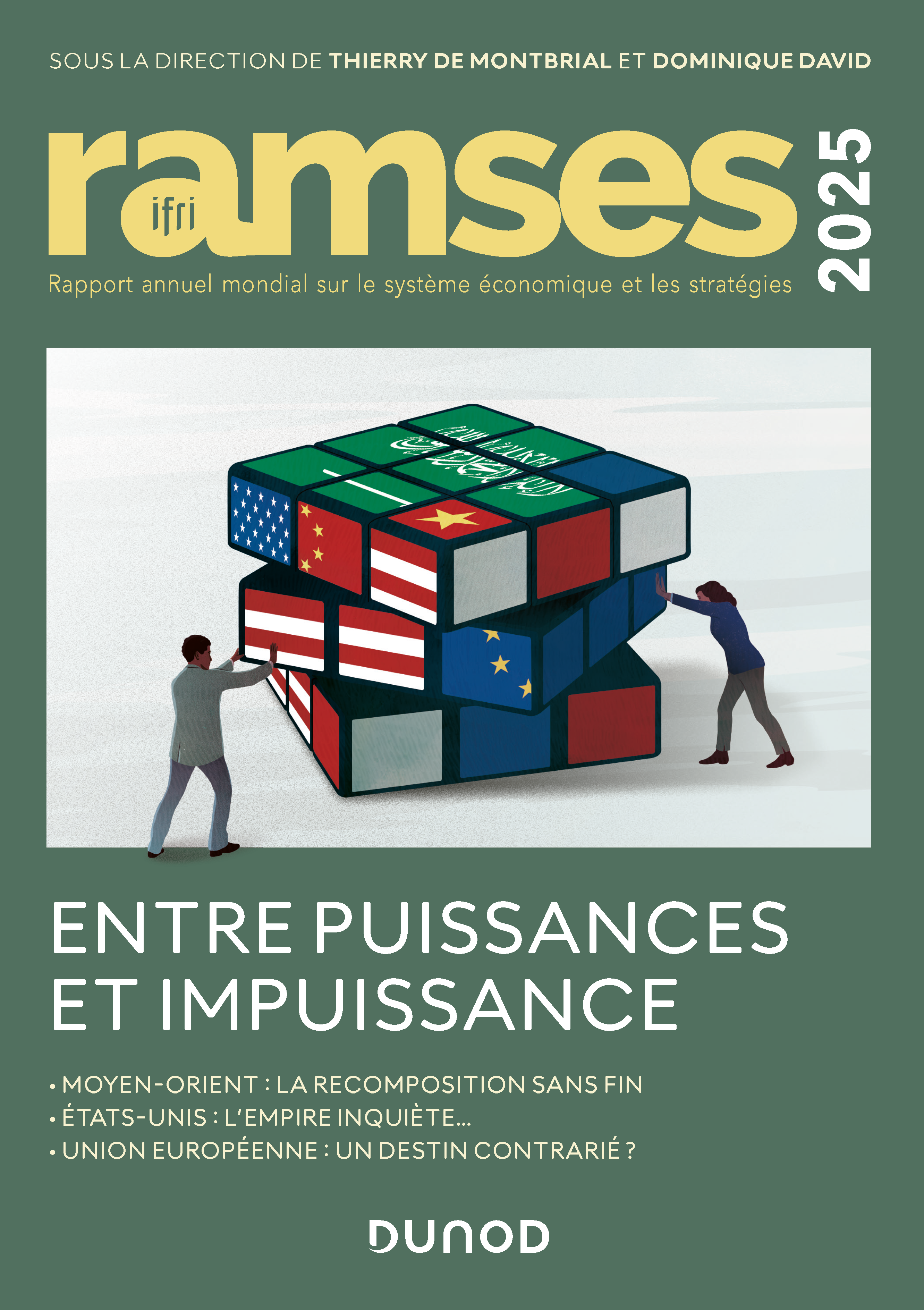
RAMSES 2025. Between Powers and Powerlessness
Never before have there been so many powers able to upset the international balance of power, and never before have the dominant powers seemed so powerless to counter the fragmentation of the world.

Deployment of the French Frigate Bretagne in the Indo-Pacific: Implementing French Strategy in the Region
The deployment of the French Navy’s multi-mission frigate (FREMM) Bretagne in the Indo-Pacific in recent months demonstrates France’s capability to project power far from the mainland and solidifies its Indo-Pacific strategy.

The Artemis Accords: An American Strategy for Lunar Governance
The Artemis Accords provide a framework for international cooperation in space exploration as part of the U.S. lunar program. They are part of a coherent strategy.
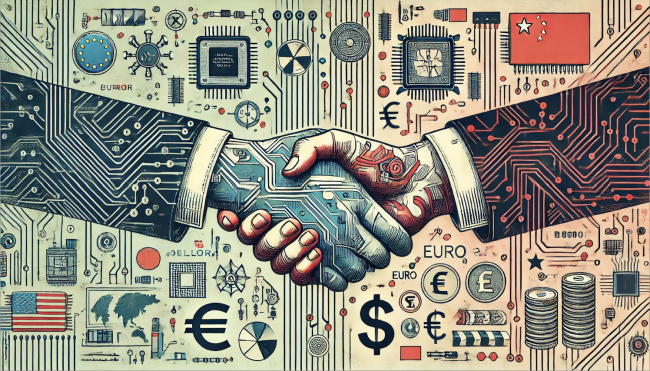
Funding A Rival: When the United States and Europe Invest in Chinese Tech
Outbound investments into rival powers are receiving increasing political attention on both sides of the Atlantic, as competition between the United States and China intensifies. The concern lies with American and European investments in certain Chinese technologies - such as artificial intelligence, biotechnology, semiconductors, or quantum computing - which could enable China to enhance its military capabilities and thus may pose risks to national and international security.

Populism and International Relations
Populism is flourishing, in Europe and elsewhere: a populist holds power today in Argentina and perhaps tomorrow in the United States. What does its spread say about our societies? And how is it shaping them, where populists rule? Do their economic policies stand any chance of success? Do their foreign policies have a greater impact on the world around them or at home? If “Trump 2.0” comes to be, will he have a free hand? If so, what can we expect?
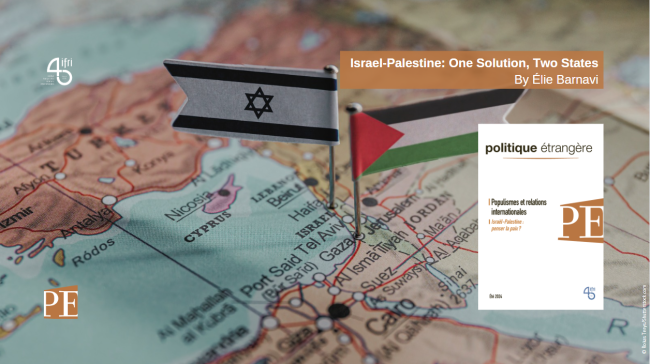
Israel-Palestine: One Solution, Two States
First proposed in 1936, the two-state solution has got lost over the course of several Israeli-Arab wars, colonization, the failure of the Oslo Accords, and the strategies of Israeli governments seeking rapprochement with certain Arab regimes. But it is currently the only imaginable solution. The numerous obstacles in its path could be overcome if the United States and its allies decided to impose it on the Israelis and Palestinians in opposition to their short-term visions.
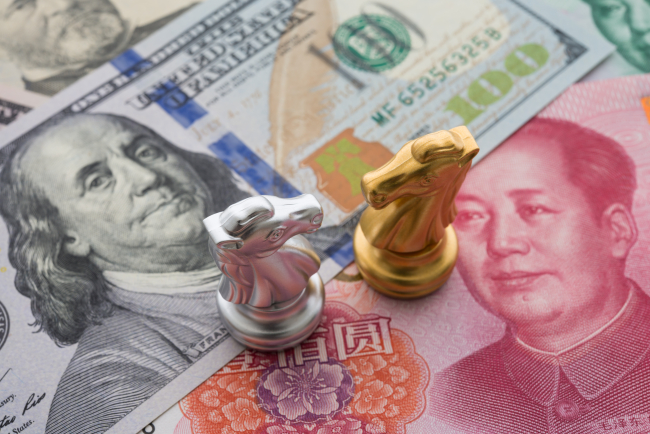
Power and Financial Interdependence
The link between financial self-reliance and geopolitical power has long been debated. The unbalanced Sino-American trade relationship has created asymmetric financial ties which generate potential sources of leverage for both parties and will not quickly disappear. Absent a clarifying major crisis, it will be difficult to definitively determine which party has greater leverage.
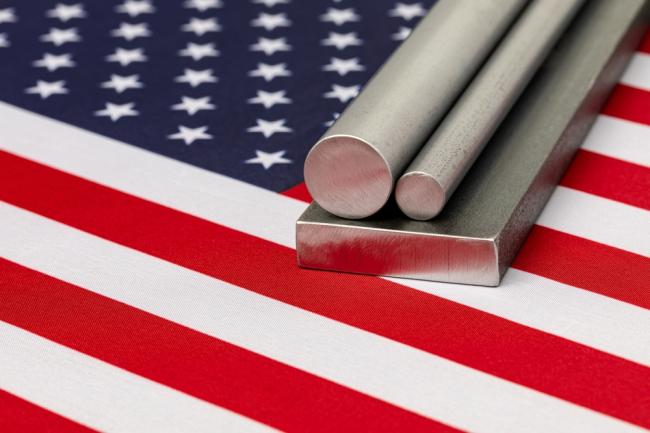
The United States’ Strategy for Securing Critical Minerals Supplies: Can It Meet the Needs of the IRA?
The United States (US) reliance on foreign supplies of raw and processed critical minerals is pressing Washington to devise a strategy to secure short-, medium- and long-term solutions. Pressure only increased with the booming demand spurred partly by the Inflation Reduction Act’s (IRA) policies.
The World Through the Lens of Ukraine
This issue of Politique étrangère looks at three conflicts currently unfolding around the world.
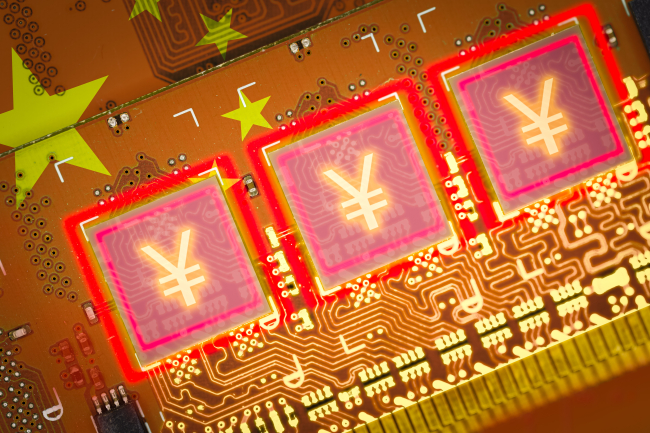
Why Chinese Fintechs Have Failed to Reshuffle International Finance
New Chinese financial technologies, including unparalleled electronic payment systems, have so far failed to threaten U.S. financial dominance.
The United States’ Strategy for Securing Critical Minerals Supplies: Can It Meet the Needs of the IRA?
The United States (US) reliance on foreign supplies of raw and processed critical minerals is pressing Washington to devise a strategy to secure short-, medium- and long-term solutions. Pressure only increased with the booming demand spurred partly by the Inflation Reduction Act’s (IRA) policies.
Why Chinese Fintechs Have Failed to Reshuffle International Finance
New Chinese financial technologies, including unparalleled electronic payment systems, have so far failed to threaten U.S. financial dominance.

COP28: A Tale of Money, Fossil Fuels, and Divisions
“Humanity has opened the gates of hell”, said the UN Secretary General Antonio Guterres during the Climate Ambition Summit, in New York, in September 2023, three months before COP28. The sense of urgency that he conveyed seems shared across the international community.
The EU, the Indo-Pacific and the US-led IPEF: Which Way Forward?
The paper provides a European Union (EU) perspective on the Indo-Pacific Economic Framework (IPEF).
Global Coal Markets at a Climax. An Era of Coal Decline is Finally about to Begin
In a previous note published in 2018, we noted that global coal demand had flattened. Several governments had announced coal phase-out plans, global coal power investment had contracted, and investment in greenfield coal mines was also at a standstill. The freezing of financial resources for coal projects might have indicated the beginning of a structural decline in coal demand and supply.
IRA: Towards Clean Hydrogen Leadership in the U.S.
Although late in adopting clean hydrogen (H2) and defining a national strategy–a draft was presented by the Department of Energy (DOE) in September 2022–, the United States (US) has strongly reinforced its support to clean hydrogen with the passage of the Inflation Reduction Act (IRA) in August 2022.
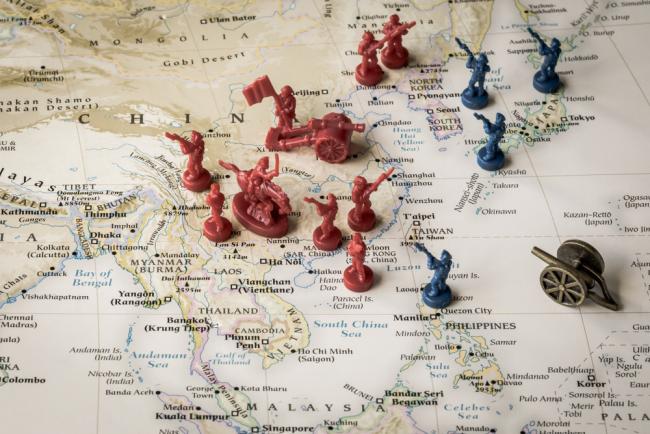
Imagining Beyond the Imaginary. The Use of Red Teaming and Serious Games in Anticipation and Foresight
The Red Team Defence demonstrates the Ministry of the Armed Forces' desire to appropriate new foresight tools. Thus, brain games or serious games aim to bypass the weight of the military hierarchy, the standardisation of thoughts and cognitive biases in order to avoid strategic unthinking.
The Ambitions of the Islamic Republic of Iran in the Pacific
In January 2023, the Iranian Navy staged a show of force near the Australian Exclusive Economic Zone (EEZ) amid growing tensions between Tehran and Canberra.
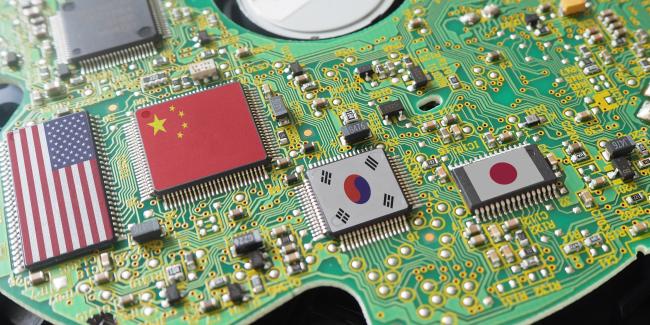
South Korea and IPEF: Rationale, Objectives and the Implications for Partners and Neighbors
As a key manufacturer of high-end technology components critical to the sustainability of the Fourth Industrial Revolution, South Korea is essential in any effort to rebuild a resilient global supply chain but also to the promotion of a clean economy. South Korea can thus contribute to two of the pillars of IPEF (Indo-Pacific Economic Framework), specially to pillars II and III (supply-chain resilience and a clean economy).
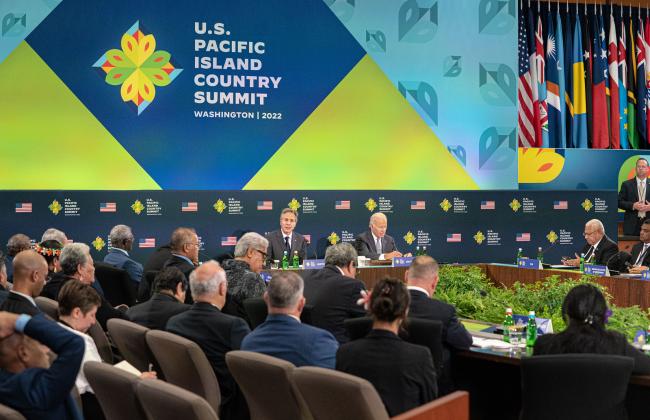
The United States and France: Partners for the Pacific Islands Region?
Emmanuel Macron and Joe Biden are meeting for the first state visit under the Biden administration, which is reserved for France.
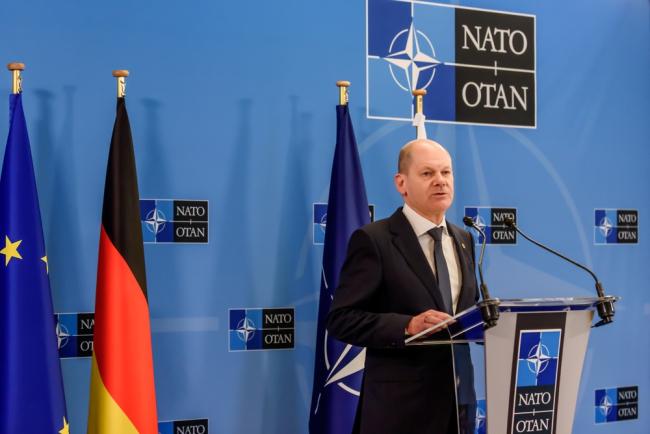
Germany, the “Zeitenwende” and the Future of NATO
Chinese Nuclear Force Modernization and Doctrinal Change
Dating back to the first test in 1964, the Chinese nuclear force modernization process is motivated by other nuclear powers’ modernization across the years, mostly from the United States and the Soviet Union, but also by domestic factors such as economic debates and tensions in the scientific community.

Towards a War of Norms ? From Lawfare to Legal Operations
Defined as the use of law to establish, perpetuate, or change power relations in order to counter an adversary, lawfare practices reflect a reality that is inherent in international law.
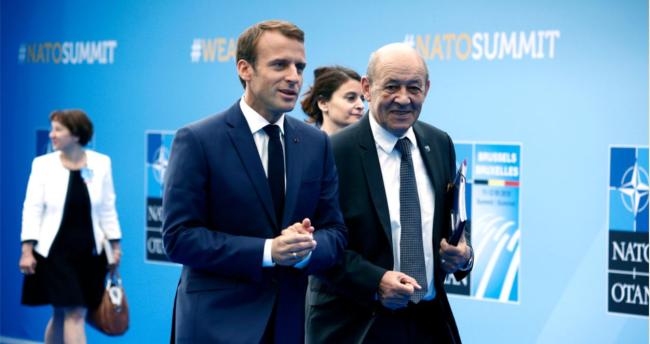
How to Keep France Engaged in NATO
France’s policy vis-à-vis the North Atlantic Treaty Organization (NATO) has always been ambivalent. On paper, France’s strategic culture fits well within NATO’s nature and agenda. Yet, in practice, French membership of NATO has always been uneasy. Several intra-alliance developments will likely affect the quality of French-NATO relations over the next few years.
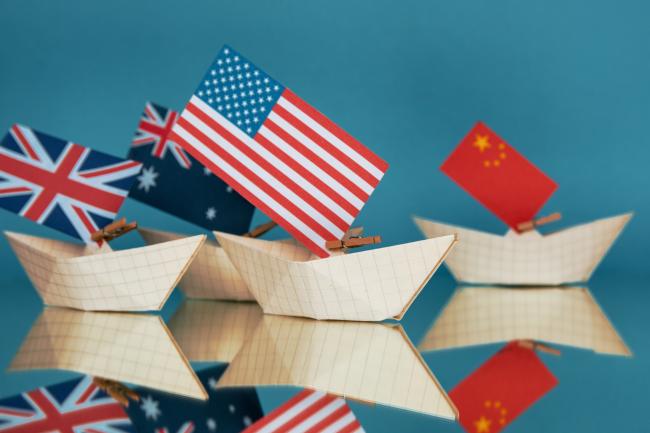
AUKUS Rocks the Boat in the Indo-Pacific, And It’s Not Good News
For anyone who still harbored doubts, Washington made crystal clear from the announcement of the new trilateral alliance with Australia and the UK (AUKUS) that countering China is its number one priority, and that it will do whatever it takes to succeed. Much has been said about the consequences of AUKUS on the French-US relations, but the strategic implications for the Indo-Pacific nations (including France), and for China especially, are also critical to consider.
Human Machine Teaming and the Future of Air Operations
The increasing autonomy and digitization of battlefields implies a re-examination of Man Machine Teaming (MMT). While Artificial Intelligence (AI) has significant benefits, the human cognitive system remains unique until this day. Nonetheless, as demonstrated by the “centaur” approach, man-machine teaming offers even greater potentials than the two working separately.
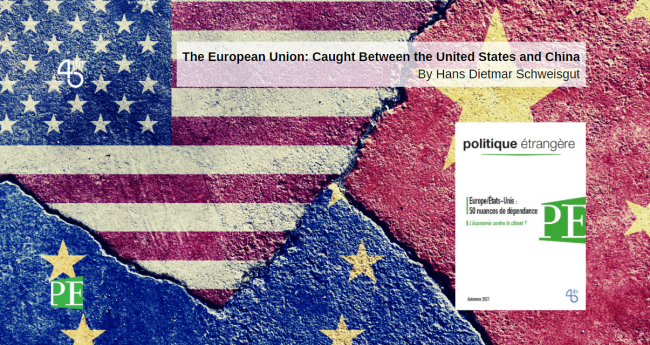
The European Union: Caught Between the United States and China
The United States and the European Union (EU) are now both in agreement regarding China – long viewed benevolently – as a systemic rival in the international order.
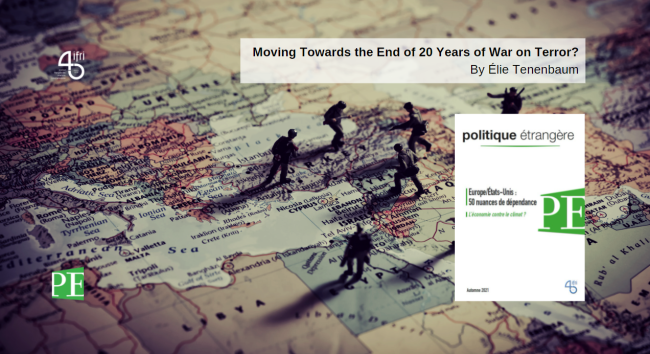
Moving Towards the End of 20 Years of War on Terror?
Twenty years after 9/11, the assessment of the “War on Terror” is mixed: heavy financial and human costs, weakening of Al-Qaeda central and the Islamic State in the Levant, but creation of affiliates in different locations, fatigue of endless wars, etc.
The China dilemma from Trump to Biden: one consensus and three worldviews
The United States underwent a fundamental transformation in its stance on China during the Trump presidency.
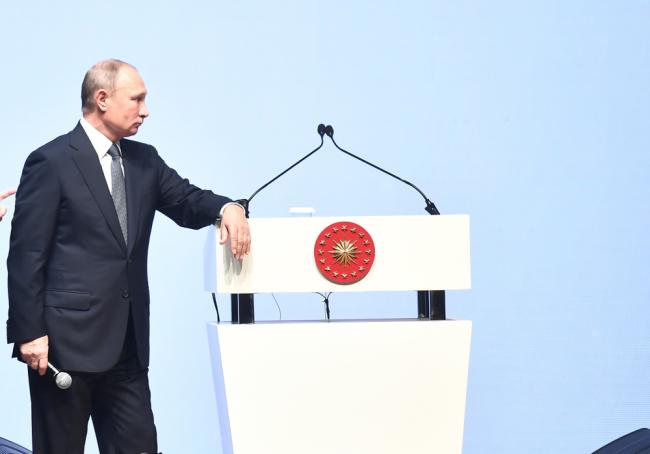
Dialogue with Russia. Russia Needs to Reset Relations with the West
This report analyses Western-Russian relations and proposes a way forward for conducting dialogue with Russia. It offers an analysis of Russia’s relations with NATO and the EU, an overview of the bilateral relations of various Western countries with Russia, a glimpse of China’s role, and an assessment of the main interests and contentious issues in Western-Russian relations.
Ifri, a foundation recognized as being of public utility, relies largely on private donors – companies and individuals – to guarantee its sustainability and intellectual independence. Through their funding, donors help maintain the Institute's position among the world's leading think tanks. By benefiting from an internationally recognized network and expertise, donors refine their understanding of geopolitical risk and its consequences on global politics and the economy. In 2026, Ifri partners with over 90 French and international companies and organizations.
