




The Political Economy of the Metaverse
The "metaverse", at the heart of the strategy of large digital companies such as Facebook (Meta), does not yet exist and it will take decades to build it. This briefing provides an overview of the issues.

Ukraine: Between Two Peaces?
We have reentered the world of war. In its first special report, Politique étrangère offers a range of in-depth analyses of the military and political dynamics at work in a Europe that has just woken up from its dream of enduring peace. The direct confrontation between Ukraine and Russia has pitted two military and defense systems against each other, whose asymmetrical logics, strengths, and weaknesses we are discovering as the conflict unfolds.

Deus ex machina : les enjeux de l’autonomisation des systèmes d’armes
While the automatization of machines is part of an already long historical, conceptual, and technical trajectory, the exponential progress of artificial intelligence techniques, robotics and their military applications suggest the emergence of systems that integrate more autonomy. Indeed, despite campaigns calling for a moratorium on autonomous weapons, most military powers are developing programs focused on autonomy.

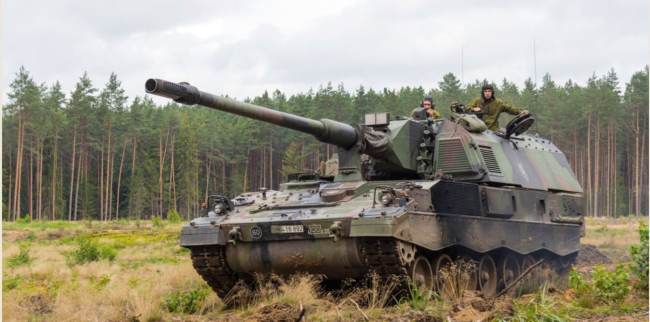
The West shares tanks, rocket launchers and artillery with Ukraine in new war phase
Western countries are supplying Kyiv with heavy weapons, abandoning the caution shown at the start of the conflict. The aim is to restore the Ukrainian army's strength and block the Russian war effort in the Donbas.
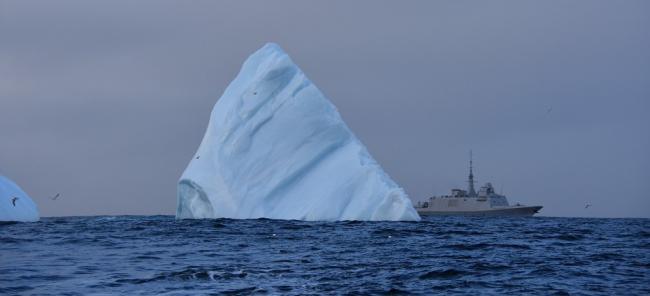
Arctic: Toward the End of the Exception? Strategic, Nuclear and Maritime Issues in the Region
Through multiple international initiatives, including the creation of the Arctic Council at the end of the Cold War in 1996, the Arctic appears to be one of the last areas of peaceful cooperation in the world. This “Arctic exception” is also devoid of any serious territorial dispute between the neighboring countries, some of which are nevertheless great powers: Russia, the United States, Canada, but also Sweden, Norway, Denmark (via Greenland), Iceland and Finland.

Towards a War of Norms ? From Lawfare to Legal Operations
Defined as the use of law to establish, perpetuate, or change power relations in order to counter an adversary, lawfare practices reflect a reality that is inherent in international law.


Meet the woman researching the geopolitics of technology
Alice Pannier is leading a new programme looking at the relationship between technology and geopolitical alliances. Recent events have proven this to be more important than ever.
Climate: Which Way Forward?
Thirty years after Rio, the case file “Climate: Which way forward?” assesses current climate commitments, which are undoubtedly less impressive and less certain than the political pronouncements and media fanfare make them seem. A number of fundamental problems remain.
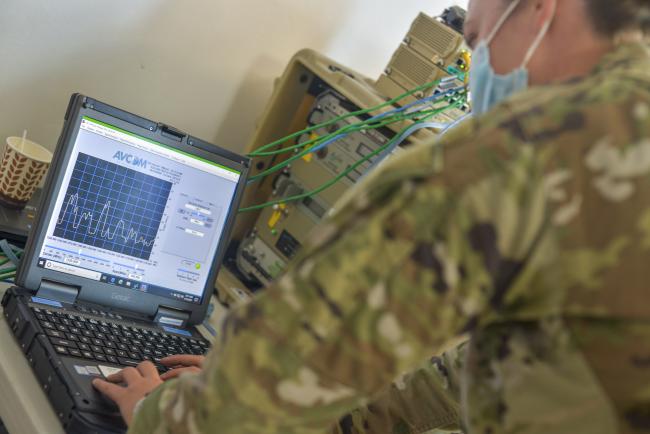
The Military Use of Small Satellites in Orbit
The number of small satellites in orbit has increased rapidly over the last decade, and the growth of this sector is expected to accelerate even more in coming years.

Convince and Coerce: U.S. Interference in Technology Exchanges Between its Allies and China
The tough-on-China policy adopted by the Trump and Biden administrations has – and will increasingly have – important consequences for Washington’s allies, both on their infrastructure choices (5G, submarine cables...) and on their technological exchanges with China.

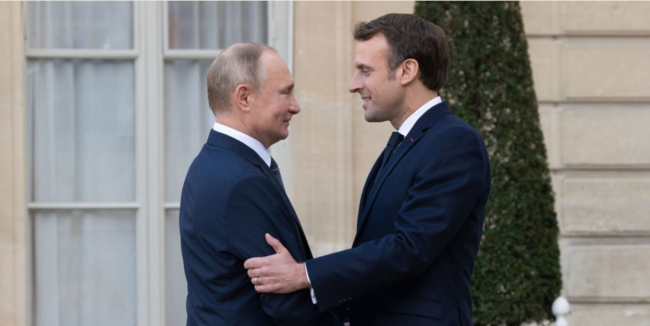
Kremlin Is Top Destination For Spooked European Leaders
Rarely in recent years has the Kremlin been so popular with European visitors. French President Emmanuel Macron arrives Monday. The Hungarian prime minister visited last week. And in days to come, the German chancellor will be there, too. All are hoping to get through to President Vladimir Putin, the man who singlehandedly shapes Russia’s course amid its military buildup near Ukraine and whose designs are a mystery even for his own narrow inner circle.
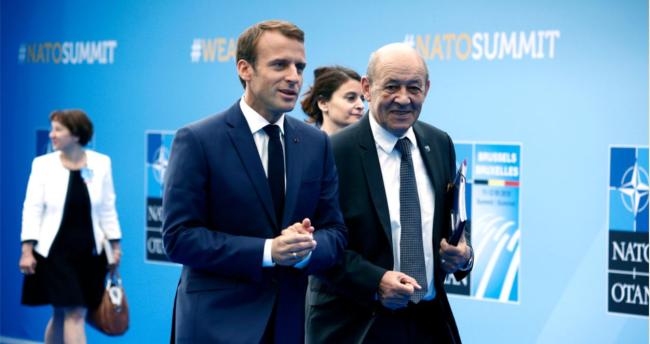
How to Keep France Engaged in NATO
France’s policy vis-à-vis the North Atlantic Treaty Organization (NATO) has always been ambivalent. On paper, France’s strategic culture fits well within NATO’s nature and agenda. Yet, in practice, French membership of NATO has always been uneasy. Several intra-alliance developments will likely affect the quality of French-NATO relations over the next few years.
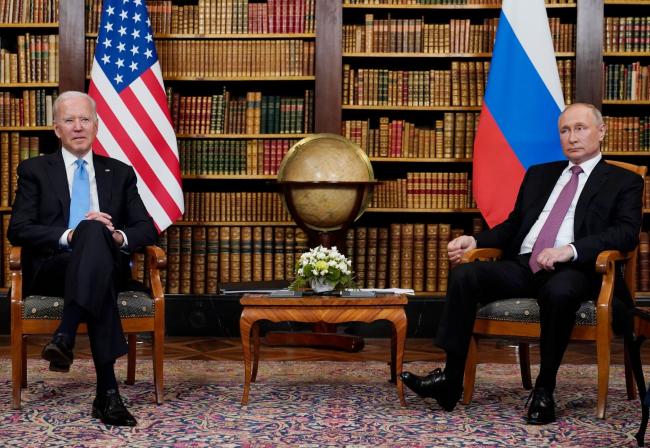
Rewinding the Clock? US-Russia Relations in the Biden Era
The escalating crisis in Ukraine in the winter of 2021-2022 has returned US-Russia relations to center stage.

Europe and the Geopolitics of 5G: Walking a Technological Tightrope
The acute Sino-American tensions which started in 2018 have been coupled with controversies around 5G technology, exemplified by the spotlight placed on Chinese equipment manufacturer Huawei and the security risks associated with its use. For Europe, the 5G challenge at the international level is drawing a very complex landscape.
Technology at the Center of Geopolitical Relations
Technologies from big data to quantum computing, artificial intelligence and next-generation drones are fueling power struggles between nations and large industrial companies. Alice Pannier, head of the Geopolitics of Technology program at the French Institute of International Relations (IFRI), talks us through the impact of these new technologies, which have added a further level of complexity to the major energy issues seen in the 20th century.
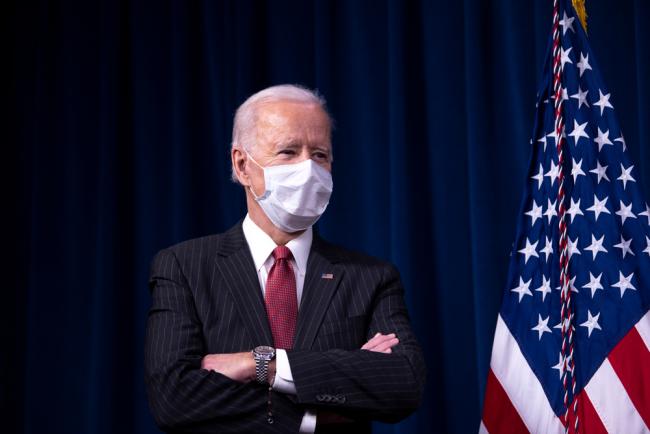
The Biden administration in turmoil (video replay)
Celebrating its 20th edition, Ifri's Annual Conference on the United States convened a first panel on national politics and a second on the evolution of U.S. trade. An exchange between Thierry de Montbrial and Henry Kissinger, 56th Secretary of State, concluded the day. Videos of all interventions are below.
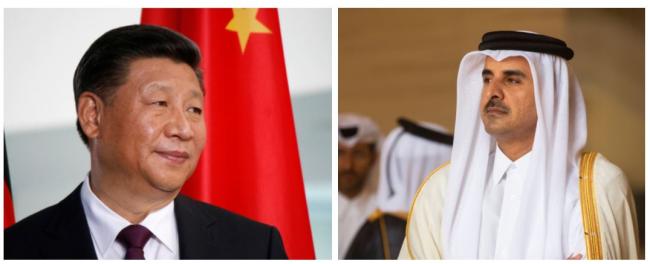
Qatar and the US-China Rivalry: The Dilemmas of a Gulf Monarchy
Like its neighbors in the Arabian Peninsula, Qatar finds itself increasingly confronted with a difficult dilemma: while its economy is looking to the East, more specifically towards China, the security and stability of the country still depend on the United States.
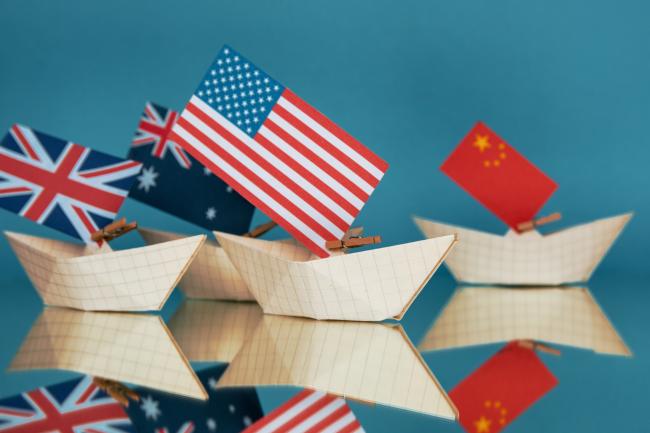
AUKUS Rocks the Boat in the Indo-Pacific, And It’s Not Good News
For anyone who still harbored doubts, Washington made crystal clear from the announcement of the new trilateral alliance with Australia and the UK (AUKUS) that countering China is its number one priority, and that it will do whatever it takes to succeed. Much has been said about the consequences of AUKUS on the French-US relations, but the strategic implications for the Indo-Pacific nations (including France), and for China especially, are also critical to consider.

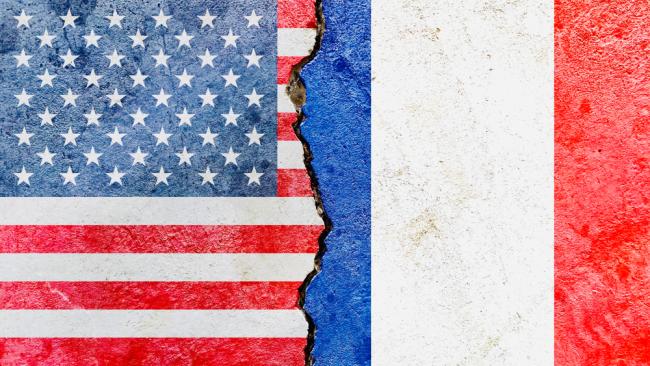
Sub snub just one symptom of longtime French unease with US
Born of a revolution fought for liberty, ties between the United States and its oldest ally, France, have long been fraternal, but they've also been marked by deep French unease over their equality.
Human Machine Teaming and the Future of Air Operations
The increasing autonomy and digitization of battlefields implies a re-examination of Man Machine Teaming (MMT). While Artificial Intelligence (AI) has significant benefits, the human cognitive system remains unique until this day. Nonetheless, as demonstrated by the “centaur” approach, man-machine teaming offers even greater potentials than the two working separately.
Global Swing States and U.S. Strategy
Defending and renewing the global order is a priority for the United States and Europe. An important part of this effort will be accomplished if transatlantic partners can successfully engage four “global swing states” — Brazil, India, Indonesia and Turkey — in the management of global issues, because of their geopolitical and economic status, as well as their desire to have a stronger voice in the various international forums. Successful engagement of these nations will be key to preserving the international order and U.S. leadership.
Le Pentagone face à la séquestration et aux sorties de guerres : l'art du brouillard budgétaire ?
The U.S. defense budget has faced a sharp reduction since 2010, linked to the drawing down of two wars and the Great Recession.
Obama's Second Term: The Process of Building Global Leadership
The second term of Barack Obama’s presidency has introduced new Foreign Policy leadership that suggests changes for the future. The White House will likely centralize foreign policy making and the Treasury Department may play a bigger role in the country’s global engagement. Despite new policy direction, no framework for the strategic renewal of U.S. global leadership has emerged.
Les républicains et la politique étrangère américaine: quelles perspectives pour 2016 ?
The future candidates for the 2016 Republican presidential primary will be expected to develop a clear foreign policy agenda and prove the GOP’s credibility on foreign affairs issue.
A Transatlantic Free Trade Agreement? Weimar Triangle Analyses: French, Polish and German viewpoints on European questions
On an initiative of the German Council of Foreign Relations (DGAP), the Study Committee for Franco-German Relations (Cerfa) of the French Institute of International Relations (IFRI) and the Polish Institute of International Affairs (PISM) are regularly publishing short contributions on a common subject, written by three experts of these institutes. The purpose of these “Weimar Triangle Analyses” is to give the French, Polish, and German views on central questions of European politics and European integration.
A City Upon a Crumbling Hill?
Interrogations on a possible decline of U.S. leadership are a regular occurrence in the country.
The Future of the American Leadership: Between Renewal and Delegation
In an effort to preserve its global leadership, the United States has engaged in a “double rebalancing”; a geopolitical rebalancing, as illustrated by the “pivot to Asia,” and a rebalancing of means, with the Obama administration increasingly advancing diplomatic and economic negotiations (economic statecraft), emphasizing the indirect uses of military force and opening up reinforced dialogue with new actors.
The Future of U.S. Leadership
The French Institute for International Relations (Ifri) and The German Marshall Fund of the United States - France (GMF) have partnered to launch a joint research program on the transformations of U.S. leadership by the year 2020.
The U.S. Oil and Gas Boom
A funny thing happened in the last few years when no one was paying attention. J.R. Ewing, the legendary Texas oilman, and his wife Sue Ellen sold Southfork, their ranch near Dallas, and moved to a new home in Pennsylvania (Northfork?). JR immediately began buying subsurface mineral rights for acres of land above the Marcellus and Utica shale formations in the Appalachian Basin. Cliff Barnes, J.R.'s nemesis, sold all his Texas properties and moved to North Dakota, where he started leasing mineral rights to acreage above the Bakken shale play.
How Does the Tea Party Compare with European Far Right Movements?
There is a rich history of far-right political parties in Europe. Long-standing parties such as the French Front National (FN), mostly marginalized since World War II, have enjoyed a resurgence since the 1980’s. Under the very recent leadership of Marine Le Pen, the FN has undergone a rejuvenation of its communication strategy and gained two seats in the National Assembly, the first time that the FN won any seats since the end of the proportional representation system in 1988. There are also many newer far-right parties in Europe, such as the Dutch Party for Freedom (PVV). The PVV, formed in 2006 by Geert Wilders, has become the third most popular party in the Netherlands and was until recently a member of the governing minority coalition.
Building Security Institutions: Lessons Learned in Afghanistan
After its rapid military victory over the Taliban, the international community underestimated the resources, time and work that would be required enforce to Security Sector Reform (SSR) in Afghanistan. Even though the Afghan population was supportive of the coalition’s efforts at first, the light footprint approach, fostered by the Europeans, failed to provide with satisfying results as the insurgency made its way through popular frustration.
Is Omar Sy an Uncle Tom? Race relations in America and France as seen through "Les Intouchables"
The Intouchables tells the story of a young Senegalese immigrant named Driss, who has been hired to be the caretaker of Philippe, a rich tetraplegic. The feel-good comedy has been a smashing success in France and across the world, grossing over $350m worldwide. While reviews of the film both in France and abroad have been mostly positive, there is a contingent of American critics that thinks that The Intouchables highlights racial stereotypes.
The Obama Administration and Syria: From "off the table" to on
A quick look at the news dealing with the Syrian uprising the last year shows a slow progression from protests and civil resistance towards violence. The Obama Administration’s policy dealing with what many have called “slow motion revolution” has evolved in fits and starts, with mixed episodes of confusion, assertiveness, denial and drift.
Racial integration - Lessons from the U.S. Army
On Friday, the 13th of January, 2012, the Center for Migrations and Citizenship welcomed 3-star U.S. Army General Bostick as a speaker of its international conference: "Business and the State: Migration Policies, Diversity and Integration".
Linking Business and Migration Policy in the USA
On Friday, the 13th of January, 2012, the Center for Migrations and Citizenship welcomed Jesus 'Chuy' Garcia - Cook County Commissioner, Chicago (USA) - as a speaker of its international conference "Business and the State: Migration Policies, Diversity and Integration".
The U.S. Oil and Gas Boom
A funny thing happened in the last few years when no one was paying attention. J.R. Ewing, the legendary Texas oilman, and his wife Sue Ellen sold Southfork, their ranch near Dallas, and moved to a new home in Pennsylvania (Northfork?). JR immediately began buying subsurface mineral rights for acres of land above the Marcellus and Utica shale formations in the Appalachian Basin.
U.S.-Moroccan Relations: How Special?
U.S.-Moroccan ties have sometimes been described as a "special relationship." This paper explores the bilateral relationship to investigate how special it really is.
U.S. Foreign Policy and the Israeli-Palestinian Conflict: A View from Palestine
How will the US respond to the changing Palestinian and Arab paradigm?
A Tragic Tale of Corn and Congress
Ever since Iowa landed the privilege of holding the first Presidential primary, no candidate has the political courage to confront the $11 billion subsidy price tag of US corn ethanol. Everyone agrees we need to dilute our supply and price vulnerability in transportation fuels and everyone agrees we need to decarbonize the transport sector. But surely not this way.
Political Oil Prices: A Measured Response if Any
Oil prices are becoming an increasingly worrisome factor in today’s economies. They have risen dramatically over the past 6 or 7 months and are now driving inflation in many economies and acting as a drag on nearly all. They are not at these levels because markets are fundamentally out of balance.
Ifri, a foundation recognized as being of public utility, relies largely on private donors – companies and individuals – to guarantee its sustainability and intellectual independence. Through their funding, donors help maintain the Institute's position among the world's leading think tanks. By benefiting from an internationally recognized network and expertise, donors refine their understanding of geopolitical risk and its consequences on global politics and the economy. In 2026, Ifri partners with over 90 French and international companies and organizations.
