How Tokyo is widening regional defence ties to complicate Beijing’s Taiwan calculus
Tokyo is strengthening partnerships across the Indo-Pacific and beyond, possibly bolstering its ability to withstand a prolonged armed conflict.
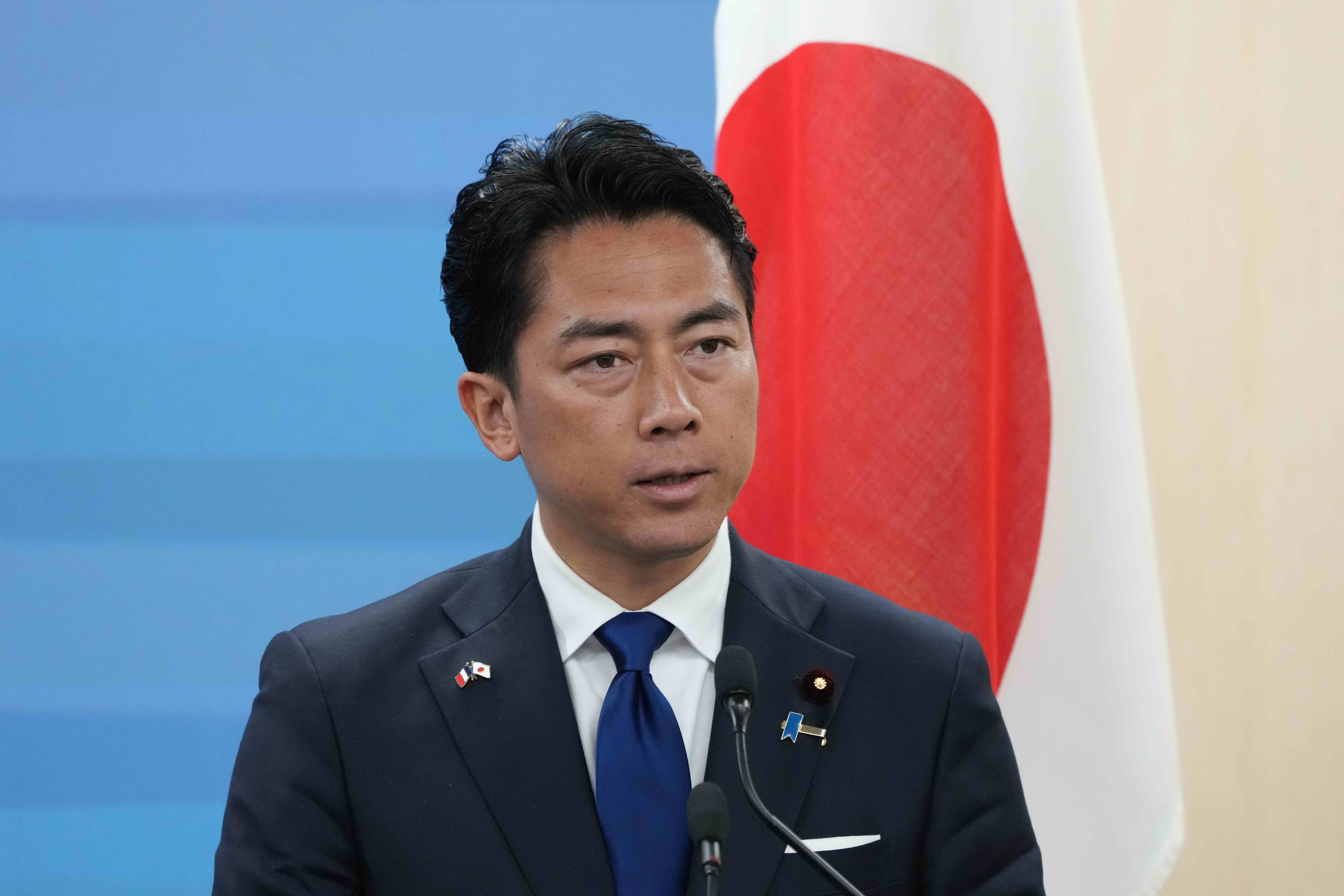
The risk of a conflict over Taiwan is shaping Japanese defence planning, with Tokyo shoring up security at home and abroad for a potentially prolonged fight. But there are economic, demographic and political constraints on how far its military transformation can go. In the first of a three-part series, Gabriel Dominguez examines how Japan is building a network of partnerships to strengthen its strategic endurance.
Japan is rapidly building a web of defence partnerships spanning the Indo-Pacific and beyond, a move that may bolster its ability to withstand a prolonged armed conflict over Taiwan and complicate Beijing’s calculations.
The push was on display in Australia last month, where Tokyo and Canberra moved to deepen cooperation, ranging from defence planning and advanced weapons development to the construction and sustainment of Japanese-designed warships.
But the deepening relationship with Australia is only part of a much broader shift.
[...]
Christopher Hughes, a professor of international politics and Japanese studies at Warwick University, described Tokyo’s approach as a three-layered strategy: strengthening Japan’s own capabilities, integrating more deeply with the United States and building complementary ties with like-minded American allies and partners.
The first two remain at the core, Hughes said, meaning the blossoming relationships with regional partners and Nato member states are not intended to replace the US alliance.
Celine Pajon, head of Japan research at the French Institute of International Relations, echoed that analysis.
“Japan is not trying to replace the US alliance,” Pajon said. “It is trying to make itself less dependent on any single partner.”
[...]
“GCAP is about much more than building a fighter,” said Pajon, referring to the programme. “It is Japan learning to build defence capabilities internationally.”
But the potential wartime relevance of industrial cooperation extends beyond sophisticated platforms.
[...]
Pajon said that ultimately Japan’s expanding partner network was making China’s strategic environment “more complex and less predictable”, while Maslow similarly argued that Tokyo’s efforts had “complicated China’s security planning”.
In a Taiwan contingency, this means Beijing would have to factor in not only Japan’s own military capabilities but also Tokyo’s access to outside sources of technology, production, intelligence, economic support and political backing as a conflict continued.
[...]
European submarines or aircraft carriers that sometimes sail to the region might play some role, he said, but more realistic contributions could include economic pressure or European navies assuming greater responsibility in the Indian Ocean, freeing US forces to concentrate on Japan or Taiwan.
Pajon likewise said Europe’s strongest contributions would probably come through diplomacy, sanctions, cyber and information operations, intelligence, capacity-building and selected military deployments rather than large-scale combat operations.
“The real value therefore lies in deterrence through a broader network of capable partners, not in assuming that Europe would provide large-scale military support if deterrence failed,” Pajon said.
Tokyo thus does not need every partner to fight the PLA for its growing network to have strategic value.
> Read the entire article on the South China Morning Post's website.

Media:

Reporter(s):
Format
Share
Authors

Céline PAJON
Research Fellow, Head of Japan and Indo-Pacific Research, Center for Asian Studies, Ifri