






Japan’s Cybersecurity Strategy: From the Olympics to the Indo-Pacific
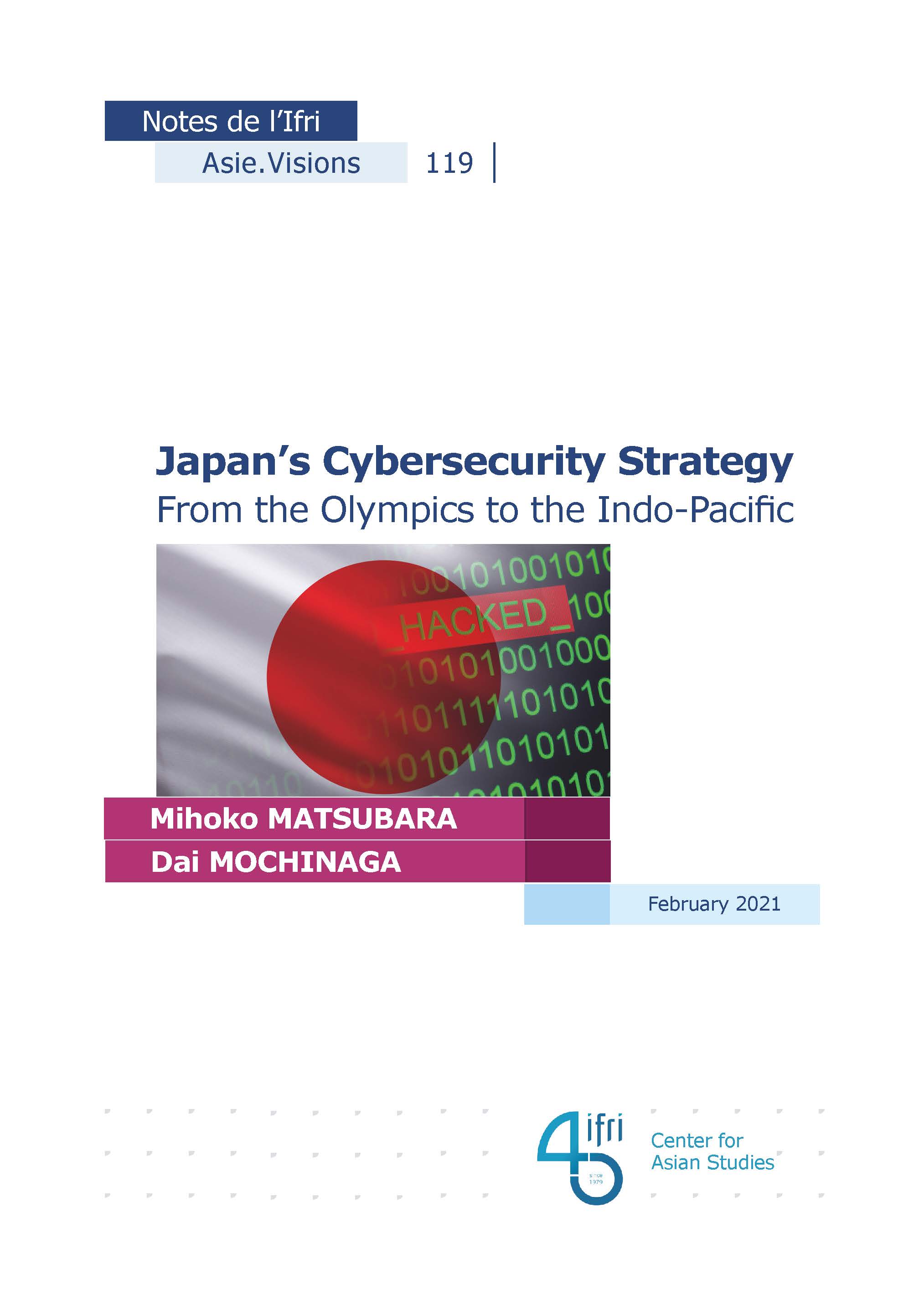
In September 2020, the Ifri Center for Asian Studies held an online event on Japan’s cybersecurity strategy.
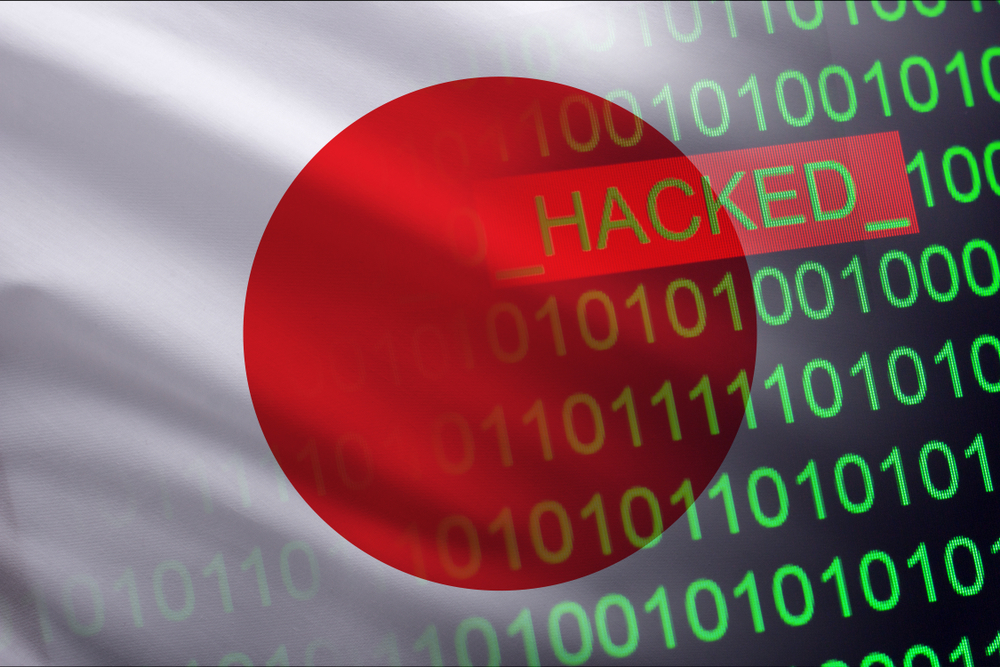
The starting point was to look at the cybersecurity challenges posed by the organization of the Olympic Games, initially planned to be held in Tokyo in 2020. Indeed, in recent years, the use of cyber-attacks to derail the organization of mega sport events has been multiplying. Japan has therefore taken a variety of measures to reinforce cybersecurity both for government agencies and companies. Beyond these preparatory measures to reinforce Tokyo’s own capabilities, the event also touched upon the various diplomatic initiatives taken by the Japanese government and industry to act as a leading nation in terms of cybersecurity and cyber governance on the international stage. Japan is indeed a proactive actor in this area, both at multilateral and bilateral levels.
Further elaborating on the discussions, the following two papers present perspectives on Japan’s evolving cybersecurity strategy, at the domestic and international level.
First, Mihoko Matsubara, Chief Cybersecurity Strategist, NTT Corporation, presents Japan’s efforts to enhance its national cybersecurity capabilities ahead of the 2020 Olympics. In particular, Japan has been facing a shortage of cybersecurity professionals. In order to cope with this situation, a variety of industry and government-driven initiatives were taken to cultivate an adequate cybersecurity manpower. Secondly, the 2015 Cybersecurity Strategy stated, for the first time, the responsibility of business executives to include cybersecurity in their business strategy. As a result, business leaders are now playing a key role to improve the national level of cybersecurity and encourage others to have board-level discussions on cybersecurity. Finally, the 2019 Rugby World Cup helped Japan prepare for the Olympics by providing a dry-run opportunity to test cybersecurity readiness to host a mega sport event.
In his paper, Dai Mochinaga, a Senior Researcher at Keio Research Institute, presents his vision of Japan’s diplomacy on cybersecurity and cyber governance. More specifically, the author provides a first assessment of the dynamic between the Free and Open Indo-Pacific (FOIP) vision developed by the Japanese government since 2016 and Tokyo’s approach in terms of cyber-diplomacy. The FOIP initiative has been helpful to integrate ongoing initiatives in terms of cyber-diplomacy, while pursuing Japan’s national interests. Tokyo’s cyber-diplomacy helps shaping collective action to influence international fora, through bilateral and multilateral discussions, particularly on the digital economy and data governance. The paper concludes on a reservation: Tokyo has still limited options to counter malicious cyber-activities. The imposition of sanctions is an option that Japan might want to consider for a better deterrence.
This page contains only a summary of our work. If you would like to have access to all the information from our research on the subject, you can download the full version in PDF format.
Japan’s Cybersecurity Strategy: From the Olympics to the Indo-Pacific


Center for Asian Studies
Asia is a nerve center for multiple global economic, political and security challenges. The Center for Asian Studies provides documented expertise and a platform for discussion on Asian issues to accompany decision makers and explain and contextualize developments in the region for the sake of a larger public dialogue.
The Center's research is organized along two major axes: relations between Asia's major powers and the rest of the world; and internal economic and social dynamics of Asian countries. The Center's research focuses primarily on China, Japan, India, Taiwan and the Indo-Pacific, but also covers Southeast Asia, the Korean peninsula and the Pacific Islands.
The Centre for Asian Studies maintains close institutional links with counterpart research institutes in Europe and Asia, and its researchers regularly carry out fieldwork in the region.
The Center organizes closed-door roundtables, expert-level seminars and a number of public events, including an Annual Conference, that welcome experts from Asia, Europe and the United States. The work of Center’s researchers, as well as that of their partners, is regularly published in the Center’s electronic journal Asie.Visions.

France’s View: From Diplomacy to Public-Private Action
France has emerged as the EU’s IMEC forerunner, combining port infrastructure, diplomatic alliances and public-private cooperation. With Marseille Fos at its core, the country brings a strategic hub for logistics, energy and digital connectivity to the corridor.
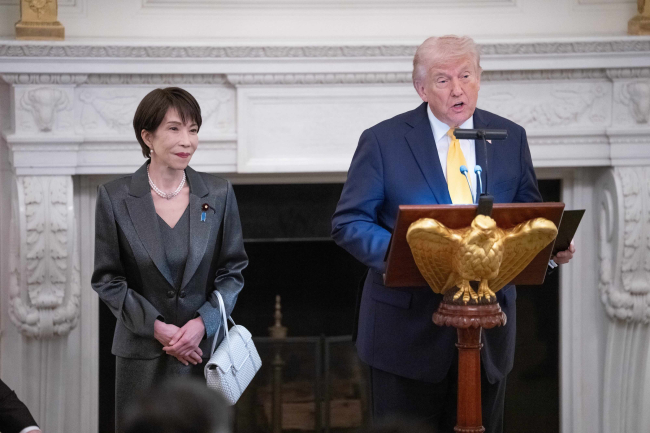
Trump II, the Crisis of the Rules-Based Order and Europe’s Indo-Pacific Strategy
This article examines the implications of Trump II for Europe’s engagement in the Indo-Pacific. The piece contends that Trump II is accelerating the erosion of the rules-based order and undermining the relevance of the Free and Open Indo-Pacific (FOIP) concept, while forcing Europe to refocus on its own continental security amid US retrenchment. Paradoxically, these very constraints create conditions for a more autonomous, pragmatic, and explicitly interest-driven European engagement in the Indo-Pacific, rather than outright withdrawal.
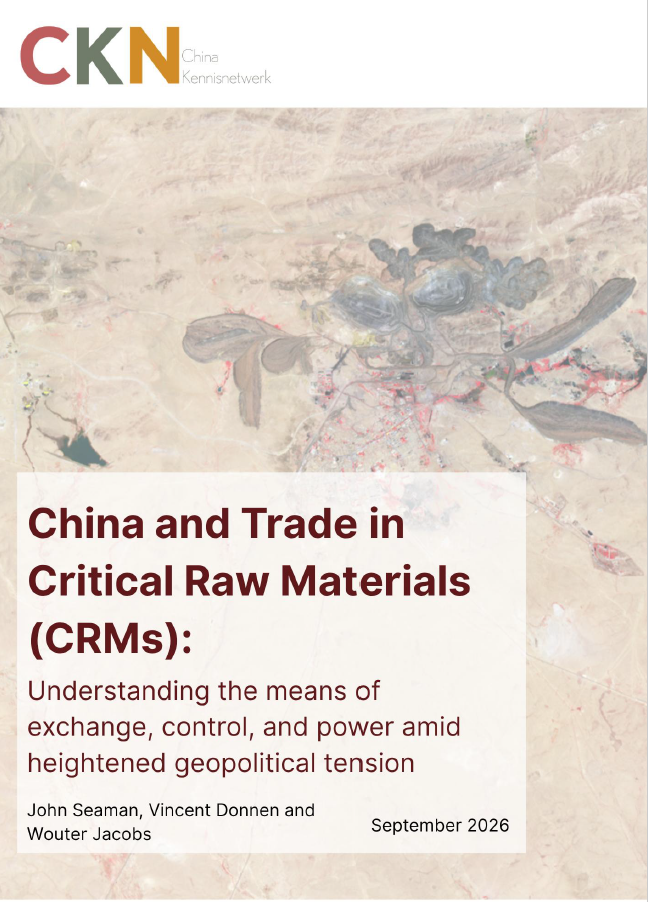
China and Trade in Critical Raw Materials (CRMs)
Critical raw materials (CRMs) have become central features of a new dynamic in global power politics, with China now wielding considerable leverage. Amid rising regional and global uncertainty, resource security is back in the spotlight as a key determinant of sovereignty and national security for Europe, its allies and its partners. The very survival of key, even vital industries, from automotive to aerospace to health to energy to defense, is at stake.
Japan’s Energy Policy after Hormuz. Security, Competitiveness, and Decarbonization
The 2026 Hormuz crisis has strengthened rather than weakened the rationale for Japan’s decarbonization strategy, contrary to what might have been expected. Rather than energy policy supplanting climate policy, the two should actually be viewed as inseparable.