





ASEAN-India Political Cooperation: How to reinforce a much-needed pillar?
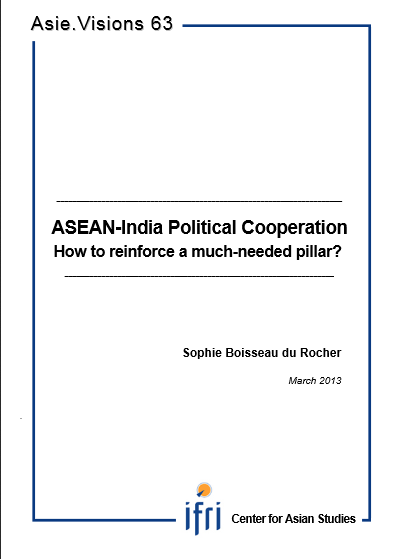
India is one of Southeast Asia’s principal neighbors and there is certainly great potential for cooperation with the region and its institutional representation, ASEAN. But does India properly exploit this opportunity? Is Southeast Asia satisfied with the level of engagement?
The bases for cooperation are strong. Since ancient times India’s soft power has played a unique role in Southeast Asia and has contributed to shaping the region’s political culture. Even if colonialism and the Cold War hampered these links, they have been revived with India’s “Look East Policy” in the early 1990s. The relationship has since gathered momentum and evolved into a broad-level interaction encompassing economic and security pillars.
Nevertheless, this study shows that political linkages remain weak and penalized by the absence of a clear vision. This reality is indeed worrying and there is concern that between rising economic and security imperatives there is no room, no time and no investment for a much needed, constructive political dialogue.
The basic argument of this paper is that the missing political link might be detrimental to the whole relationship. The ASEAN - India framework for political cooperation has no substance and could not play a functional role in case of uncertainty or tensions. In a context of growing competition with China, both India and ASEAN need a reinforced partnership that includes a functional form of political cooperation.

Available in:
Regions and themes
ISBN / ISSN
Share
This page contains only a summary of our work. If you would like to have access to all the information from our research on the subject, you can download the full version in PDF format.
ASEAN-India Political Cooperation: How to reinforce a much-needed pillar?


Sophie BOISSEAU du ROCHER
Ancienne Chercheuse associée, Centre Asie de l'Ifri

Center for Asian Studies
Asia is a nerve center for multiple global economic, political and security challenges. The Center for Asian Studies provides documented expertise and a platform for discussion on Asian issues to accompany decision makers and explain and contextualize developments in the region for the sake of a larger public dialogue.
The Center's research is organized along two major axes: relations between Asia's major powers and the rest of the world; and internal economic and social dynamics of Asian countries. The Center's research focuses primarily on China, Japan, India, Taiwan and the Indo-Pacific, but also covers Southeast Asia, the Korean peninsula and the Pacific Islands.
The Centre for Asian Studies maintains close institutional links with counterpart research institutes in Europe and Asia, and its researchers regularly carry out fieldwork in the region.
The Center organizes closed-door roundtables, expert-level seminars and a number of public events, including an Annual Conference, that welcome experts from Asia, Europe and the United States. The work of Center’s researchers, as well as that of their partners, is regularly published in the Center’s electronic journal Asie.Visions.
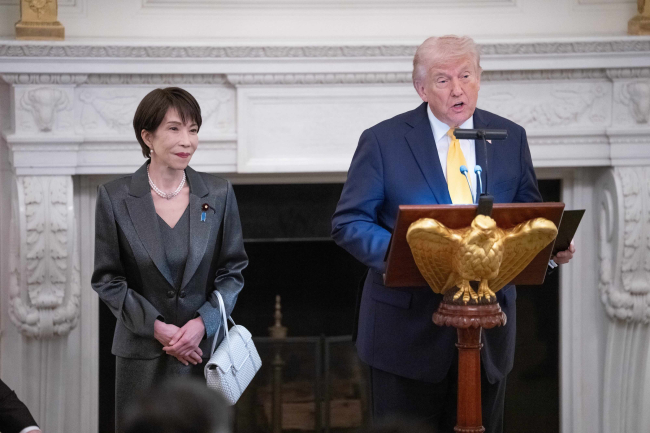
Trump II, the Crisis of the Rules-Based Order and Europe’s Indo-Pacific Strategy
This article examines the implications of Trump II for Europe’s engagement in the Indo-Pacific. The piece contends that Trump II is accelerating the erosion of the rules-based order and undermining the relevance of the Free and Open Indo-Pacific (FOIP) concept, while forcing Europe to refocus on its own continental security amid US retrenchment. Paradoxically, these very constraints create conditions for a more autonomous, pragmatic, and explicitly interest-driven European engagement in the Indo-Pacific, rather than outright withdrawal.
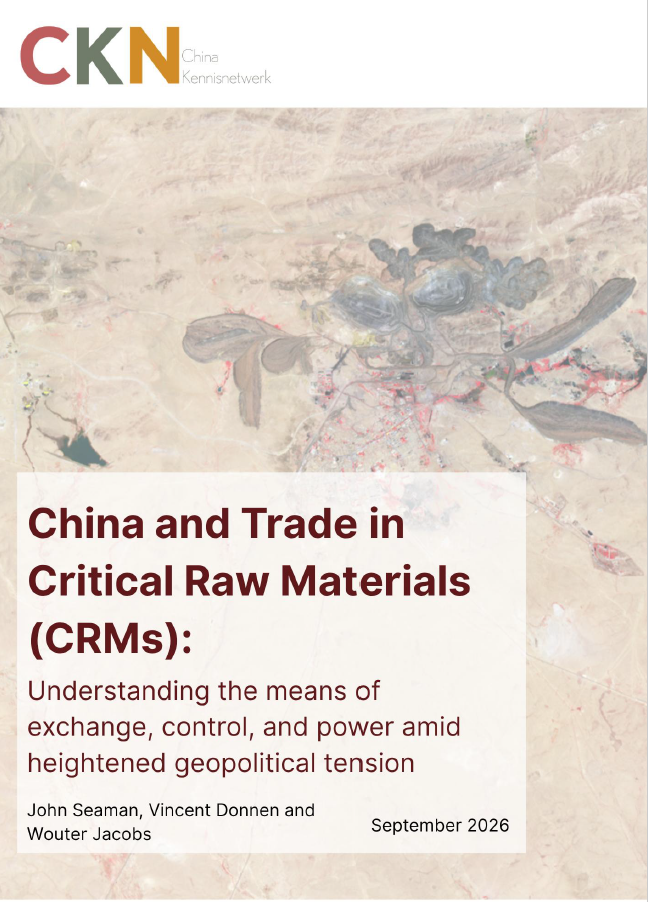
China and Trade in Critical Raw Materials (CRMs)
Critical raw materials (CRMs) have become central features of a new dynamic in global power politics, with China now wielding considerable leverage. Amid rising regional and global uncertainty, resource security is back in the spotlight as a key determinant of sovereignty and national security for Europe, its allies and its partners. The very survival of key, even vital industries, from automotive to aerospace to health to energy to defense, is at stake.
Japan’s Energy Policy after Hormuz. Security, Competitiveness, and Decarbonization
The 2026 Hormuz crisis has strengthened rather than weakened the rationale for Japan’s decarbonization strategy, contrary to what might have been expected. Rather than energy policy supplanting climate policy, the two should actually be viewed as inseparable.
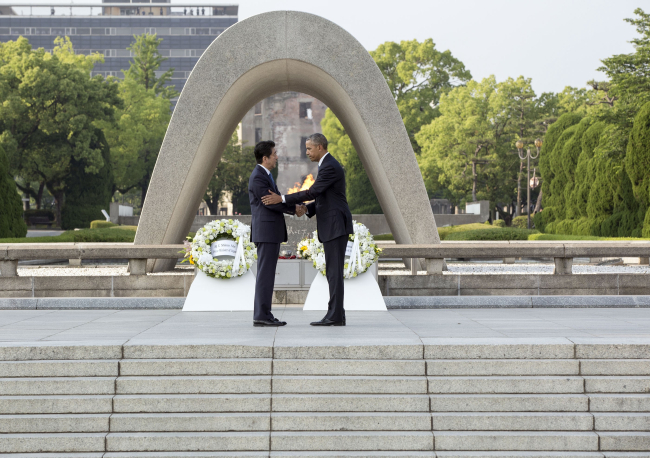
Japan and Nuclear Weapons: Between Extended Deterrence and Normative Dilemmas
Since the late 1950s, Japan’s nuclear weapons policy has been based on the coexistence of two competing normative rationales: the rejection of nuclear weapons, rooted in the legacy of Hiroshima and Nagasaki, and the recognition of the central role of US extended nuclear deterrence for Japan’s security.