
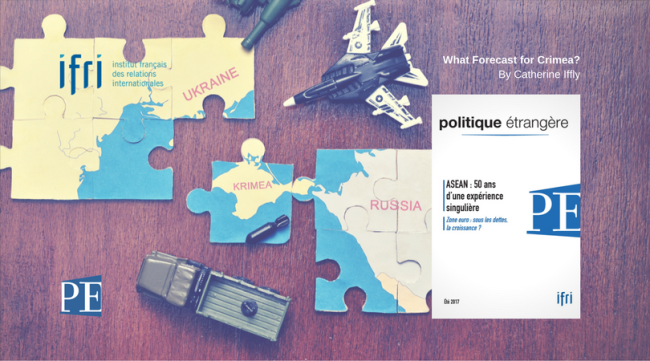
What Forecast for Crimea?
Since Russia’s annexation of Crimea in 2014, the peninsula’s demographics have changed. Thousands have left and new arrivals – Ukrainians fleeing conflict in the east of their country and Russians – have moved in.

Democratic Deconstructions
Today’s democratic governments appear less legitimate and their longevity less assured than ever.
Kadyrovism: Hardline Islam as a Tool of the Kremlin?
This paper analyses the phenomenon of “Kadyrovism” as a relatively coherent ideology which possesses its own internal logic and propaganda tools and which reflects the reality of Ramzan Kadyrov’s rule, based on submission to Vladimir Putin while also being marked by provocative acts directed at the paternal figure of the Russian President.
Energy Relations between Russia and China: Playing Chess with the Dragon
Post-sanctions Russia-China energy relations: what expectations?
Shifting Political Economy of Russian Oil and Gas
Dramatic changes in the Russian energy strategy and energy-based political alliances are to be expected due to the evolution of the domestic oil and gas market resulting from the economic crisis and sanctions linked to the annexation of Crimea.
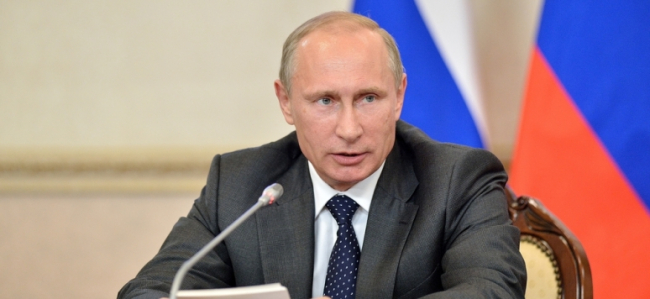
“Conservatism” in Russia: Political Tool or Historical Choice?
President Vladimir Putin’s third term of office proceeds under the “conservative shift.” Does this mean that the Russian government has finally opted for conservatism as its official—though not state—ideology, with long-term consequences for both its domestic policy and foreign policies?
The Political and Commercial Dynamics of Russia's Gas Export Strategy
A wide-ranging look at the way Gazprom interacts with an increasingly challenging global gas market for Russia.
Russian Digital Dualism: Changing Society, Manipulative State
The article studies the effect of the Internet on Russian society in the 2000s, as well as the complex relations between the Internet, groups of digital activists and the manipulative state.
"Digital Kremlin": Power and the Internet in Russia
The Russian Internet, which has undergone considerable development in the last decade, remains subject to constant scrutiny from the Kremlin. Digital technology has posed a challenge to the governance and political legitimacy of the ruling class, which has been anticipated by President Medvedev.
Support independent French research
Ifri, a foundation recognized as being of public utility, relies largely on private donors – companies and individuals – to guarantee its sustainability and intellectual independence. Through their funding, donors help maintain the Institute's position among the world's leading think tanks. By benefiting from an internationally recognized network and expertise, donors refine their understanding of geopolitical risk and its consequences on global politics and the economy. In 2025, Ifri supports more than 80 French and foreign companies and organizations.