






Practical information
Themes and regions
Related centers and programs
This is a private event.
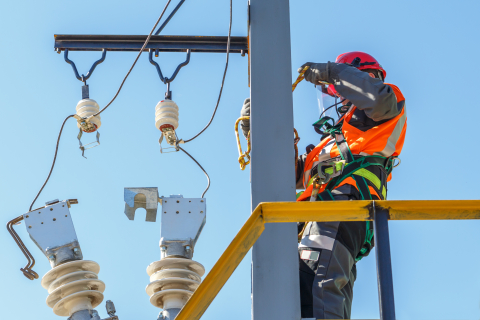
Learn more about our corporate support packagesOver six months since the start of Russia’s invasion of Ukraine, what was to be a three days blitzoperation has turned into an ugly war of attrition with many strategic and tactical surprises. Putin is now doubt now counting on Ukraine and the West to bow first while Russia’s resilience will ultimately prevail and help Russia to lose less than the collapsing Ukraine and West. These two seminars aim at discussing the energy sector dimensions of Russia’s war, and their implications for Europe, as well as how the Kremlin is coping from a political economy perspective to developments it probably has not anticipated.

Tatiana Mitrova, Research Fellow at the Center on Global Energy Policy: Russia’s energy sector: what will be left from the energy superpower and implications for Europe?
Vladimir Milov, Russian opposition politician and energy expert: The Putin system challenged by over six months of war: political and economic implications
Related Subjects
Other events
France-Ukraine Forum 2026
More than four and a half years after the start of the full-scale war launched by Russia against Ukraine, the 2026 France-Ukraine Forum will bring together policymakers, experts, academics, and civil society representatives from both countries to discuss three main topics: the formats and conditions for a lasting diplomatic settlement; Ukraine’s Euro-Atlantic integration, encompassing both the EU accession process and closer ties with NATO; and the societal transformations of postwar Ukraine, as well as its prospects for reconstruction.

The EU in a World of Economic Warfare: Trade, Geopolitics, and the Battle for Economic Sovereignty
The international trading system has become a primary theatre of geopolitical competition. Tariffs, sanctions, and technology controls have replaced dialogue as the default instruments of economic relations.
The Road to 27 Electrification Action Plans: Planning and Investing in Europe’s Electric Future
The European Commission’s Electrification Action Plan places the continent on an electric path to structurally reduce dependence on fossil fuel imports and boost the energy transition in industry, transport and buildings.