





Confronting Russia’s High-Velocity Arsenal: European Challenges and Solutions
Since February 2022, Russian missile and long-range drone strikes against Ukraine have served as near-daily reminders of what European states could face in a war with Russia. The same weapon systems battering Ukrainian infrastructure and population centers would be directed against European military and civilian targets in any confrontation between Russia and NATO. As Russian missile production expands and its arsenal diversifies, Europe must confront an uncomfortable question: how to deter, and if push comes to shove, fight Russia's long-range strike arsenal?
China in Kyrgyzstan and Tajikistan: From Economic Presence to a New Security Role
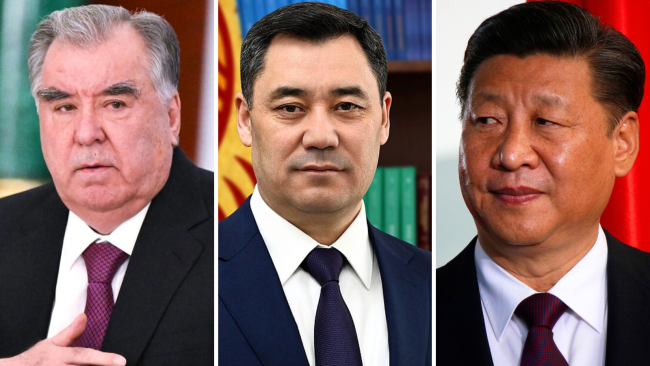
Over the past three decades, China’s influence in Central Asia has steadily expanded, but in the last three to five years this process has entered a markedly accelerated phase. Following 2022, Beijing effectively revised both its strategy and its operational approach toward the region.
Germany in the Shadow of the United States, Russia, and China – Systemic Paradigm Shifts
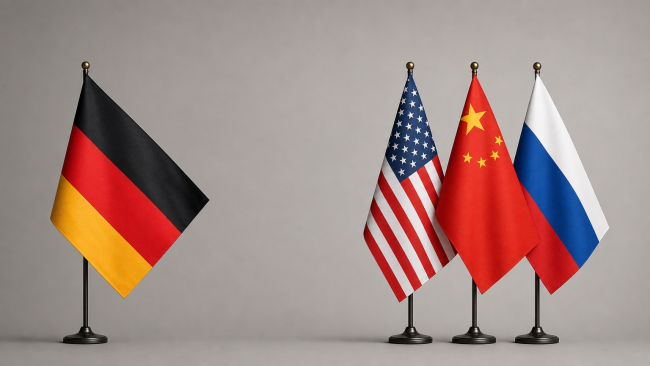
Since reunification, Germany has built its prosperity on an international order based on free trade, multilateralism, and geopolitical stability. This model relied on three relationships considered complementary: U.S. military protection, Russian energy supplies, and economic integration with China. For several decades, Berlin viewed these interdependencies as factors contributing to peace, growth, and security.
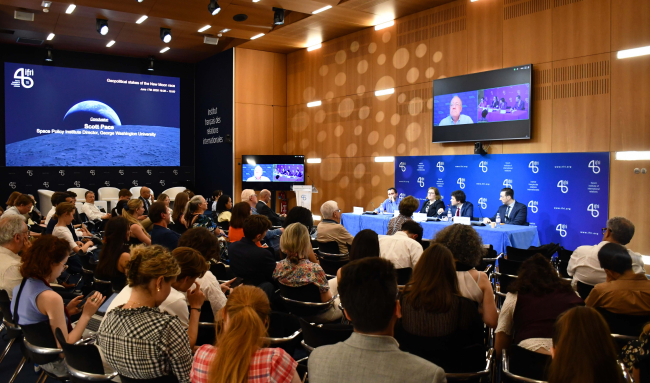
Replay - Geopolitical Stakes of the New Moon Race
As the United States, China, and India solidify their lunar ambitions, Europe is still seeking to define its stance: should it be a reliable partner or an autonomous strategic player? This conference examines the stakes of this new race to the Moon and Europe’s interest in asserting itself as a lunar power through partnerships, industrial ambitions, and whether its participation in the new lunar race serves as a lever for strategic autonomy and internal cohesion, or an illustration of its dependence.
Between Russia and Europe, between War and Peace: What is at Stake in Armenia’s Upcoming Elections?
Armenia’s June 7, 2026, parliamentary election is shaping up less as a routine vote than as a referendum on Nikol Pashinyan’s post-2020 course, which includes peace with neighbors, reduced dependence on Russia, and a more explicit European orientation. The ruling Civil Contract party is still the frontrunner, but its position is fragile, as the campaign is being fought in a highly polarized environment shaped by the trauma of defeat in the war against Azerbaijan, the displacement of Karabakh Armenians, and the massive election interference from Russia.
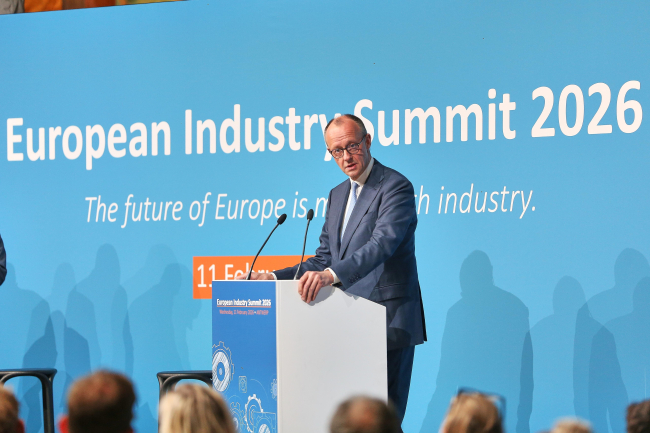
Reviving the German Economy: Balancing Economic, Social, and Defense Priorities
Germany is facing fundamental challenges to its economic and social model and is seeking a new course. The German post-war model was hugely successful, leading to economic strength and prosperity over many decades, but now it is steadily faltering. The previously latent fear of deindustrialization is becoming more concrete, particularly due to the weakening of a key sector: the automotive industry.
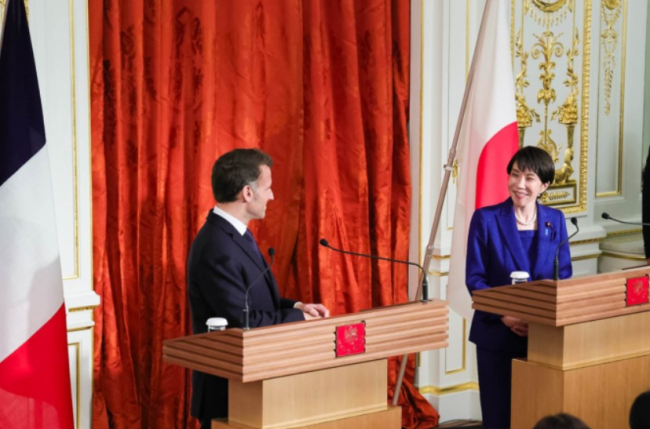
Emmanuel Macron in Japan and South Korea: A Historic Opportunity for Euro-Asian Rapprochement
President Emmanuel Macron is touring Japan and South Korea at a time when the interests of these three countries have never been more aligned, and more broadly between Europe and East Asian democracies.

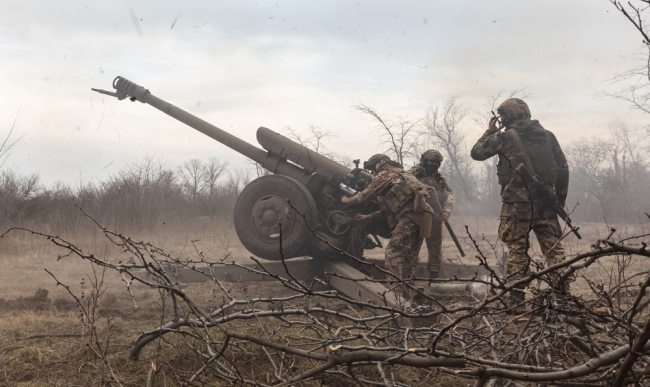
The war could still last for years and paradoxically, time is not on the Kremlin's side
Dimitri Minic, Scientific Director of the Observatory on Russia, Eastern Europe, the Caucasus, and Central Asia and a Research Fellow at Ifri’s Russia/Eurasia Center, argues in an interview with Le Monde that “Ukraine should not be buried too quickly,” even if the current balance of power favors Russia.
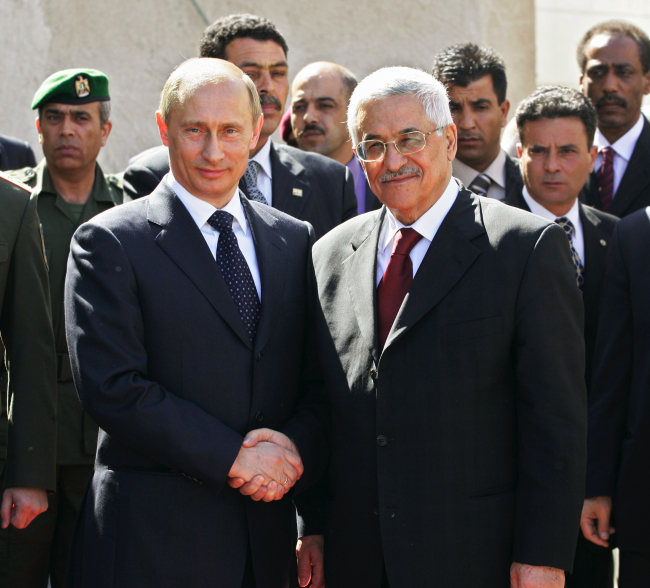
Russia, the Palestinians and Gaza: Adjustments after October 7th
The Soviet Union (USSR), and subsequently the Russian Federation as its internationally recognized legal successor, has consistently sought to play a visible role in efforts to resolve the Israeli-Palestinian conflict.
Mind the Deterrence Gap: Assessing Europe’s Nuclear Options
Europe must urgently confront a new nuclear reality. In recent years, Russia’s nuclear-backed revisionism has reintroduced nuclear coercion and the threat of nuclear escalation to the continent, underscoring the importance of credible nuclear deterrence. At the same time, Europe’s traditional reliance on US extended nuclear deterrence appears politically more fragile than at any point since the Cold War. Together, these developments require Europeans to think about their nuclear options.
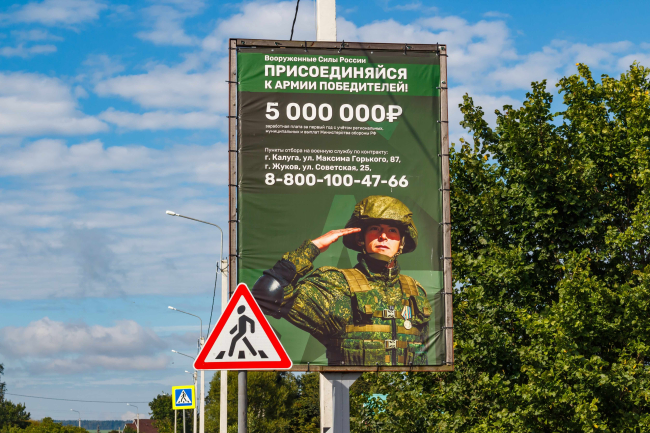
Deathonomics: The Social, Political, and Economic Costs of War in Russia
The report attempts to outline and examine a truly new phenomenon in Russian society, dubbed “deathonomics”—the making of a mercenary army against the backdrop of the Kremlin’s war in Ukraine, eventually replacing both the Soviet (conscript) and early new Russian (contract) armies. It notes that, by the end of 2023, this trend had turned the military service into one of the highest-paying professions in the country, something not seen in Russia on such a scale since the late 17th century.
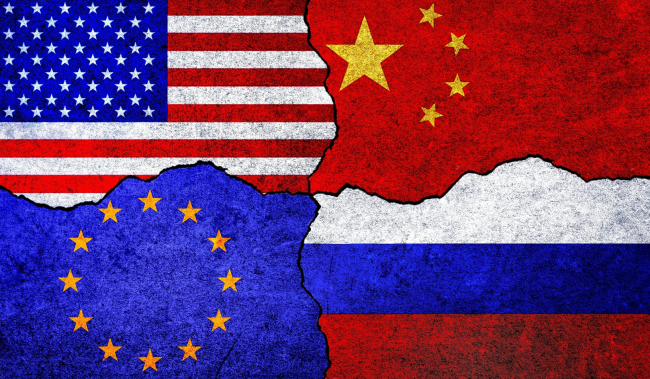
Placing the EU on a Warfare Footing: Energy and Raw Materials Priorities for 2026
The year 2025 has confirmed that one must prepare for much worse in the field of geopolitics and geoeconomics as the intensity and frequency of shocks increase and as the European Union (EU) has no more stable flanks now that crises with the United States (US) become so frequent and reveal a systemic rift. In the world, barriers to trade multiply and dependencies are weaponized.
'Russia holds a decisive edge in terms of manpower, firepower and mobilization capacity'
Three researchers at the French Institute of International Relations, Dimitri Minic, Tatiana Kastouéva-Jean and Paul Maurice, are urging Europe to intensify its power dynamic with Moscow. The French Institute of International Relations (IFRI) published a report on Tuesday, November 4, that highlights Europe's vulnerabilities in the event of a high-intensity conflict with Russia.
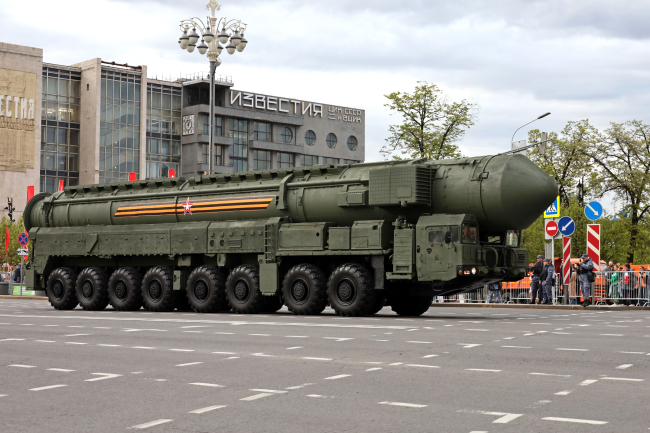
Russia's Nuclear Deterrence Put to the Test by the War in Ukraine
From the outset of its “special military operation” (SVO) against Ukraine on February 24, 2022, Russia, which possesses one of the world’s largest nuclear arsenals, has adopted aggressive deterrence measures and a resolutely menacing rhetorical stance.

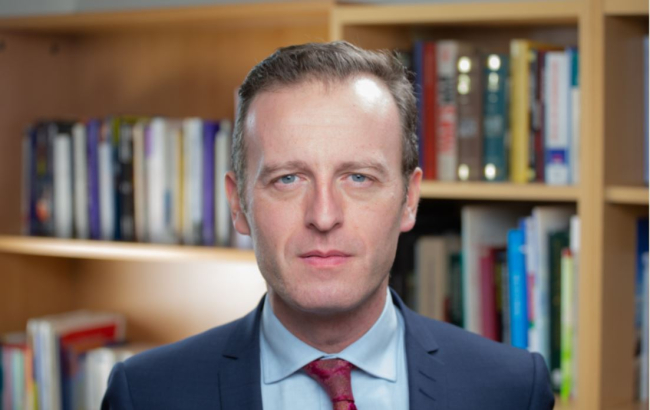
Thomas Gomart, director of the French Institute of International Relations: 'Trump reasserts the US' strategic centrality'
By bombing Iran alongside Israel, Donald Trump has performed a show of force aimed at China and Russia, explains the director of the French Institute of International Relations in an interview.
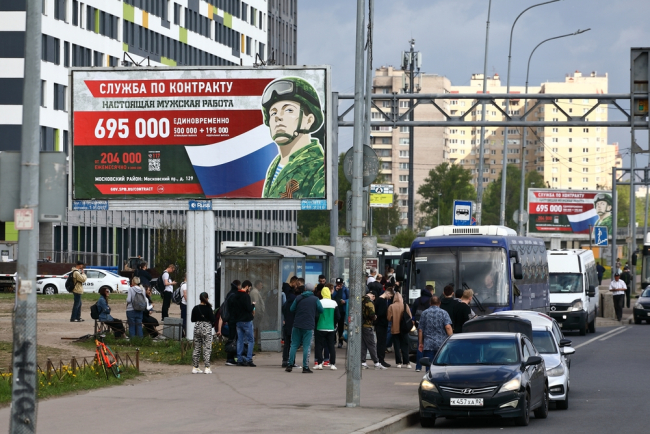
War as Social Elevator: The Socioeconomic Impact of Russian Military Keynesianism
In order to finance its war effort, the Russian state has spent substantial sums of money and implemented a form of “military Keynesianism” that is transforming society at both the socioeconomic and cultural levels. This has partially rebalanced the wide disparities in wealth, levels of consumption, and social prestige in Russian society by granting significant financial and symbolic advantages to peripheral Russia, which has long been overlooked by the central government.

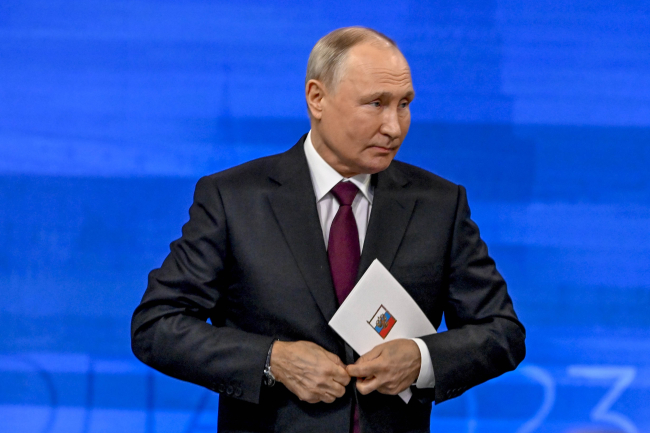
Putin Eyes Peacemaking Role In Israel-Iran Air War
Vladimir Putin is eyeing the conflict between Israel and Iran as an opportunity to thrust himself to the forefront of the international stage, more than three years into his invasion of Ukraine.
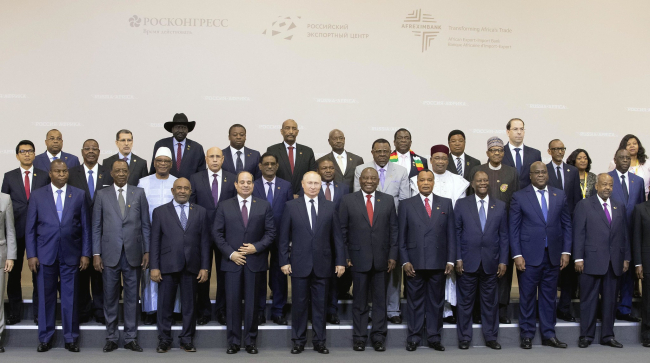
The Contradictory Impacts of Western Sanctions on Economic Relations between Russia and Sub-Saharan Africa
How does Russia maintain economic ties with Africa despite Western sanctions? An analysis of investments, trade, and the circumvention strategies deployed by Moscow.
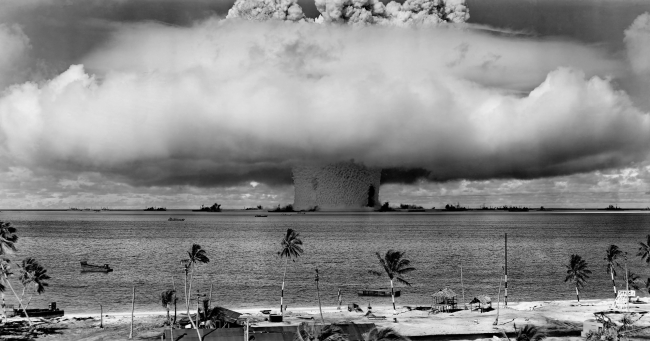
A Fragile Consensus? The Pressure on the Norm Against Nuclear Testing
Apart from North Korea, no state has conducted explosive nuclear tests in the 21st century, reflecting the emergence of a strong international norm against such testing.
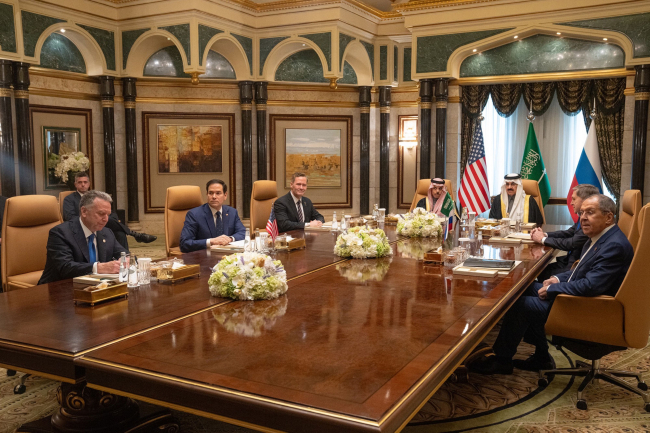
How the US under Trump Became a Strategic and Ideological Adversary of Europe
The Europeans' worst security nightmare seems to be coming true: on Tuesday, February 18, 2025, U.S. Secretary of State Marco Rubio and Russian Foreign Minister Sergey Lavrov met in Saudi Arabia to initiate the normalization of relations between their two countries. The meeting also aimed to set up peace negotiations for Ukraine. However, despite having the potential to affect the entire continent, the discussions took place without the Europeans or the Ukrainians being present.
Confronting Russia’s High-Velocity Arsenal: European Challenges and Solutions
Since February 2022, Russian missile and long-range drone strikes against Ukraine have served as near-daily reminders of what European states could face in a war with Russia. The same weapon systems battering Ukrainian infrastructure and population centers would be directed against European military and civilian targets in any confrontation between Russia and NATO. As Russian missile production expands and its arsenal diversifies, Europe must confront an uncomfortable question: how to deter, and if push comes to shove, fight Russia's long-range strike arsenal?
China in Kyrgyzstan and Tajikistan: From Economic Presence to a New Security Role
Over the past three decades, China’s influence in Central Asia has steadily expanded, but in the last three to five years this process has entered a markedly accelerated phase. Following 2022, Beijing effectively revised both its strategy and its operational approach toward the region.
Germany in the Shadow of the United States, Russia, and China – Systemic Paradigm Shifts
Since reunification, Germany has built its prosperity on an international order based on free trade, multilateralism, and geopolitical stability. This model relied on three relationships considered complementary: U.S. military protection, Russian energy supplies, and economic integration with China. For several decades, Berlin viewed these interdependencies as factors contributing to peace, growth, and security.
Between Russia and Europe, between War and Peace: What is at Stake in Armenia’s Upcoming Elections?
Armenia’s June 7, 2026, parliamentary election is shaping up less as a routine vote than as a referendum on Nikol Pashinyan’s post-2020 course, which includes peace with neighbors, reduced dependence on Russia, and a more explicit European orientation. The ruling Civil Contract party is still the frontrunner, but its position is fragile, as the campaign is being fought in a highly polarized environment shaped by the trauma of defeat in the war against Azerbaijan, the displacement of Karabakh Armenians, and the massive election interference from Russia.
Reviving the German Economy: Balancing Economic, Social, and Defense Priorities
Germany is facing fundamental challenges to its economic and social model and is seeking a new course. The German post-war model was hugely successful, leading to economic strength and prosperity over many decades, but now it is steadily faltering. The previously latent fear of deindustrialization is becoming more concrete, particularly due to the weakening of a key sector: the automotive industry.
Emmanuel Macron in Japan and South Korea: A Historic Opportunity for Euro-Asian Rapprochement
President Emmanuel Macron is touring Japan and South Korea at a time when the interests of these three countries have never been more aligned, and more broadly between Europe and East Asian democracies.
Russia, the Palestinians and Gaza: Adjustments after October 7th
The Soviet Union (USSR), and subsequently the Russian Federation as its internationally recognized legal successor, has consistently sought to play a visible role in efforts to resolve the Israeli-Palestinian conflict.
Mind the Deterrence Gap: Assessing Europe’s Nuclear Options
Europe must urgently confront a new nuclear reality. In recent years, Russia’s nuclear-backed revisionism has reintroduced nuclear coercion and the threat of nuclear escalation to the continent, underscoring the importance of credible nuclear deterrence. At the same time, Europe’s traditional reliance on US extended nuclear deterrence appears politically more fragile than at any point since the Cold War. Together, these developments require Europeans to think about their nuclear options.
Deathonomics: The Social, Political, and Economic Costs of War in Russia
The report attempts to outline and examine a truly new phenomenon in Russian society, dubbed “deathonomics”—the making of a mercenary army against the backdrop of the Kremlin’s war in Ukraine, eventually replacing both the Soviet (conscript) and early new Russian (contract) armies. It notes that, by the end of 2023, this trend had turned the military service into one of the highest-paying professions in the country, something not seen in Russia on such a scale since the late 17th century.
Placing the EU on a Warfare Footing: Energy and Raw Materials Priorities for 2026
The year 2025 has confirmed that one must prepare for much worse in the field of geopolitics and geoeconomics as the intensity and frequency of shocks increase and as the European Union (EU) has no more stable flanks now that crises with the United States (US) become so frequent and reveal a systemic rift. In the world, barriers to trade multiply and dependencies are weaponized.
NATO and Nuclear Weapons
The changes in the way that NATO operates raise the question of whether the nuclear weapons stationed in Europe would, in a time of crisis, be an instrument of solidarity, or lead instead to divisiveness.
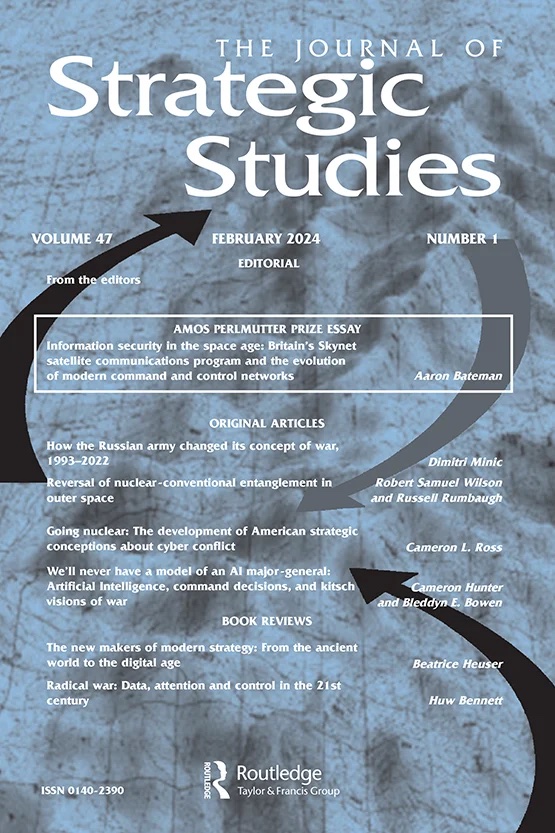
How the Russian Army Changed its Concept of War, 1993-2022
The traditional and high-intensity war that has occurred in Ukraine since Russia decided to invade raises a key issue: did post-soviet Russian strategic thought really prepare Russia for waging this war?
Russia's Nuclear Deterrence Put to the Test by the War in Ukraine
From the outset of its “special military operation” (SVO) against Ukraine on February 24, 2022, Russia, which possesses one of the world’s largest nuclear arsenals, has adopted aggressive deterrence measures and a resolutely menacing rhetorical stance.
War as Social Elevator: The Socioeconomic Impact of Russian Military Keynesianism
In order to finance its war effort, the Russian state has spent substantial sums of money and implemented a form of “military Keynesianism” that is transforming society at both the socioeconomic and cultural levels. This has partially rebalanced the wide disparities in wealth, levels of consumption, and social prestige in Russian society by granting significant financial and symbolic advantages to peripheral Russia, which has long been overlooked by the central government.
The Contradictory Impacts of Western Sanctions on Economic Relations between Russia and Sub-Saharan Africa
How does Russia maintain economic ties with Africa despite Western sanctions? An analysis of investments, trade, and the circumvention strategies deployed by Moscow.
A Fragile Consensus? The Pressure on the Norm Against Nuclear Testing
Apart from North Korea, no state has conducted explosive nuclear tests in the 21st century, reflecting the emergence of a strong international norm against such testing.
How the US under Trump Became a Strategic and Ideological Adversary of Europe
The Europeans' worst security nightmare seems to be coming true: on Tuesday, February 18, 2025, U.S. Secretary of State Marco Rubio and Russian Foreign Minister Sergey Lavrov met in Saudi Arabia to initiate the normalization of relations between their two countries. The meeting also aimed to set up peace negotiations for Ukraine. However, despite having the potential to affect the entire continent, the discussions took place without the Europeans or the Ukrainians being present.

The China-Russia Partnership and the Ukraine War: Aligned but not allied
China and Russia maintain a strategic partnership rooted in shared opposition to the U.S. and liberal democracies, but their relationship is shaped more by pragmatism than trust.
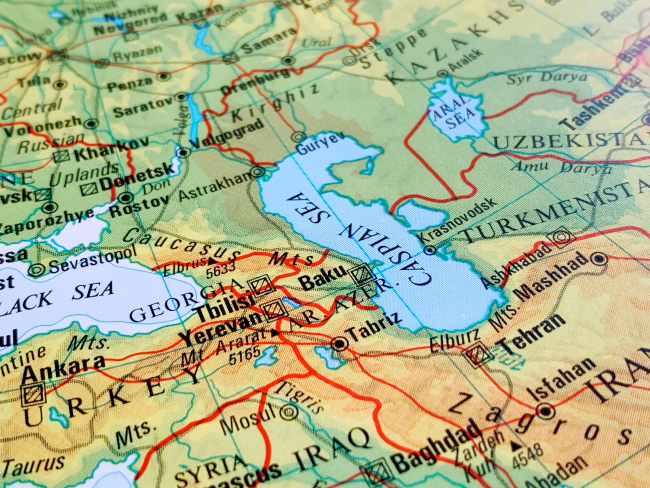
The Caspian Sea as an Emerging Energy Hub : Potentials and Limitations
This report analyzes the prospects of the Caspian Sea region — and its key actors except for Russia and Iran — becoming an important energy hub serving the needs of the European Union (EU).
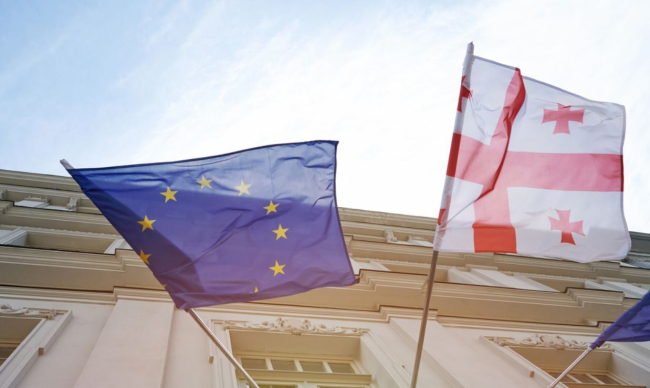
The European Union's Strategic Test in Georgia
The political crisis brewing in Georgia is of an existential nature for the country. What is at stake is Georgia's future as a democratic and sovereign European nation (EU).
Replay - Geopolitical Stakes of the New Moon Race
As the United States, China, and India solidify their lunar ambitions, Europe is still seeking to define its stance: should it be a reliable partner or an autonomous strategic player? This conference examines the stakes of this new race to the Moon and Europe’s interest in asserting itself as a lunar power through partnerships, industrial ambitions, and whether its participation in the new lunar race serves as a lever for strategic autonomy and internal cohesion, or an illustration of its dependence.
The war could still last for years and paradoxically, time is not on the Kremlin's side
Dimitri Minic, Scientific Director of the Observatory on Russia, Eastern Europe, the Caucasus, and Central Asia and a Research Fellow at Ifri’s Russia/Eurasia Center, argues in an interview with Le Monde that “Ukraine should not be buried too quickly,” even if the current balance of power favors Russia.
Thomas Gomart, director of the French Institute of International Relations: 'Trump reasserts the US' strategic centrality'
By bombing Iran alongside Israel, Donald Trump has performed a show of force aimed at China and Russia, explains the director of the French Institute of International Relations in an interview.
Putin Eyes Peacemaking Role In Israel-Iran Air War
Vladimir Putin is eyeing the conflict between Israel and Iran as an opportunity to thrust himself to the forefront of the international stage, more than three years into his invasion of Ukraine.

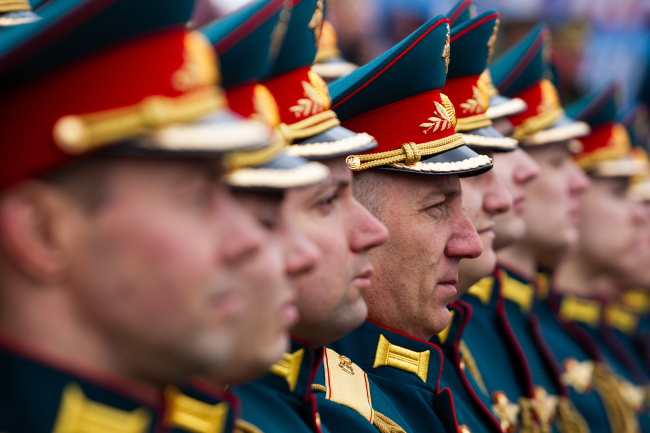
In Putin's wartime Russia, military corruption is suddenly taboo
To be sure government spending reaches the battlefield in Ukraine, President Vladimir Putin is suddenly putting high priority on purging Defense Ministry officials accused of corruption. Russia's war in Ukraine has turned out to be a powerful anti-corruption initiative — at least at the Ministry of Defense.

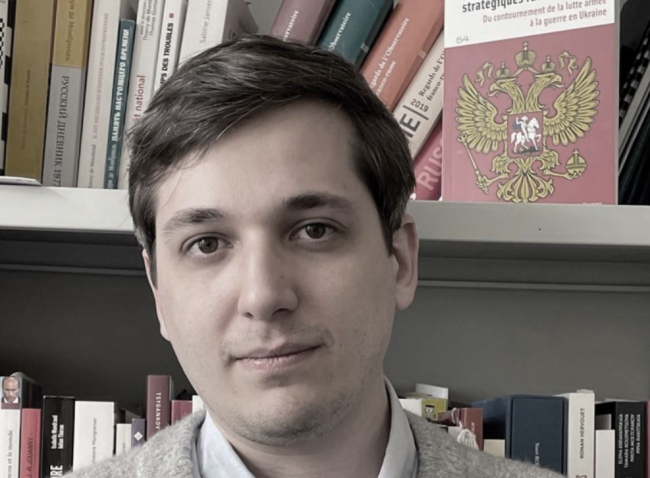
Dimitri Minic: 'The Kremlin's credibility has been shaken'
For this Russian army specialist, at least part of the armed forces rallying behind the founder of the Wagner group, Yevgeny Prigozhin, cannot be ruled out.
Dimitri Minic: 'The Russian army is influenced by beliefs that detaches it from objective reality'
According to the researcher, the failure of the Russian army in Ukraine is the result of the implementation of a theory that emerged in the 2000s, which places a central focus on 'psychological-informational' warfare rather than armed combat.

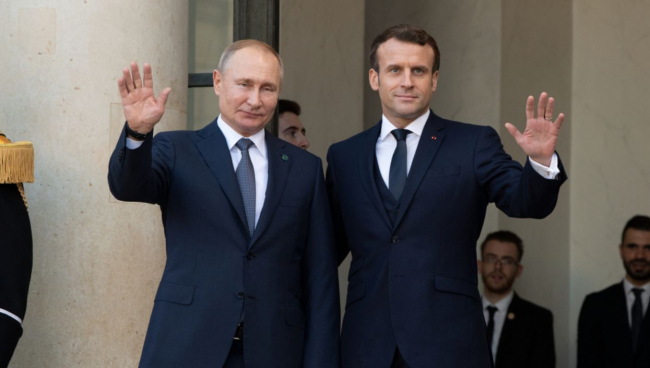
Macron pirouettes on Russia to the strains of ‘Churchill and Chamberlain’
President Emmanuel Macron’s nuanced position on the war in Ukraine is part and parcel of yet another French specificity, an attitude towards Russia which is unique in Europe. Macron prides himself on being a moderate among western warmongers.
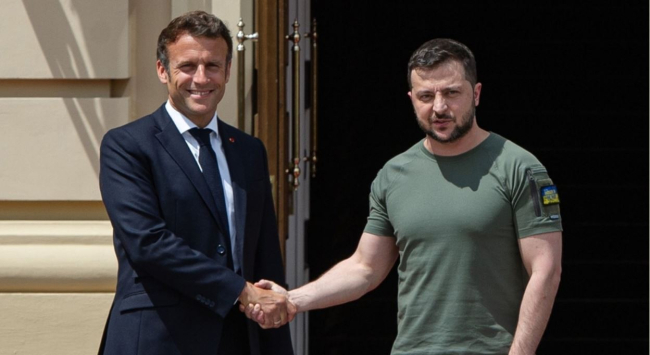
How will it end? No easy answers over Russia's war on Ukraine
The Kremlin wanted Russia's invasion of Ukraine to yield a lightning victory, but 12 months on the war is dragging into a stalemate with neither side achieving military breakthrough nor prepared to agree a settlement based on the status quo.

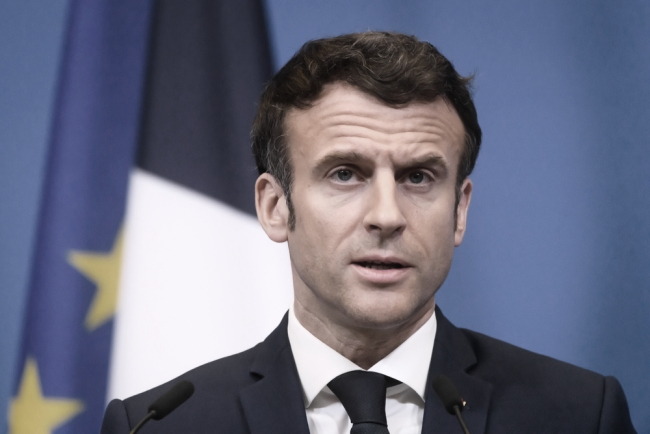
What Macron's 'Security Guarantees' Mean for Ukraine War
Ukraine is facing a grim festive period. Civilians are hunkered down in below-freezing conditions with periodic power as Russian missiles and drones continue Moscow's punishing infrastructure offensive. Ukrainian troops, bogged down by mud, are still pushing forwards gradually in the south and northeast, while defenders around Bakhmut are locked in hellish combat with Russian regulars and mercenaries.

Global Focus: Has the War in Ukraine United Europe?
Does the war in Ukraine change the prospect of European Union enlargement? What is the possibility and future of Europe's common foreign and security policy? Does russian aggression unite or unify Europe and what is the role of the European political community? What is Russia's ultimate strategic goal?


Military briefing: How will Russia’s mobilisation affect the war in Ukraine?
Kyiv expects new recruits to appear within two months but Moscow struggles with training and logistical obstacles.
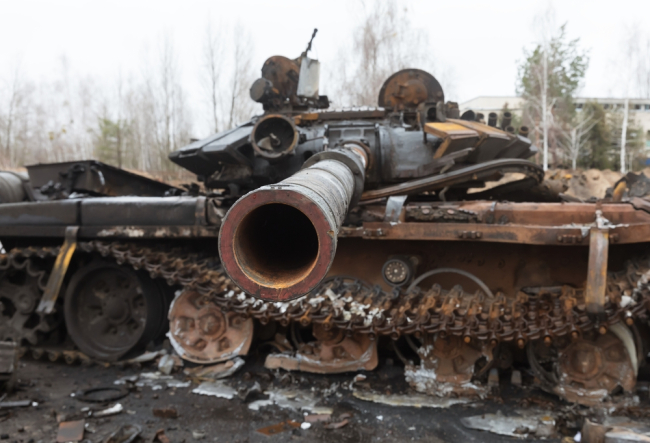
Russian army hobbled by shortage of soldiers
Following the last Ukrainian victories over the Russian Army in the Kharkiv oblast, Russian administration currently faces controversies. As a matter of fact, many question the degree of intensity Russian general staff has decided, avoiding for now general mobilization. According to Dimitri Minic, researcher attached to the Russia / NIS center at the French Institutes of International Relations and expert in russian armed forces, the current russian army not only lacks men but also modern equipment.
C.Africa's Leap Into Bitcoin Leaves Its People Bemused
In the Central African Republic (CAR), nine out of 10 people do not have internet, and only one in seven has electricity -- that is, when there are no power cuts.
Yet the CAR has just followed El Salvador in adopting bitcoin as legal tender, a currency that requires access to the net to be bought, sold or used.

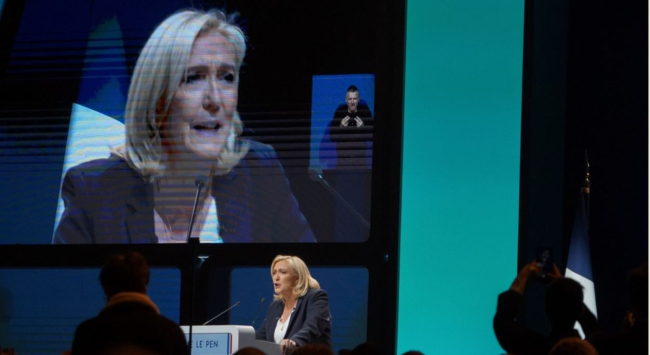
Le Pen Closer Than Ever to the French Presidency (and to Putin)
As elections approach Sunday, the far-right candidate is linked to the Russian president by a web of financial ties and a history of support that has hardly dimmed despite the war in Ukraine.
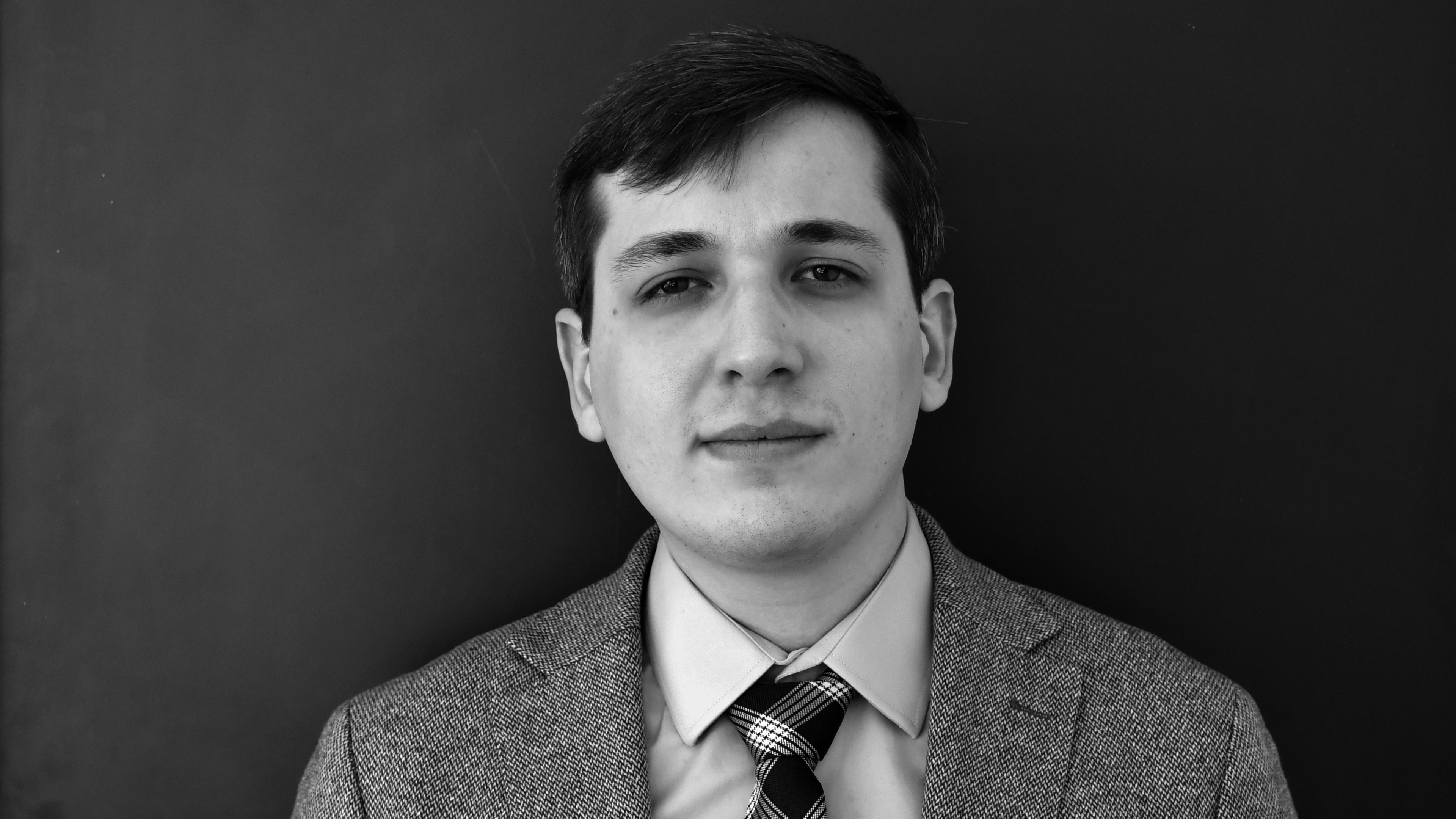
Russian Elite Divided on Strategy in Ukraine but Not on Kremlin Goals There, Minic Says
Vladimir Putin is not a military strategist, and the decision to shift Russian forces from around Kyiv to the southeast in order to be in a position to defeat the Ukrainian army rather than go all out to achieve regime change now in Ukraine shows that, Dmitri Minic of the Paris Institute for International Relations says.

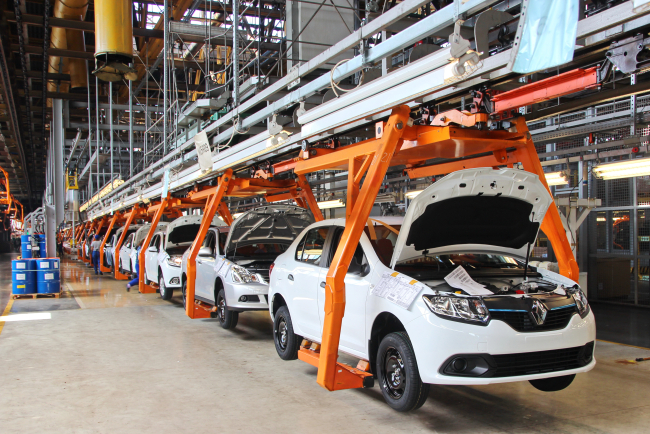
Renault’s Russia dilemma
Renault had for months been plotting to export a newfangled version of the Lada to the reste of the world. although realising that ambition remained some way off, it would have capped the revival of a brand arguably more synonymous with the Soviet Union than any other and which Renault first took a punt on in 2007 after then chief Carlos Ghosn identified Russia as a promising market.

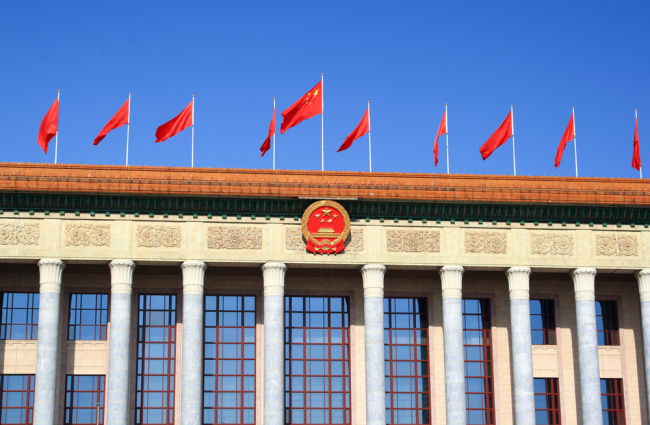
China sees at least one winner emerging from Ukraine war: China
Officials in Beijing believe it can take advantage of a distracted US and weakened Russia. The war in Ukraine is far from over, but a consensus is forming in Chinese policy circles that one country stands to emerge victorious from the turmoil: China.
After the riots, a new era in Kazakhstan?
In January 2022 Kazakhstan underwent its most serious political crisis since its independence, proclaimed on December 16, 1991. The increase in the price of fuel has set ablaze the west of the country in the grip of socio-economic marginalization, then the southern regions, traditionally more resistant to central power. What actually happened, and what consequences did these troubles have at the national and regional levels?
Putin’s War is Stuck, Beware The Rising Risks
Data on the concentration of Russian troops was solid; the diplomatic offensive executed by Moscow was deliberately disagreeable; yet, many experts (myself including) refused to accept the proposition on the coming war as “inevitable”.
Replay - Geopolitical Stakes of the New Moon Race
As the United States, China, and India solidify their lunar ambitions, Europe is still seeking to define its stance: should it be a reliable partner or an autonomous strategic player? This conference examines the stakes of this new race to the Moon and Europe’s interest in asserting itself as a lunar power through partnerships, industrial ambitions, and whether its participation in the new lunar race serves as a lever for strategic autonomy and internal cohesion, or an illustration of its dependence.
Russia-North Korea Alliance: A New Threat to Global Security and Korean Stability?
An interview with Wooyeal PAIK, Professor, Department of Political Science and International Studies, Yonsei University. He analyses why North Korea's support for Russia could escalate global tensions, strain the EU-NATO security ties, and destabilize the Korean Peninsula.
Global Financial Shifts: The Impact of Dollar Sanctions and Frozen Russian Assets
An interview with Brad Setser, Whitney Shepardson Senior Fellow (Council on Foreign Relations) led at Ifri on September 24, 2024.
Dollar-based financial sanctions have been increasing, particularly since the beginning of the century. Is this phenomenon likely to significantly alter the international role of the dollar?
There is a lot of controversy about the in which way frozen assets from Russia’s central bank should be treated, regarding both the assets themselves and the associated revenues. What consequences do you foresee for the international financial system?
Ditching U.S. Nuclear Protection in Europe: Will It Trigger a Nuclear Arms Race?
What if France takes over the U.S. role in providing nuclear deterrence for Europe? What happens to U.S. nuclear weapons stationed on the European continent? Could France’s increased nuclear security role lead to proliferation and a new arms race? Join us as we delve into European nuclear security, the Iranian nuclear program, and the roles of Russia and China in supporting Iran.
Strategic stability: what future in the context of confrontation between Moscow and Washington?
An interview with Andrey KORTUNOV, Director General of the Russian International Affairs Council (RIAC).
Russia and Information Warfare: Aims, Tools and Implications for the West
How can the West counter Russia's cyber and psychological operations? Can we talk about a "militarization" of information in Russia?
Russia and Information Warfare: Aims, Tools and Implications for the West - Keir Giles
How can the West counter Russia's cyber and psychological operations? Can we talk about a "militarization" of information in Russia?
Ifri, a foundation recognized as being of public utility, relies largely on private donors – companies and individuals – to guarantee its sustainability and intellectual independence. Through their funding, donors help maintain the Institute's position among the world's leading think tanks. By benefiting from an internationally recognized network and expertise, donors refine their understanding of geopolitical risk and its consequences on global politics and the economy. In 2026, Ifri partners with over 90 French and international companies and organizations.
