







Sustainable Urban Growth in Africa: the Role of Governance, SMEs and Disruptive Technologies

Practical information
In 2030, half of the African population will be living in urban agglomerations. Rapid urban growth has been defined as major challenges, but also a potential opportunity for the continent’s socio-economic development. Creating inclusive, sustainable and resilient cities is one of the 17 United Nations Sustainable Development Goals.
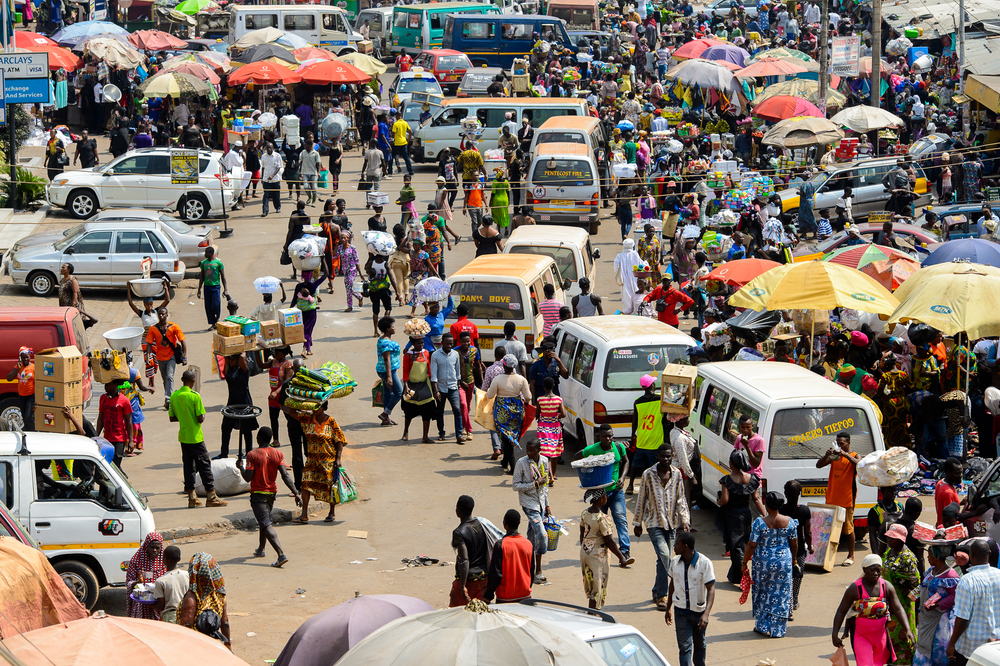
Public authorities, national governments and the private sector are confronted with major challenges resulting from growing demographic and spatial growth of African urban agglomerations: access to jobs, housing and land, but also to basic services such as transport and clean energy are priority.
In preparation of the next Africa-France summit (Montpellier, 7th-9th October 2021) and focusing on three interrelated key sectors of urban governance – land, transport and energy – this webinar will address the role of disruptive technologies, developed by start-ups and tech companies and SMEs, to achieve the goal of more inclusive and sustainable cities.
This webinar is co-organized by Ifri’s Sub-Sahara Africa Center and Ifri’s Center for Energy & Climate.
Chair & moderation: Sina Schlimmer, Researcher, Sub-Sahara Africa Center, Ifri
Speakers:
- Antony Lamba, Chief Technical Advisor, UN-Habitat
- Teddy Delaunay, Project Officer, Croix Rouge Mobilités
- Hugo Le Picard, Researcher, Center for Energy & Climate, Ifri
Find out more

The Potential of Digital Technologies for Centralized Electricity Systems in Sub-Saharan Africa
Affordable and reliable electricity access is a prerequisite for the economic development of sub-Saharan Africa.
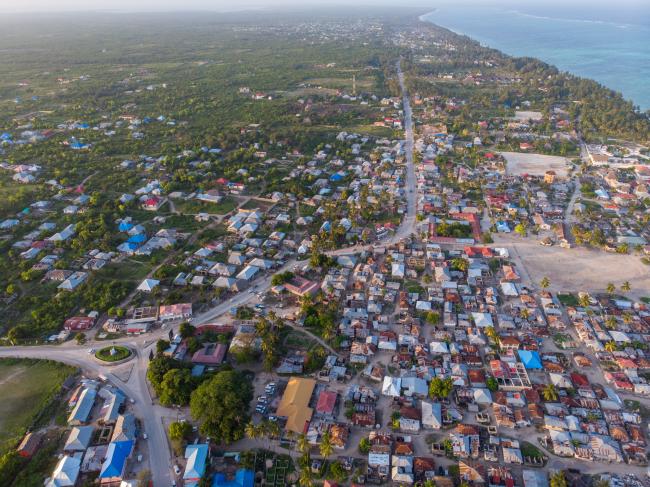
Land Governance in the Outskirts of African Cities. Socio-Economic Challenges of Growing Peri-Urban Land Markets
Between 2020 and 2050, Africa’s population is expected to double, and the continent will be home to 2.5 billion people. Almost half of this population will be living in urban agglomerations. Metropolitan cities, such as Lagos, Nairobi, Dar es Salaam or Abidjan will host several tens of millions of urban dwellers. Peri-urban areas are most affected by the cities’ expansion and undergo important social, political, and economic transformations.
Other events

France-Ukraine Forum 2026
More than four and a half years after the start of the full-scale war launched by Russia against Ukraine, the 2026 France-Ukraine Forum will bring together policymakers, experts, academics, and civil society representatives from both countries to discuss three main topics: the formats and conditions for a lasting diplomatic settlement; Ukraine’s Euro-Atlantic integration, encompassing both the EU accession process and closer ties with NATO; and the societal transformations of postwar Ukraine, as well as its prospects for reconstruction.

The EU in a World of Economic Warfare: Trade, Geopolitics, and the Battle for Economic Sovereignty
The international trading system has become a primary theatre of geopolitical competition. Tariffs, sanctions, and technology controls have replaced dialogue as the default instruments of economic relations.
The Road to 27 Electrification Action Plans: Planning and Investing in Europe’s Electric Future
The European Commission’s Electrification Action Plan places the continent on an electric path to structurally reduce dependence on fossil fuel imports and boost the energy transition in industry, transport and buildings.