Saving Energy in a Hurry: Reducing Dependence on Russian Hydrocarbons Requires Resolute Demand and Supply Sides Action
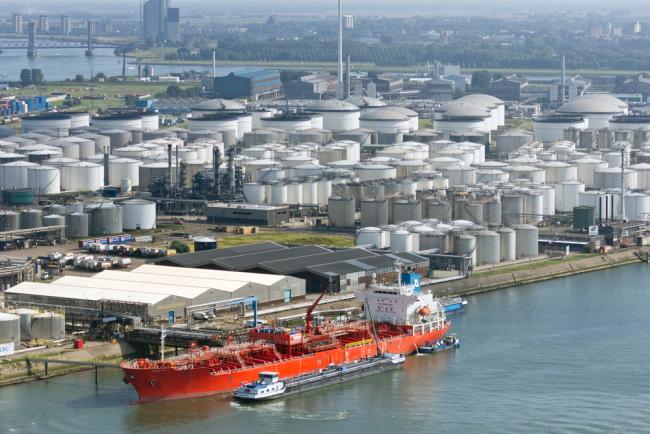
Facing Russia’s aggression on Ukraine, European countries have enacted economic and financial sanctions against Russia.
Geoengineering to the climate's rescue? Issues, actors and perspectives of an anthropocene symbol
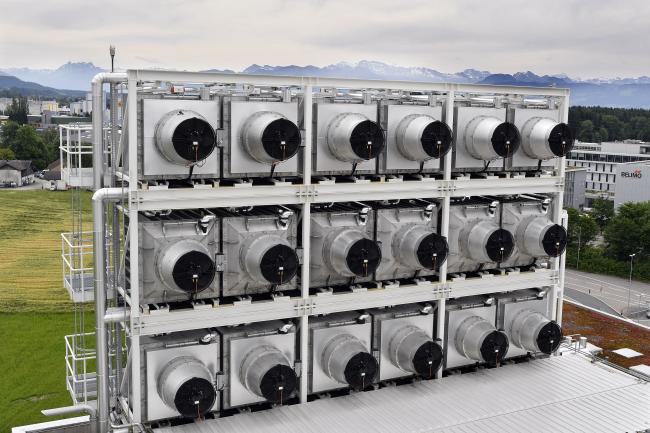
Geoengineering is a catchword for a wide range of techniques, and it is becoming an international issue that will grow in importance as the costs of certain technologies fall or as greenhouse gas emissions continue to decline, making these techniques more attractive.
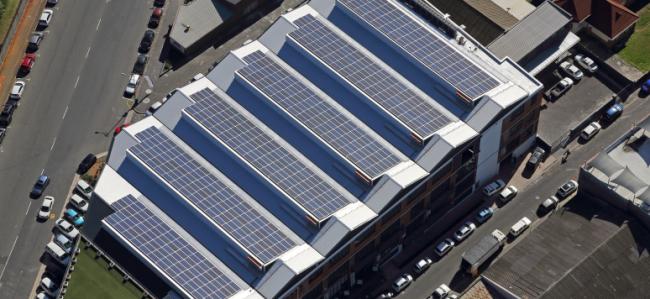
Booming Decentralized Solar Power in Africa’s Cities. Satellite Imagery and Deep Learning Provide Cutting-Edge Data on Electrification
The market for decentralized solar systems first developed in rural Africa, and today it is expanding to the continent’s cities, though these areas are already covered by each country’s central network.


What can we expect from Russia at COP26?
We ask experts whether the Kremlin’s latest moves on climate, including its 2060 net-zero target, heralds genuine change or more greenwash.
Russia has been seen as a climate pariah by the international community for some years. It was one of the last counties to ratify the 2015 Paris Agreement – not until September 2019, at the UN’s Climate Action Summit.

The Missing Guest: Energy Efficiency in the Multilateral Energy Arena
Since the 1970s, energy efficiency has gained visibility as a low hanging fruit – its potential impact on critical issues such as climate change, energy security, or competitiveness is now widely acknowledged, even more so in times of higher energy prices.
Climate and International Trade: The Clash of Powers
The fight against climate change has a major economic dimension. With climate neutrality as their new objective, the major powers are counting on green industrial policy, and trying to contain the emissions related to their imports.
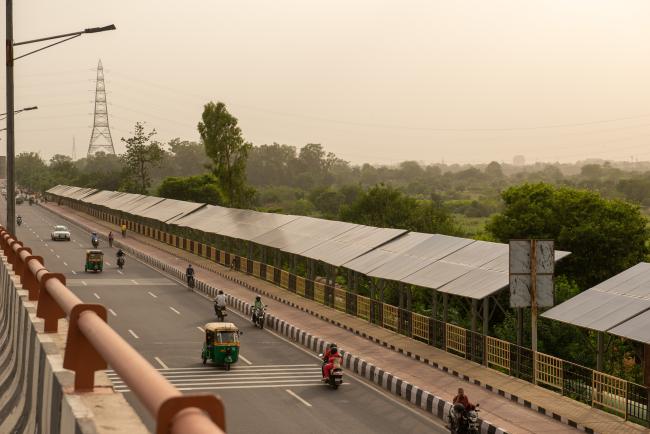
India’s Energy and Climate Policies Post COVID-19: Short Term Slowdown, Longer Term Boom in Renewables
India has long been a positive and committed partner in global and domestic climate change mitigation efforts.
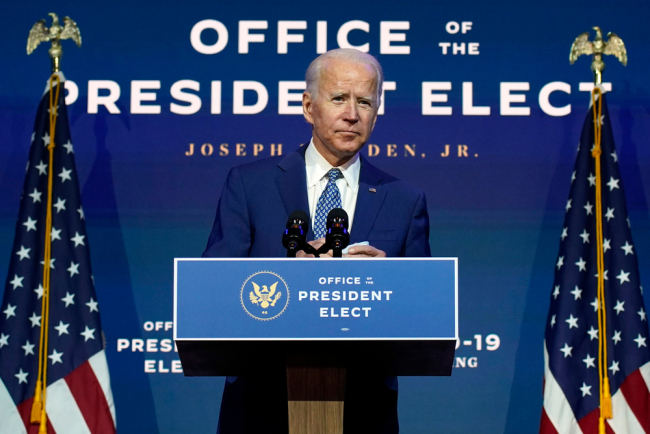
United States Climate Politics Under Biden: Is the Clean Energy Revolution Under Way?
For most of United States (US) history, environmental issues enjoyed bipartisan support. While Democratic President Johnson signed the Clean Air Act in 1963, Republican President Nixon established the Environmental Protection Agency (EPA) in 1970. America’s “environmental decade” culminated under President Carter, with Congress enacting ambitious environmental legislation.
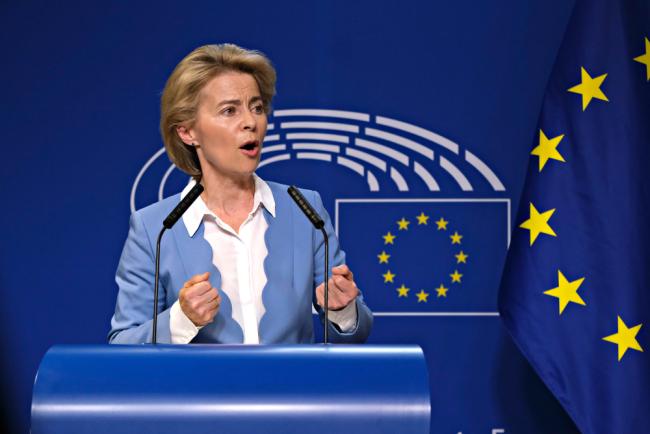
The War on Carbon. Five Priorities for the European Green Deal
2019 has marked a fundamental turning point in the energy transition of the European Union (EU).
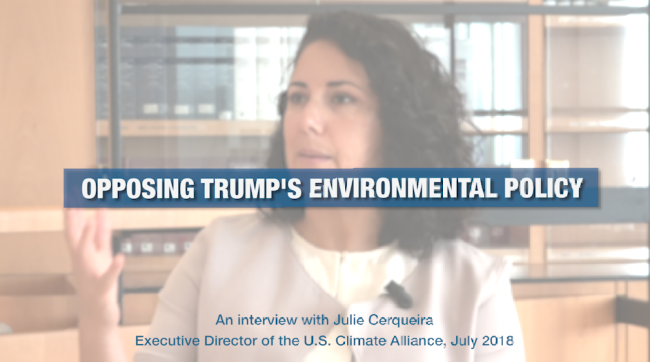
Opposing Trump's Environmental Policy
An interview with Julie CERQUEIRA, Executive Director of the U.S. Climate Alliance.

Opinion : "No common view on the role of nuclear energy at COP climate talks, but individual countries can decide"
A year after the landmark COP21 climate discussions, the ambitious Paris Agreement entered into force just before COP22 began in Marrakech, Marrocco. With this latest round of talks new over, Carole Mathieu of Ifri debriefs Nuclear Report on what happened in Marrakech, the importance of the decarbonization agenda, and on the silent place nuclear energy occupies at the UNIFCCC negociations.
To Read the Full Interview click here

From COP21 to COP22: Keeping up the Momentum
In December 2015, a new international climate agreement was adopted, paving the way for increased mitigation and adaptation efforts.

What new climate measures are G7 countries taking after Paris deal?
A month after COP21 summit, club of major economies weighs policy tweaks to meet tough global warming goal.
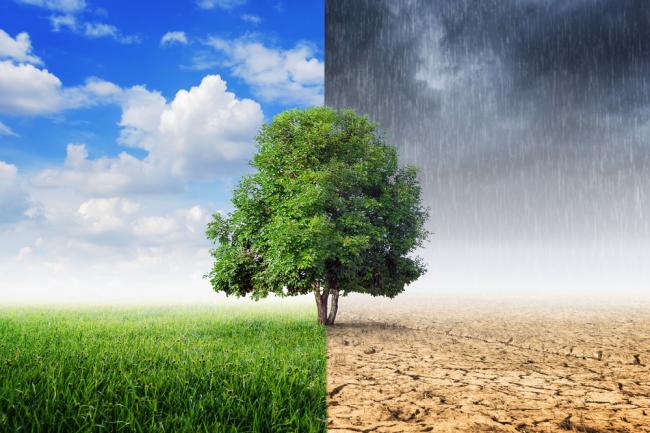
Innovation: a New Mode of Climate Action
A range of announcements of energy and climate coalitions have been made during COP21. Beyond their important diplomatic objectives, these new forms of coalitions bring scientists and industry leaders towards new long term visions of energy consumption modes.
How to reflect non-parties contributions? The Taiwanese experience with climate action
Minister Kuo-Yen Wei, the third speaker to our conference on Climate Action beyond COP21, shared his insights on how Taiwan, which is not an official party to the UNFCCC, is determined to contribute to the global fight against climate change by taking action domestically. Mr. Wei is the current Minister of the Environmental Protection Administration of Executive Yuan, ROC (Taiwan).
Key challenges for COP21
Yvo de Boer, the first speaker to our conference Climate Action beyond COP21, shared his insights on what should be the core elements of the Paris agreement. Mr de Boer is the Director General of the Global Green Growth Institute and he was the Executive Secretary of the United Nations Convention on Climate Change between 2006 and 2010.
What chances do we have to stay below the 2°C limit?
Jean Jouzel, the second speaker to our conference on Climate Action beyond COP21, shared his insights on the aggregate effect on national climate pledges and adressed the issue of consistency with the globally agreed long-term goal of keeping the average temperature rise below 2°C. Mr Jouzel is a climatologist, research director at CEA and former vice-president of the scientific working group of the IPCC (2002-2015).
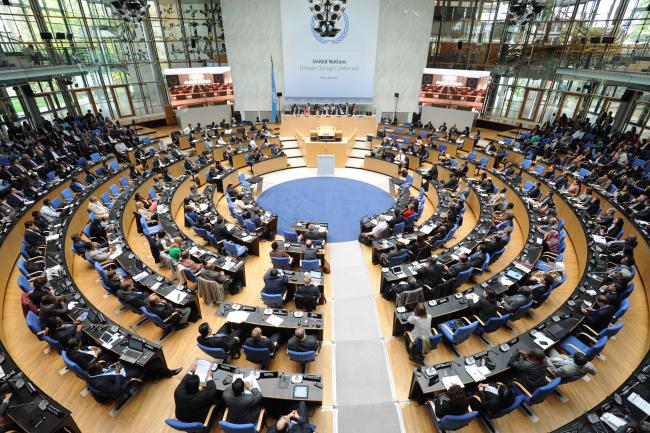
Shaping Expectations to Foster the Low Carbon Transition: Can COP21 be a catalyst for action?
This report explores the debate on how COP21 could shape expectations of a global shift towards decarbonisation and thus boost low carbon investments.
Climate Action beyond COP21 - Conference Brief
On November 4th 2015, the Ifri Center for Energy held an international conference on the future of Climate Action beyond the COP21. The conference brought together key experts to outline reasonable expectations for the Paris Climate Summit, in terms of binding commitments from the parties and, more broadly, in terms of the profound transformation that an agreement could trigger.

Nations prepare for Paris Climate Summit
World leaders to gather in Paris for a new round of talks on climate change. CNN's Jim Bittermann reports.
Ifri, a foundation recognized as being of public utility, relies largely on private donors – companies and individuals – to guarantee its sustainability and intellectual independence. Through their funding, donors help maintain the Institute's position among the world's leading think tanks. By benefiting from an internationally recognized network and expertise, donors refine their understanding of geopolitical risk and its consequences on global politics and the economy. In 2026, Ifri partners with over 90 French and international companies and organizations.