




Law and Justice
Regulating the world through law and justice is an old idea, but one that has run up against many difficulties. One growing phenomenon is the extraterritoriality of national legislation.


Democratic Deconstructions
Today’s democratic governments appear less legitimate and their longevity less assured than ever.
Africa and the ICC Going Forward
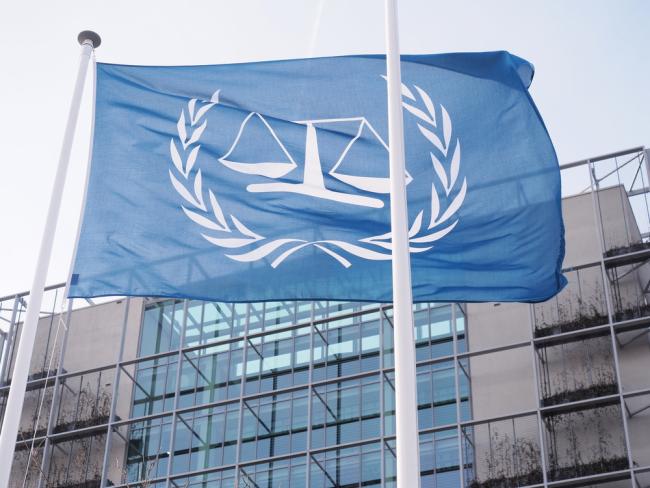
October 2016 presented a grim test for the fourteen-year-old International Criminal Court (ICC) as three Sub-Saharan African countries, Burundi, South Africa and Gambia announced their decision to opt out of the international judicial body.
South China Sea and the Law of the Sea: Where is China’s Power Heading?
On Tuesday July 12th, after three years of deliberations, the Permanent Court of Arbitration finally delivered its verdict on the conflict opposing the Philippines and China over status of the Spratly Islands in the South China Sea. The judgment is historic, as it goes far beyond the expectations of the involved parties and observers.
États-Unis : les nominations à la Cour suprême, enjeu des élections de 2016
With the death of Justice Antonin Scalia on February 13, 2016, the Supreme Court of the United States lost a beacon of conservative thought and one of the most influential American jurists of the last thirty years. The question of his replacement immediately became an issue as the United States looks forward to the presidential election in November. While past nominations to the Supreme Court have been relatively uncontentious, nominations today are affected by the polarization of American politics.
The Right to Compensation at the ICC: Promises and Uncertainties
The establishment of the International Criminal Court (ICC) has made it possible for the victim to be fully recognized in international trials, with the assertion of the right to compensation for acts of genocide, crimes against humanity, and war crimes.
The ICTY Story: A Clear Failure?
Established to hold trials for crimes committed during the Yugoslav wars in the 1990s, the International Criminal Tribunal for the former Yugoslavia (ICTY) has vacillated between its punitive purpose and writing the history of this period.
Assessing the Achievements of International Criminal Justice / A New Era of Oil Abundance?
Born from the ashes of two world wars, the concept of international criminal justice took nearly half a century to become anchored in institutions and legal concepts that are independent of specific conflicts. The International Criminal Tribunal for the former Yugoslavia, that for Rwanda, and the creation of the International Criminal Court, among others, bear witness to the real progress made during the 1990s. This issue of Politique étrangère offers a series of articles that shed light on these achievements and their limits.
Rwanda: How to Judge Genocide?
The extraordinary nature of the 1994 massacres in Rwanda gave rise to the need for “complete justice”, operating judicial processes on several levels.
International Criminal Justice at 70: Between the Iron and Golden Ages
The modern principle of international criminal justice goes back to Nuremberg and its highly specific historical context. The 1990s marks a decade of renaissance, for former Yugoslavia and Rwanda in particular.
Sentencing Reform in the United States
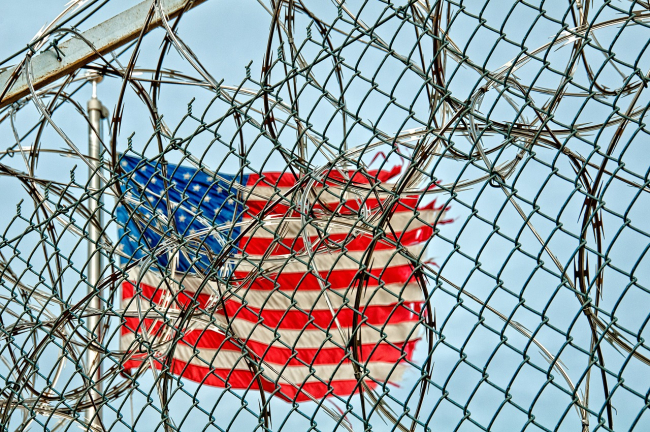
Since the 1980's the incarceration rate in the United States has climbed to unprecedened levels. Today, the United States incarcerates a higher proportion of its population than any other country in the world. Activists have long called for sentencing reform, recognizing the criminal justice system's racial bias and failure to rehabilitate. President Obama's recent call to action propelled the debate on the issue forward at an unprecedented pace but will proposed reforms be enough to end mass incarceration ?
Fragility Factors and Reconciliation Needs in Forest Guinea
In December 2013 the first Ebola cases surfaced in Guéckedou district, near the Liberian and Sierra Leon borders in the Forest Region of Guinea. The outbreak quickly spread from Forest Guinea to the rest of the country and, through the borders, to neighbouring countries. It took three months to identify the Ebola virus as the causative agent of the burgeoning epidemic, longer for the Guinean government to understand the importance of treating the outbreak as a national emergency, and even more time for everyone involved to appreciate the great social toll of Ebola.
Europe’s English Patient
Relations between London and the European construct are founded on a misunderstanding: for mainland Europeans, it represents a global political project, whereas for the British, the European Union is just one international institution among others.
Judicialization of the Battleground
The increasing judicialization of external military action is encouraging military law to fall into line with common law.
Citizens’ Self-Defense Groups in Mexico: Rightful Defenders, Incontrollable Groups or Whistle-Blowers?
The rise of civilian self-defense groups in various states across Mexico since 2011 bear witness to the powerlessness and corruption of state bodies confronted with the pervasiveness of organized crime.
Terminator Ethics: Should We Ban “Killer Robots”?
Automatic lethal weapon systems are under debate and certain non-governmental organizations (NGOs) are demanding their precautionary prohibition.
Transitional Justice in the Arab World: Fortune and Misfortune
The revolutionary forces that shook the Arab world in 2011 were fighting for more just societies. Justice, however, is difficult to bring about in post-dictatorship transitional phases.
France would support new sanctions on Russia
"It's clear that we will have to declare ourselves in favour of new sanctions in case of a military escalation," said state secretary for parliamentary relations Jean-Marie Le Guen to French media on Sunday. The junior minister’s comments came as unrest continued to spread in eastern Ukraine, leaving at least one Ukrainian officer and a pro-Russian activist dead in the eastern city of Slaviansk, about 150 km from the Russian border, on Sunday.
Raising the Costs to President Putin
-by building dissonance within. Some like to remember fondly the call by Ronald Reagan for Gorbachev “to tear down this wall”. The United States “Won the Cold War” said George Bush Senior in his State of the Union Address. We need to step back and recognize with some humility that the Soviet Union fell largely of its own weight rather than as a result of external pressure. Again today Russia is economically weak. It has become an exporter of raw materials, its industrial sector is weak, and its revenues are already falling. Conditions now offer the opportunity to aggravate Russia’s economic frailty – let’s focus on that.
The "War to End All Wars": Total War, Total Peace?
The Paris Peace Conference of 1919-1920 marked the end of the First World War whose purpose was to establish the conditions for enduring, if not perpetual peace.
The Legacy of the Great War: Sovereign States, Globalization and Regionalism
The Great War has shaped many 20th century practices and norms.
Ifri, a foundation recognized as being of public utility, relies largely on private donors – companies and individuals – to guarantee its sustainability and intellectual independence. Through their funding, donors help maintain the Institute's position among the world's leading think tanks. By benefiting from an internationally recognized network and expertise, donors refine their understanding of geopolitical risk and its consequences on global politics and the economy. In 2026, Ifri partners with over 90 French and international companies and organizations.
