




Governance and Societies
States remain essential pillars of the international system, even if they are not the only players. Governance is a local, national and international issue.
Related Subjects


COVID-19: The Geopolitics of Herd Immunity
Mass vaccination against COVID-19 identifies several groups of countries: rich countries with rapid vaccination; countries that develop and produce vaccines, but do not prioritize vaccination of their own population; and poorer countries that will only achieve herd immunity by 2022 or 2023.
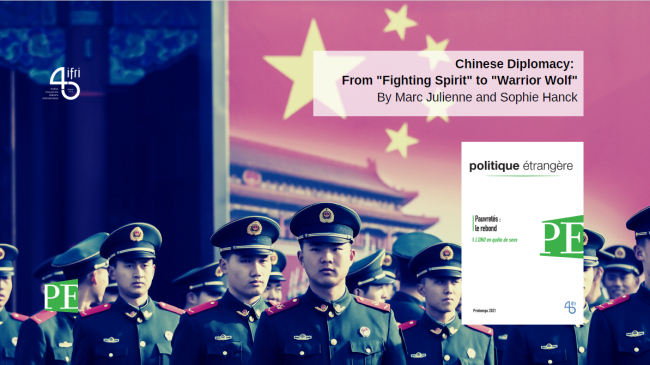
Chinese Diplomacy: from “Fighting Spirit” to “Warrior Wolf”
The COVID-19 pandemic has led China to develop aggressive communication, with diplomatic missions using social media extensively to spread a positive image of Chinese achievements and to criticize Western countries.
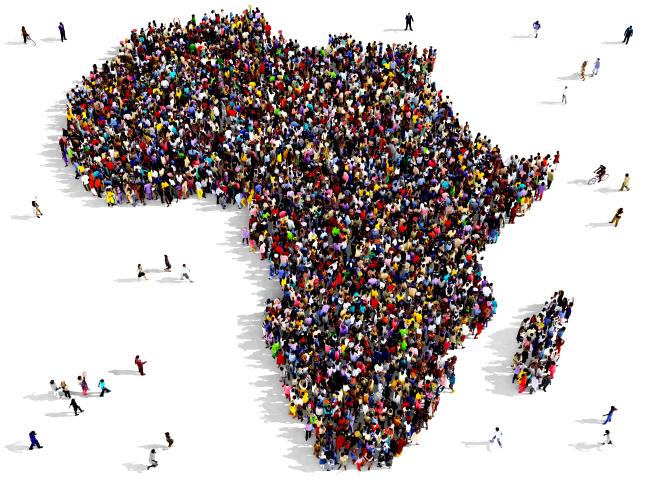
The African Union’s Migration Agenda: An Alternative to European Priorities in Africa?
While migration from Africa is the priority of European policies for the control of the European Union’s external borders, African migration dynamics are above all regional. Sub-Saharan migration is poorly connected to transcontinental flows: more than 70% remain in Africa.

How the French Understand Immigrant Integration and Citizenship
On December 9, 2020 will be celebrated the 115th anniversary of the 1905 law on French secularism (laïcité). On the very same day, a new law project will be presented by the French government, with the objective of further strengthening the “republican values” in order to fight against so-called “Islamist separatism” within French society.


Why do migrants still leave northern France to head to UK?
Migrants who head to the United Kingdom often see it less as a panacea than a last-ditch means-to-an-end, according to Matthieu Tardis, an expert in migration policy at the French Institute of International Relations (IFRI).

Europe still mired in division after migrant crisis
Since taking in more than a million people fleeing war and poverty in 2015, Europe has stepped up border controls but still falls short on common migration and asylum policies.

Immigration in the EU and the US: Comparing Border Policies
Both in the US and in Europe, border control has become one central component of immigration and asylum policies with seemingly the same objective: preventing irregular entries of migrants and refugees. This trend has accelerated in recent years, with ever stricter border controls, more detention of migrants and refugees, the use of the notion of “safe third country” and partnerships with third countries, some of which now play a pivotal role in controlling the borders of their US and European neighbors, such as Turkey and Mexico.
What are the differences and similarities in the policies implemented in the EU and the US? What is their impact on the fundamental rights of migrants and refugees? In both contexts, what relative weight is given to the rights of migrants and refugees on the one hand, and to border enforcement measures on the other? Finally, what long-term consequences will the COVID-19 crisis have on border policies in both cases?
Migrant and Refugee Participation: Approaches to Rethinking Integration Policies
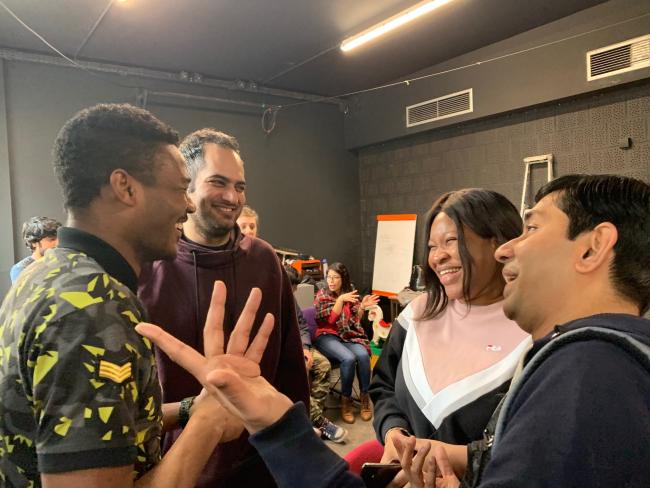
In France, people participating in policies and programs that affect them is not a new concept. It has been widely studied in the field of social work and the fight against poverty, and is at the heart of many experiments. How can this concept of participation, as is outlined for people experiencing poverty, be applied to refugees and migrants? Does the participation of refugees and migrants present specific characteristics?
Safe and Legal Pathways for Refugees: Can Europe Take Global Leadership?
More than 70 million people were forcibly displaced at the end of 2018. In that context, more safe and legal pathways to countries of asylum is a crucial challenge for the international protection regime. A toolkit is available to States and UNHCR, more particularly refugee resettlement.

EU border crisis : an interview with Matthieu Tardis
Matthieu Tardis, Research Fellow at the Center for Migration and Citizenship spoke about the European Union's migration policy and the crisis at the Turkish-Greek border on Euronews's program, Now.

U.S. Immigration Policy: The Making of a Crisis
Donald Trump’s election to the White House appeared to be the beginning of a profound change in the United States’ immigration policy. He reneged on bipartisan consensus that recognized the “positive contribution” of immigration to the country. This resulted in an increase in policies that affected all aspects of immigration. However, it is the most symbolic of Donald Trump’s goals: building a wall between the United States and Mexico that caused the longest government shutdown in American history.
Europe and Africa
In this special issue of Politique étrangère devoted to the proceedings of the conference organized by Ifri on April 10, 2019, in the Grand Amphitheater of the Sorbonne, on the occasion of its fortieth anniversary, discover the conversation between Louise Mushikiwabo, Secretary General of La Francophonie and Thierrry de Montbrial, Founder and Executive Chairman of Ifri.
What Can Europe Hope to Achieve in Tomorrow's World?
In this special issue of Politique étrangère devoted to the proceedings of the conference organized by Ifri on April 10, 2019, in the Grand Amphitheater of the Sorbonne, on the occasion of its fortieth anniversary, discover the debate moderated by Christine Ockrent between Franziska Brantner, Jean-Louis Boulanges, Bernardino Leon, and Igor Yurgens.
New Global Challenges and European Security
In this special issue of Politique étrangère devoted to the proceedings of the conference organized by Ifri on April 10, 2019, in the Grand Amphitheater of the Sorbonne, on the occasion of its fortieth anniversary, discover the debate moderated by Nicole Gnesotto between Julian King, Jean-Marie Guéhenno, Wolfgang Ischinger, Nathalie Tocci, Hubert Védrine.
The Future of Think Tanks
In this special issue of Politique étrangère devoted to the proceedings of the conference organized by Ifri on April 10, 2019, in the Grand Amphitheater of the Sorbonne, on the occasion of its fortieth anniversary, discover the debate moderated by Bassma Kodmani between Thomas Bagger, Thomas Gomart, Robin Niblett, and Daniela Schwarzer.

“It is Easier to Change Your Mind in Small Communities” – Resettling Refugees in Rural Areas in France
Smaller municipalities and rural areas can be places where refugees are welcomed and where they can integrate more easily. People living in rural areas are very proud of their towns and often make an effort to mobilize and include newcomers in their communities.
Integrating refugees: are small towns inventing a model for tomorrow?
Matthieu Tardis, Research Fellow at the Centre for Migration and Citizenship at the French Institute for International Relations (Ifri), describes how small towns and rural areas are welcoming refugees and enabling them to settle.
Is the EU Better Prepared for the Next Migration Challenges?
The European Union did respond to the massive influx of migrants in 2015, but with short-term measures, which have widened the divisions between member states.
The Indo-Pacific: A Viable Concept? / Can we Stabilize the Sahel?
Only devised a few years ago, the concept of the Indo-Pacific seeks to express a new configuration of the world’s globalization. In terms of economic exchange and power distribution, the Indo-Pacific is a unitary region spanning from the Persian Gulf to the Pacific, where all the major powers meet, size up and confront one another.

RAMSES 2020. A World without a Compass?
RAMSES 2020. A World without a Compass?, written by Ifri's research team and external experts, offers an in-depth and up-to-date analysis of geopolitics in today’s world.

City Diplomacy and Human Mobility in Africa. Protecting Refugees and Migrants along the Central Mediterranean Route from the East and the Horn of Africa
Cities face constraints to work on migration and refugee issues, often due to a lack of decentralisation and resource constraints. Adopting an inclusive city approach can safeguard local authorities’ commitment towards providing protection to residents regardless of status, while not overstepping legal mandates.
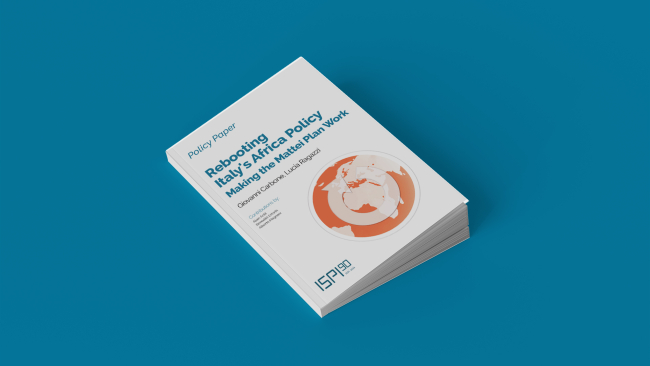
Rebooting Italy's Africa Policy: Making the Mattei Plan Work
Against the backdrop of increasing anti-French rhetoric across parts of Francophone Africa, the relative failure of the counterinsurgency operation in the central Sahel (Operation Barkhane) and diplomatic rifts with several Sahelian countries, Paris has been rethinking its relationship with the continent for several years now. As a former imperial power that has seen its colonial domain in Africa gain independence between 1956 (Morocco-Tunisia) and 1977 (Djibouti), France has invented two successive roles for itself in Africa since 1960, particularly in French-speaking sub-Saharan Africa.
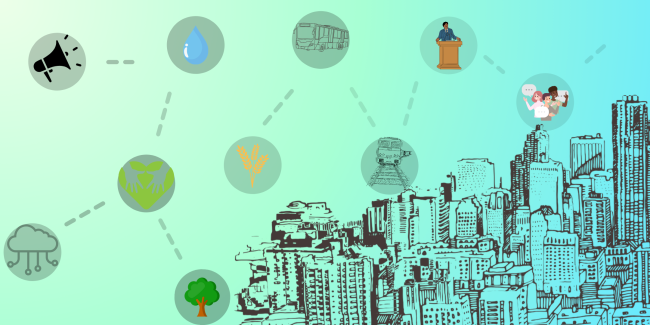
From Crisis Hotspots to Convening Powers. African Cities Launch Diplomacy to Create Climate Mobility Partnerships
African local governments cannot afford to turn into climate mobility hotspots without taking proactive action – drawing on local knowledge, convening power and access to affected communities.
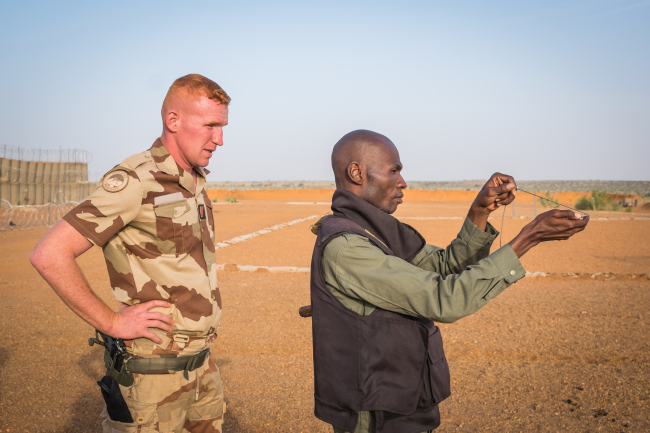
The dilemma of the Franco-African military relationship: reinvent or turn the page?
The origins of military presence and cooperation in Africa can be traced back to the tacit decolonization pact between the countries of French-speaking Africa. This cooperation led to the creation of African armies in the former colonies, as part of a project to prevent the spread of communism and maintain France's influence in the newly independent countries.
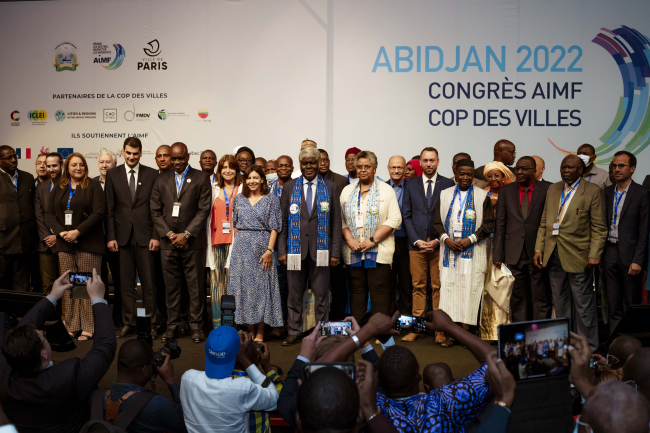
The Evolution of City Diplomacy in Africa: Impact, Potential, and Ongoing Challenges of African Cities’ International Activities.
Over the past decades, African cities have ranked among the leading players in the evolution of city diplomacy. Indeed, municipalities across the continent have gone beyond simply adapting to shifting trends in international cooperation. They have been shaping the current partnership approach that sees local authorities worldwide working together to pursue shared goals and address common urban challenges such as climate change, migration, and social justice.

The High Authority for Peacebuilding (HACP) in Niger 2011-2023. Placing the State at the heart of conflict prevention and management.
Like other Sahelian countries, Niger has been affected by terrorism for almost two decades now. This issue has highlighted both the limits of these countries’ security systems and, more profoundly, their inability to offer stability to the populations of certain parts of the country. In a way, these “jihadized insurgencies” are a continuity of groups that regularly take up arms against central states.
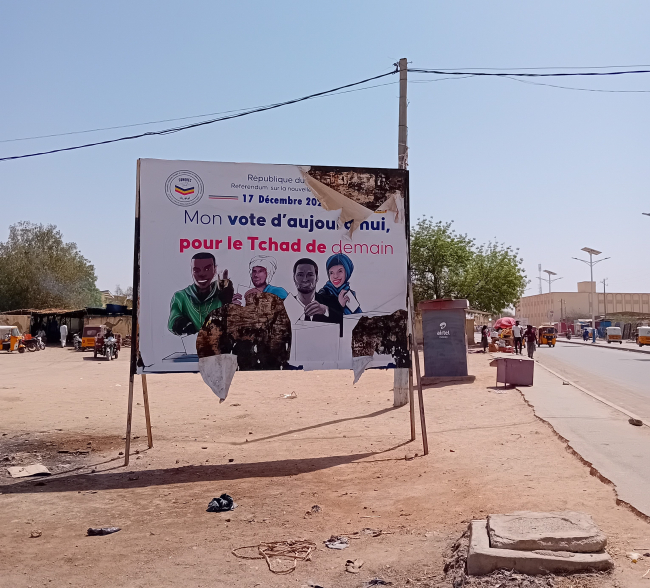
Chad: from Deby to Deby. Recipes for a successful succession (2021-2024)
As in Togo and Gabon, the transition that took place in Chad from 2021 to
2024 resulted in a dynastic succession. Mahamat Idriss Deby succeeded his
father, Idriss Deby Itno, who was President of Chad from 1996 to 2021. While
the majority of Chadians were hoping for a change of government, the “Deby
system” has managed to hold on.
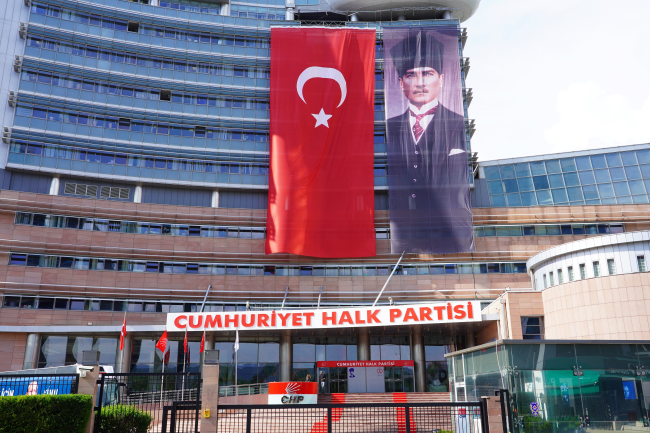
Is the Republican People’s Party (CHP) Rising from the Ashes?
The victory of the CHP [Cumhuriyet Halk Partisi, Republican People’s Party] in the Turkish municipal elections of March 2024 firmly established it as the leading party of opposition to the Islamic-conservative AKP [Adalet ve Kalkınma Partisi, Justice and Development Party], which has been in power since 2002.
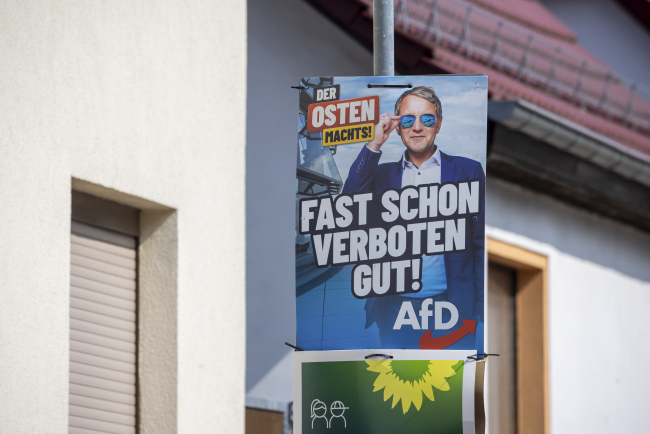
State Elections in Thuringia, Saxony and Brandenburg - Extreme Parties on the Rise?
The Alternative for Germany (AfD) became Germany's strongest political force in the regional elections in Thuringia and Saxony.

The Influence of Strategic Subnational Diplomacy in International Relations
The international engagement of cities and local governments has increased and diversified recently. Mainly understood by the public as the cultural and academic ties cultivated within the sister-city framework, these connections now bear deeper and more strategic implications.
Ifri, a foundation recognized as being of public utility, relies largely on private donors – companies and individuals – to guarantee its sustainability and intellectual independence. Through their funding, donors help maintain the Institute's position among the world's leading think tanks. By benefiting from an internationally recognized network and expertise, donors refine their understanding of geopolitical risk and its consequences on global politics and the economy. In 2026, Ifri partners with over 90 French and international companies and organizations.
