




Governance and Societies
States remain essential pillars of the international system, even if they are not the only players. Governance is a local, national and international issue.
Related Subjects

Migration in Eastern Africa: Regional Challenge, Global Issue
An interview with Jeffrey LABOVITZ, International Organization for Migration (IOM) Nairobi Regional Director
Between aging and migrations: the difficult German equation
The decision of German Chancellor Angela Merkel to welcome over one million refugees in the years 2015 and 2016 had been interpreted by some to be a strategic choice to cope with the demographic problems that Germany is facing: the expected decline in the population, especially in its work force, as well an ageing population.

Foreign Policy Challenges for the Next French President
France’s current presidential campaign has created an unprecedented situation fuelled by revelations and a total absence of restraint, but it has not truly taken account of the disruptions of the last year: Brexit, the attempted coup in Turkey, the election of Donald Trump, the recapturing of Aleppo by Bashar al-Assad, Xi Jinping’s declarations about “economic globalization”, or the behavior of North Korea. The debate, or rather its absence, can be looked at in two ways.
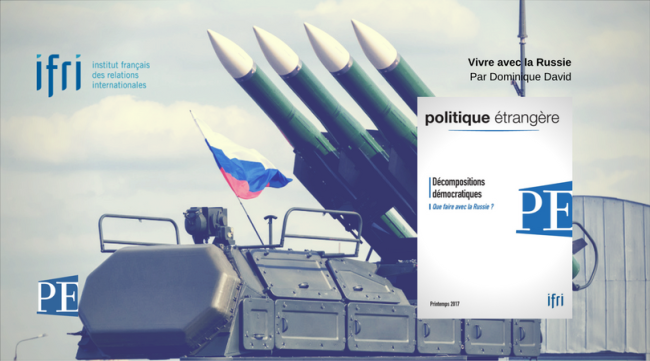
Living with Russia
Russia’s power comes, in part, from the West’s errors and illusions in the wake of the Cold War.
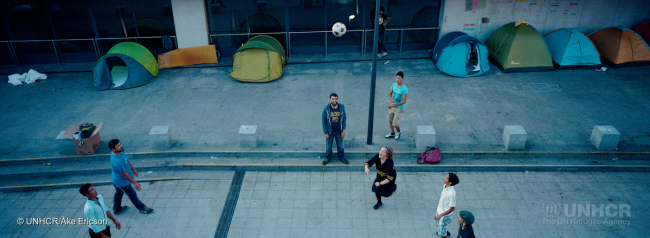
Europe and Refugees in 2015: A Crisis of Memory?
Contrary to other immigration societies such as the United States, Canada or Australia, migrations is not a core element of European narratives on shared identity. Each country maintains a very particular understanding of his migratory past and on the extent to which it should become part of the national narrative. The question of a European memory of migration therefore struggles to emerge.
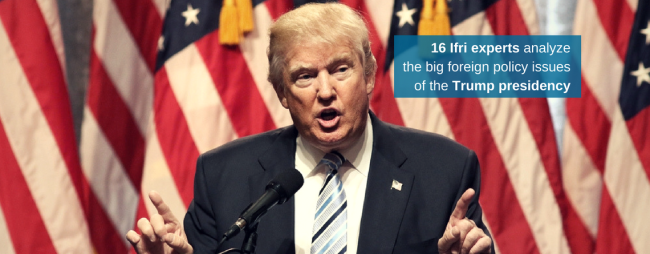
Le monde selon Trump. Anticiper la nouvelle politique étrangère américaine
What will become of US foreign policy under Donald Trump? A selection of Ifri researchers has come together to offer their thoughts on this question. Our experts cover an array of topics through 14 contributions, ranging from the future Sino-American relations, through US engagement in the Middle East, to the prospects of a renewed transatlantic relationship. This analysis intends to help readers anticipate the outcomes of this election in order to facilitate decision-making.
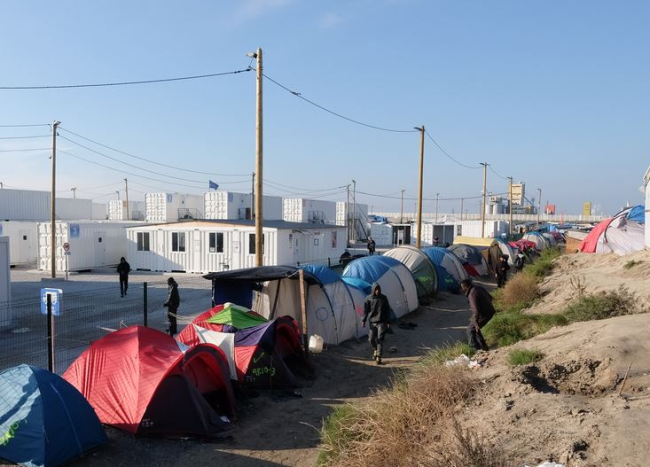
Calais: French asylum system out of gas or failure of the European asylum policy?
The Calais’ camp demolition operation that has begun on October 24th 2016 is the most significant ever conducted. It follows numerous failed or aborted attempts to dismantle the shanty town and relocalize its inhabitants.

Citizenship in the French Tradition. Values and Realities
Citizenship is a major issue in public debates when it comes to immigration in France. Passionate talks illustrate the current disagreements on the meaning of value such as “laïcité”, “universalism”, “equality”, “community” and on the way these should apply in social and political life.

Understanding African Migrations
Movements of African people, being within their countries, on the continent or heading Europe, have numerous and ancient causes. The term “migration” covers a plurality of situations with many internal as well as international implications. Therefore, reasons to migrate deserve a careful analysis. One cannot tackle such a phenomenon through mere border control policies or their externalization, as the European Union seems inclined to do.
Russia’s Immigration Policy: New Challenges and Tools
A new stage in the development of Russia's migration policy is upon us. Since 2010, legal amendments and the Concept of Migration Policy of the Russian Federation to 2025, adopted in June 2012, marked a clear change in how migration flows are regulated, the aim being now to maximise the economic benefit of labour migration.
Refugees and European borders in the aftermath of Paris’ terror attacks
Just a day after the murderous attacks that killed 129 people and wounded about 350 more in Paris and St Denis on November 13th 2015, the word spread that a Syrian passport had been found near the body of one of the Stade de France’s attacker.
Are private companies agents in the implementation of French immigration policies?
Migration policies and rules applying to the recruitment of foreign workers impact HR and recruitment processes of French private companies. Administrative procedures are both complex and time consuming for they might require extra actions from those employees in charge of the recruitment process. The difficult access to clear information coupled with the impossibility to anticipate the outcome of recruitment procedures hinders economic objectives of firms and impacts their competitiveness.
Migratory Flows in the Mediterranean
The current crisis in the Mediterranean is a part of an unprecedented global migratory movement.
Accommodating Refugees: The Other European Crisis
The European Union (EU) has been trying to establish a common European asylum system for fifteen years. This project has been stalled by disagreements between states, each looking out for its own national interests.
Right of asylum: history of a European failure
Since the April 2015 shipwrecks in the Mediterranean, the right of asylum has become a priority in European talks. However, states have remained reluctant and sometimes hostile to measures of solidarity recommended by the European Commission. Such tensions raise the question of the European Union’s capacity to enforce a European asylum policy.
Calais Migrant Crisis: Refugees Risk Their Lives To Leaves France For UK
The distance between Dover, England, and Calais, France, is only 30 miles. For migrants and refugees trying to cross from France to Britain through a tunnel underneath the English Channel, however, that short distance represents a dangerous journey and a risk of deportation, grave injury and even death.
Issues in the Libyan Crisis
Libya is in chaos, divided by geographic, ethnic, economic, and religious rifts, with two militia supported governments, each trying to take control of the country’s oil fields.
Recruitment procedures of foreign workers in France. The point of view of French companies
Study on migration policies’ impact on recruitment procedures of foreign workers in France.
The Changing Face of Migration Flows
Migration continues to be an integral part of the political landscape in several European capitals, especially at a time when national or local elections are approaching. Nearly all EU member states are under pressure in one way or another from external challenges, but some are under constant pressure from migration flows.
The Netherlands and the Multicultural Crisis
For several decades, there has been general consensus bridging the Dutch political class regarding the notion of a multicultural society. This consensus is now being challenged.
Russia’s Immigration Policy: New Challenges and Tools
A new stage in the development of Russia's migration policy is upon us. Since 2010, legal amendments and the Concept of Migration Policy of the Russian Federation to 2025, adopted in June 2012, marked a clear change in how migration flows are regulated, the aim being now to maximise the economic benefit of labour migration.
The Changing Face of Migration Flows
Migration continues to be an integral part of the political landscape in several European capitals, especially at a time when national or local elections are approaching. Nearly all EU member states are under pressure in one way or another from external challenges, but some are under constant pressure from migration flows.
Migration Flows and Policies: India at a Turning Point
India hosts millions of economic migrants from neighboring countries, especially Nepal and Bangladesh. It is also a haven for large refugee communities from Tibet or Sri Lanka. In the past years, India’s dynamic economic growth has brought in new types of migrants: young European graduates, entrepreneurs and highly skilled Indian migrants returning home.
Are Europe's Migration Funds Adequate to Meet Growing Challenges?
Europe’s history books have always identified the Mediterranean as a bridge between different civilisations and cultures. Scholars, such as Fernand Braudel, have portrayed the Mediterranean as the bedrock of Western culture from which dialogue, mutual understanding and trade have been promoted since the very origins of our civilisation.
Emerging Markets and Migration Policy: China
China’s development has given rise to massive flows of both domestic migration and international emigration.

European States and their Muslim Citizens
Temporary Workers or Permanent Migrants? The Kafala System and Contestations over Residency in the Arab Gulf States
The Arab Gulf is the third largest receiving region for global migrants (after North America and the European Union). The six states of the Gulf Corporation Council (GCC) are the richest Arab economies, boast some of the highest GDP per capita rankings in the world, and they all depend upon guest workers in virtually every economic sector. Guest workers have played an integral role in the Gulf since the 1970s, supplying the skills and manpower needed to implement ambitious development plans.
Racial integration - Lessons from the U.S. Army
On Friday, the 13th of January, 2012, the Center for Migrations and Citizenship welcomed 3-star U.S. Army General Bostick as a speaker of its international conference: "Business and the State: Migration Policies, Diversity and Integration".
Linking Business and Migration Policy in the USA
On Friday, the 13th of January, 2012, the Center for Migrations and Citizenship welcomed Jesus 'Chuy' Garcia - Cook County Commissioner, Chicago (USA) - as a speaker of its international conference "Business and the State: Migration Policies, Diversity and Integration".

European Task Force on Irregular Migrations - Country Report: Italy
In order to understand the present configuration of immigration policies in Italy, it is necessary to follow a path of double logic at every step of the analysis. On one side, the study will identify consistent trends in the country’s “immigration history” that continue to shape the main features of the reality of immigration today (see §§ 2.1 and 2.2). On the other side, the study will focus on major changes in the regulation of immigration and the policies addressing undocumented migrants that occurred in more recent times (see § 2.3.).
Ifri, a foundation recognized as being of public utility, relies largely on private donors – companies and individuals – to guarantee its sustainability and intellectual independence. Through their funding, donors help maintain the Institute's position among the world's leading think tanks. By benefiting from an internationally recognized network and expertise, donors refine their understanding of geopolitical risk and its consequences on global politics and the economy. In 2026, Ifri partners with over 90 French and international companies and organizations.
