



Soft Power and Influence
The expression "soft power" was popularized by Joseph Nye in 1990. It refers to the ability to attract and persuade through a form of seduction. Influence strategies are becoming increasingly sophisticated.
Related Subjects

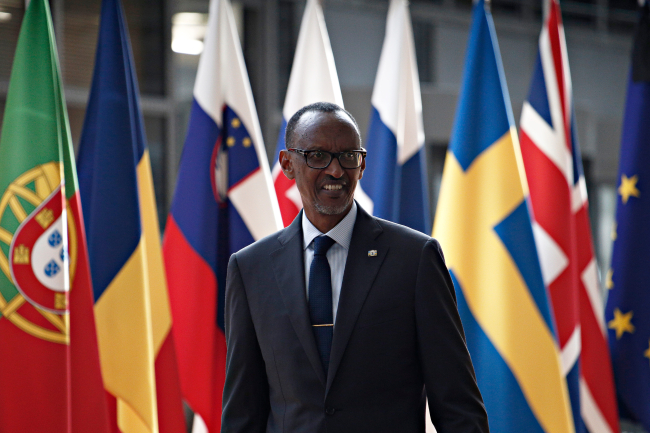
The Vectors and Means of Rwanda’s Growing External Influence under Paul Kagame
For three decades, Paul Kagame’s Rwanda has pursued a foreign policy aimed at increasing investment in the national economy, maximizing military cooperation and intelligence sharing, and promoting a model of post-genocide state reconstruction.
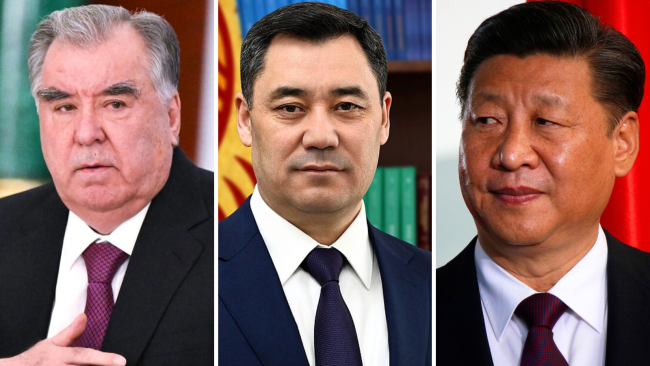
China in Kyrgyzstan and Tajikistan: From Economic Presence to a New Security Role
Over the past three decades, China’s influence in Central Asia has steadily expanded, but in the last three to five years this process has entered a markedly accelerated phase. Following 2022, Beijing effectively revised both its strategy and its operational approach toward the region.
Poking the bear? Armenia welcomes European leaders in Russia's backyard
Just as Europe frets over fresh Trump tariffs, a US troop drawdown announced for Germany and the message it sends to a hostile Russia, how about not one but two summits in former Soviet state Armenia. Before a first-ever gathering of EU leaders in Yerevan on Tuesday comes the European Political Community: a talk shop with regional players which also include Ukraine and NATO heavyweights like the UK, Norway and an outside guest who shares superpower proximity problems.
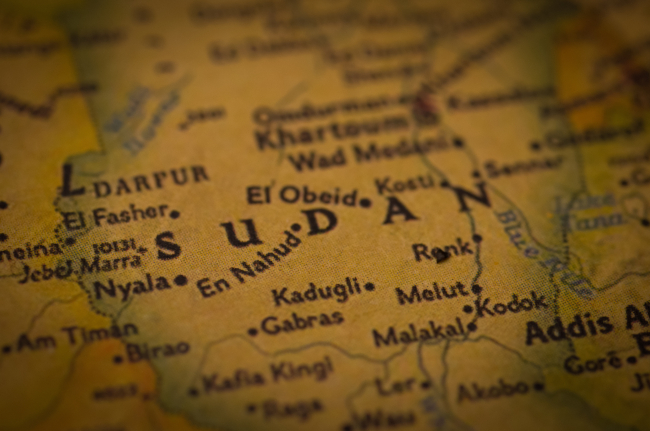
Sudan Wartime Online Propaganda
In the Sudan conflict, the propaganda battle between the Sudan Armed Forces (SAF) and the Rapid Support Forces (RSF) on mainstream and social media makes it hard to distinguish real, false, and manipulated information. Furthermore, the lack of field press coverage allows fake and misleading news to spread more easily. Although the SAF and RSF work hard to shape the war narrative by building large supporter networks and using various methods such as disinformation and censorship, it is clear they no longer fully control the flow of information. Social media analysis shows that Sudanese politicians, military figures, influencers, and followers weave a tangled web of exchanges filled with rivalries, lies, and propaganda.
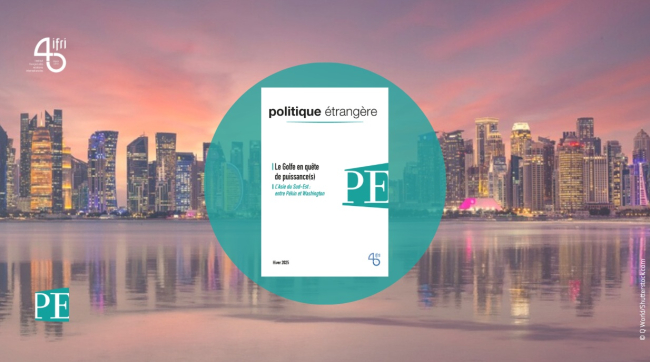
The New Diplomatic Weight of Gulf Countries
The political and economic weight of the Gulf monarchies has increased considerably. These countries have diversified their economies and become logistic hubs, attracting large numbers of investors. They have also managed to extend their power beyond their borders. However, the wider regional fallout of the war begun by Hamas on October 7, 2023 has cast doubt on the Gulf’s stability, especially as it seems that the American security umbrella can no longer be taken for granted

China Plays Up Image of Reliable Partner as Foreign Monarchs Visit "The visit gives China a chance not only to reaffirm its closeness with the (Thai) Kingdom, but also to signal its continued regional relevance at a time when U.S. influence is visibly receding. It comes just two weeks after Trump's brief stop at the ASEAN Summit, where his visit's only visible outcome was his role in overseeing the signing of the short-lived peace declaration between Thailand and Cambodia. By contrast, China announced the deepening of its free-trade agreement with ASEAN" - Juliette Loesch.

quoted by Liz Lee in Reuters
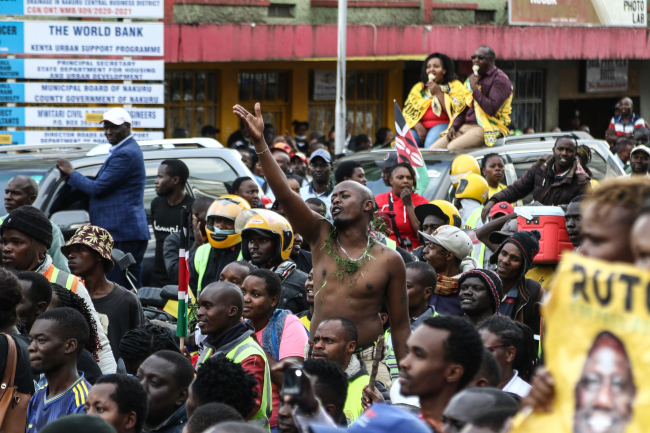
Claiming "The People": Youth Booms, Ailing Authoritarians and "Populist" Politics in Kenya, Uganda, and Tanzania
This study analyses the emergence of so-called “populist” political tendencies in three East African countries: Kenya, Uganda and Tanzania. It builds its analysis on a wider discussion of the term “populism”, its use and applicability in (eastern) African settings before going on to examine the drivers of three cases of populism: William Ruto’s 2022 election victory in Kenya and the “Hustler Nation”; Bobi Wine’s opposition to Yoweri Museveni in Uganda; and John Magufuli highly personal style of government in Tanzania.

Expanding SPDMM as a pivotal institution in the Pacific – A French perspective
The South Pacific Defence Ministers’ Meeting (SPDMM) is the only forum that brings together defense ministers from the wider South Pacific — including Chile, which is hosting it for the first time. This heterogeneous group of countries with varying resources, capacities, and interests — Australia, Chile, Fiji, France, New Zealand, Papua New Guinea (PNG), and Tonga — are united by their shared determination to strengthen cooperation on maritime security and humanitarian assistance and disaster relief (HADR) activities.
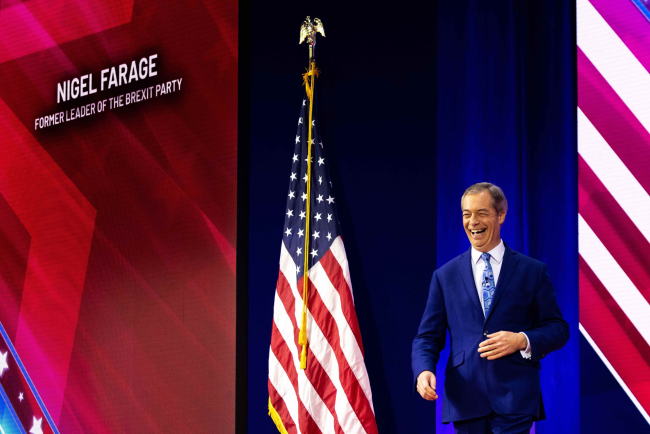
What Is Dividing the West?
Once united by shared values and strategic interests, the West is increasingly fractured along ideological lines. Just as illiberal politicians have spent years building an international reactionary movement, their liberal counterparts must foster transatlantic dialogue to forge a common democratic vision.

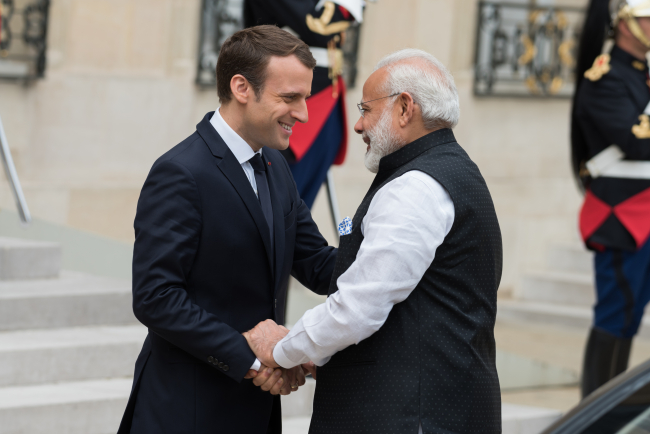
India's Modi heads to Paris as co-chair of AI summit
Indian Prime Minister Narendra Modi is visiting France from Monday as co-chair of an international summit on artificial intelligence in Paris that is expected to be attended by industry leaders, including executives from OpenAI and DeepSeek.

Out of Thin Air but More than a Mirage: The Politics of Saudi Arabia's Nascent Music Industry
This study critically examines Saudi Arabia’s nascent music industry, which is promoted as a key element of Vision 2030, Crown Prince Mohammed bin Salman’s strategic framework to diversify the kingdom’s economy. It explores how state-led investments in music and entertainment intersect with authoritarian governance. The author neither dismisses these investments as conspicuous spending nor reproduces an alarmist narrative of impending cultural imperialism. The article takes a political sociology approach to understand how Saudi entertainment plans consolidate domestic power and reshape regional cultural landscapes.

From Crisis Hotspots to Convening Powers. African Cities Launch Diplomacy to Create Climate Mobility Partnerships
African local governments cannot afford to turn into climate mobility hotspots without taking proactive action – drawing on local knowledge, convening power and access to affected communities.
France's Indo-Pacific strategy
This article has been extracted from the magazine Question internationales - n°118 - Avril-mai 2023.
The Indo-Pacific, a new theater of strategic rivalry between China and the United States, is of growing interest to France, where it defends its interests related to its vast maritime territory by promoting multilateralism and forging multiple partnerships in the region.
Populism and International Relations
Populism is flourishing, in Europe and elsewhere: a populist holds power today in Argentina and perhaps tomorrow in the United States. What does its spread say about our societies? And how is it shaping them, where populists rule? Do their economic policies stand any chance of success? Do their foreign policies have a greater impact on the world around them or at home? If “Trump 2.0” comes to be, will he have a free hand? If so, what can we expect?
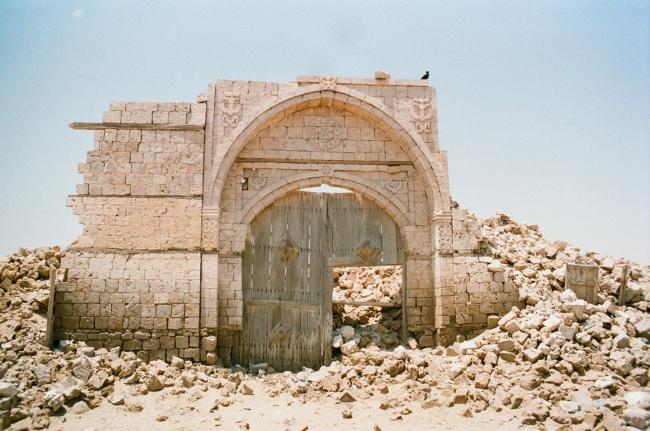
Sudan in Turkey’s African Geopolitics: A Sotto Voce Experience in a Coveted Region
Since the launch of the Opening Plan to Africa in 2003, Turkey's African policy has spread to the whole of the African continent, where its involvement is distinguished by its scope and diversity.

Ethics and Responsibility in Space Exploration: The Rise of Soft Law to Regulate New Practices
Türkiye’s Stifled Ambitions
As its elections have unfolded this spring, Türkiye has again shown itself to be symptomatic of the times. Across the world, numerous political regimes oscillate between democratic forms of government and an authoritarian concentration of power; impressive periods of growth give way to inflation and recession; and international deregulation gives rise to widespread diplomacy in an effort to juggle a myriad of shifting political loyalties. Faced with the war in Ukraine, Ankara is playing a strong hand by enlarging its areas of presence and intervention. Türkiye is more important to its partners than ever, independent of its eventual domestic trajectory.
Western discourse predicted the advent of Chinese dominance in the very short term, but events have taken a rather different turn. The drivers that enabled the unprecedented growth of recent decades seem to have run out of steam. Moreover, the outcome of Beijing’s economic strategies is still uncertain, in a context shaped primarily by U.S. policies. China’s influence in the future will be considerable, but the direction its rebound will take remains unclear.
For Europeans, the events in Ukraine and the thorny issue of the Sino-American rivalry cannot paper over the other security problems we face: On what common vision of our history and future will we build the Europe of tomorrow? Has drug trafficking already changed the nature of our societies? Can we afford to turn away from instances of destabilization in Africa, from the Horn to the Sahel?
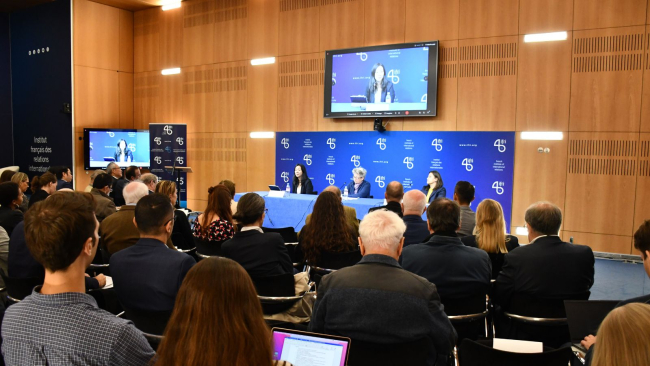
Asia after the War in Ukraine: Re-imagining multilateralism and the risk of high-intensity conflict (video replay)
Annual conference of Ifri's Center for Asian Studies. The war in Ukraine has marked the return of high-intensity conflict in Europe and represents a profound, structural shift in the region’s strategic environment. It also takes place against a backdrop of a decades-long rebalancing of global power and the increase of strategic competition between the United States and China, in particular.
Ukraine: Between Two Peaces?
We have reentered the world of war. In its first special report, Politique étrangère offers a range of in-depth analyses of the military and political dynamics at work in a Europe that has just woken up from its dream of enduring peace. The direct confrontation between Ukraine and Russia has pitted two military and defense systems against each other, whose asymmetrical logics, strengths, and weaknesses we are discovering as the conflict unfolds.
The Vectors and Means of Rwanda’s Growing External Influence under Paul Kagame
For three decades, Paul Kagame’s Rwanda has pursued a foreign policy aimed at increasing investment in the national economy, maximizing military cooperation and intelligence sharing, and promoting a model of post-genocide state reconstruction.
China in Kyrgyzstan and Tajikistan: From Economic Presence to a New Security Role
Over the past three decades, China’s influence in Central Asia has steadily expanded, but in the last three to five years this process has entered a markedly accelerated phase. Following 2022, Beijing effectively revised both its strategy and its operational approach toward the region.
Sudan Wartime Online Propaganda
In the Sudan conflict, the propaganda battle between the Sudan Armed Forces (SAF) and the Rapid Support Forces (RSF) on mainstream and social media makes it hard to distinguish real, false, and manipulated information. Furthermore, the lack of field press coverage allows fake and misleading news to spread more easily. Although the SAF and RSF work hard to shape the war narrative by building large supporter networks and using various methods such as disinformation and censorship, it is clear they no longer fully control the flow of information. Social media analysis shows that Sudanese politicians, military figures, influencers, and followers weave a tangled web of exchanges filled with rivalries, lies, and propaganda.
The New Diplomatic Weight of Gulf Countries
The political and economic weight of the Gulf monarchies has increased considerably. These countries have diversified their economies and become logistic hubs, attracting large numbers of investors. They have also managed to extend their power beyond their borders. However, the wider regional fallout of the war begun by Hamas on October 7, 2023 has cast doubt on the Gulf’s stability, especially as it seems that the American security umbrella can no longer be taken for granted
Claiming "The People": Youth Booms, Ailing Authoritarians and "Populist" Politics in Kenya, Uganda, and Tanzania
This study analyses the emergence of so-called “populist” political tendencies in three East African countries: Kenya, Uganda and Tanzania. It builds its analysis on a wider discussion of the term “populism”, its use and applicability in (eastern) African settings before going on to examine the drivers of three cases of populism: William Ruto’s 2022 election victory in Kenya and the “Hustler Nation”; Bobi Wine’s opposition to Yoweri Museveni in Uganda; and John Magufuli highly personal style of government in Tanzania.
Expanding SPDMM as a pivotal institution in the Pacific – A French perspective
The South Pacific Defence Ministers’ Meeting (SPDMM) is the only forum that brings together defense ministers from the wider South Pacific — including Chile, which is hosting it for the first time. This heterogeneous group of countries with varying resources, capacities, and interests — Australia, Chile, Fiji, France, New Zealand, Papua New Guinea (PNG), and Tonga — are united by their shared determination to strengthen cooperation on maritime security and humanitarian assistance and disaster relief (HADR) activities.
Out of Thin Air but More than a Mirage: The Politics of Saudi Arabia's Nascent Music Industry
This study critically examines Saudi Arabia’s nascent music industry, which is promoted as a key element of Vision 2030, Crown Prince Mohammed bin Salman’s strategic framework to diversify the kingdom’s economy. It explores how state-led investments in music and entertainment intersect with authoritarian governance. The author neither dismisses these investments as conspicuous spending nor reproduces an alarmist narrative of impending cultural imperialism. The article takes a political sociology approach to understand how Saudi entertainment plans consolidate domestic power and reshape regional cultural landscapes.
From Crisis Hotspots to Convening Powers. African Cities Launch Diplomacy to Create Climate Mobility Partnerships
African local governments cannot afford to turn into climate mobility hotspots without taking proactive action – drawing on local knowledge, convening power and access to affected communities.
The Future of Think Tanks
In this special issue of Politique étrangère devoted to the proceedings of the conference organized by Ifri on April 10, 2019, in the Grand Amphitheater of the Sorbonne, on the occasion of its fortieth anniversary, discover the debate moderated by Bassma Kodmani between Thomas Bagger, Thomas Gomart, Robin Niblett, and Daniela Schwarzer.

Hashtag and Political Resistance Movements in Southern Africa
What is the political significance of Southern Africa’s “hashtag movements”, socio-political campaigns using social media to disseminate information and to mobilise concerned and previously quiet segments of the public?
What Is Dividing the West?
Once united by shared values and strategic interests, the West is increasingly fractured along ideological lines. Just as illiberal politicians have spent years building an international reactionary movement, their liberal counterparts must foster transatlantic dialogue to forge a common democratic vision.
India's Modi heads to Paris as co-chair of AI summit
Indian Prime Minister Narendra Modi is visiting France from Monday as co-chair of an international summit on artificial intelligence in Paris that is expected to be attended by industry leaders, including executives from OpenAI and DeepSeek.

Russian Elite Divided on Strategy in Ukraine but Not on Kremlin Goals There, Minic Says
Vladimir Putin is not a military strategist, and the decision to shift Russian forces from around Kyiv to the southeast in order to be in a position to defeat the Ukrainian army rather than go all out to achieve regime change now in Ukraine shows that, Dmitri Minic of the Paris Institute for International Relations says.

World’s Rich Nations Jostle to Lead Globalization Clubhouse
The race to fill a role at the heart of world economic policy making is turning into a new battleground for the future of globalization.

RT Brings Its Russian Perspective to France
RT, dubbed as an "organ of influence and deceitful propaganda" by President Emmanuel Macron in May during a joint news conference with Vladimir Putin, has now launched RT France. Has France become the latest front in Russia's information war?
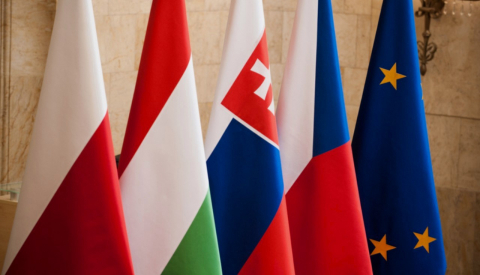
Poking the bear? Armenia welcomes European leaders in Russia's backyard
Just as Europe frets over fresh Trump tariffs, a US troop drawdown announced for Germany and the message it sends to a hostile Russia, how about not one but two summits in former Soviet state Armenia. Before a first-ever gathering of EU leaders in Yerevan on Tuesday comes the European Political Community: a talk shop with regional players which also include Ukraine and NATO heavyweights like the UK, Norway and an outside guest who shares superpower proximity problems.
Ifri, a foundation recognized as being of public utility, relies largely on private donors – companies and individuals – to guarantee its sustainability and intellectual independence. Through their funding, donors help maintain the Institute's position among the world's leading think tanks. By benefiting from an internationally recognized network and expertise, donors refine their understanding of geopolitical risk and its consequences on global politics and the economy. In 2026, Ifri partners with over 90 French and international companies and organizations.

China Plays Up Image of Reliable Partner as Foreign Monarchs Visit "The visit gives China a chance not only to reaffirm its closeness with the (Thai) Kingdom, but also to signal its continued regional relevance at a time when U.S. influence is visibly receding. It comes just two weeks after Trump's brief stop at the ASEAN Summit, where his visit's only visible outcome was his role in overseeing the signing of the short-lived peace declaration between Thailand and Cambodia. By contrast, China announced the deepening of its free-trade agreement with ASEAN" - Juliette Loesch.
quoted by Liz Lee in Reuters