





Practical information
As part of the Ifri Energy Breakfast Roundtables series, a seminar with Chris Beddoes, Director General, Europia (The European Petroleum Industry Association), Antoine Halff, Head of the Oil Industry and Markets Division/Editor, Oil Market Report, IEA, Saïd Nachet, President Energy Consulting&Advisory Services, Associate Professor IFP School, Professor Sciences-Po, a member of the French Permanent Representation to the EU (to be confirmed).
Chaired by: Cécile Maisonneuve, Director of the Center for Energy, Ifri and Jacques Lesourne, President of the Scientific Committee of the Center for Energy, Ifri.
The European refining industry is facing an ever growing list of challenges: fierce external competition from both producing and emerging countries, the decline of domestic and probably US demand, the mismatch between the type of products produced and the demand (i.e. gasoline surpluses and lack of capacity for middle distillates), the development of substitutes such as bio-fuels. Despite the long term need to restructure the sector, as pointed out by the European Commission in a 2010 working document, the European market, framed partly by European or national legislations, does not send the right signals in the shorter term. It nowadays appears increasingly difficult to renew, exit or enter the market. The economic crisis comes on top to further weaken the sector.
This situation is not only an industrial concern to maintain jobs, and push for the competitively of European companies. From an energy perspective, the undergoing closures or the clearances of many European refineries to foreign companies from emerging or oil producing countries raise the issue of European security of supply of oil products. The EU is indeed becoming increasingly dependent on oil products imports in a global market which is far from perfect.
To address this issue, this conference will debate the challenges facing the European refining sector, the regulations (fuel standards, CO2 emissions etc.) affecting the European market, the issue of investments and restructuring, and the emergence and strengthening of new actors on the global market.
Other events
France-Ukraine Forum 2026
More than four and a half years after the start of the full-scale war launched by Russia against Ukraine, the 2026 France-Ukraine Forum will bring together policymakers, experts, academics, and civil society representatives from both countries to discuss three main topics: the formats and conditions for a lasting diplomatic settlement; Ukraine’s Euro-Atlantic integration, encompassing both the EU accession process and closer ties with NATO; and the societal transformations of postwar Ukraine, as well as its prospects for reconstruction.
The EU in a World of Economic Warfare: Trade, Geopolitics, and the Battle for Economic Sovereignty
The international trading system has become a primary theatre of geopolitical competition. Tariffs, sanctions, and technology controls have replaced dialogue as the default instruments of economic relations.
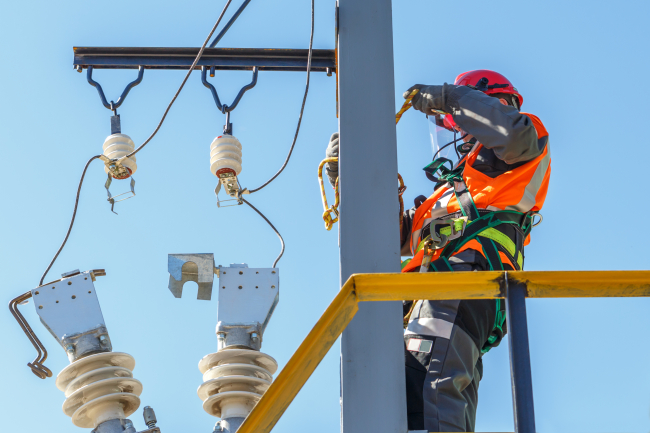
The Road to 27 Electrification Action Plans: Planning and Investing in Europe’s Electric Future
The European Commission’s Electrification Action Plan places the continent on an electric path to structurally reduce dependence on fossil fuel imports and boost the energy transition in industry, transport and buildings.