


Informations pratiques
Thématiques et régions
Centres et programmes liés
Ceci est un événement réservé.
En savoir plus sur nos programmes de soutienAs part of the Ifri Energy Breakfast Roundtables series, a seminar with Chris Beddoes, Director General, Europia (The European Petroleum Industry Association), Antoine Halff, Head of the Oil Industry and Markets Division/Editor, Oil Market Report, IEA, Saïd Nachet, President Energy Consulting & Advisory Services, Associate Professor IFP School, Professor Sciences-Po, and a member of the French Permanent Representation to the EU (to be confirmed).
Chaired by: Cécile Maisonneuve, Director of the Center for Energy, Ifri and Jacques Lesourne, President of the Scientific Committee of the Center for Energy, Ifri.
The European refining industry is facing an ever growing list of challenges: fierce external competition from both producing and emerging countries, the decline of domestic and probably US demand, the mismatch between the type of products produced and the demand (i.e. gasoline surpluses and lack of capacity for middle distillates), the development of substitutes such as bio-fuels. Despite the long term need to restructure the sector, as pointed out by the European Commission in a 2010 working document, the European market, framed partly by European or national legislations, does not send the right signals in the shorter term. It nowadays appears increasingly difficult to renew, exit or enter the market. The economic crisis comes on top to further weaken the sector.
This situation is not only an industrial concern to maintain jobs, and push for the competitively of European companies. From an energy perspective, the undergoing closures or the clearances of many European refineries to foreign companies from emerging or oil producing countries raise the issue of European security of supply of oil products. The EU is indeed becoming increasingly dependent on oil products imports in a global market which is far from perfect.
To address this issue, this conference will debate the challenges facing the European refining sector, the regulations (fuel standards, CO2 emissions etc.) affecting the European market, the issue of investments and restructuring, and the emergence and strengthening of new actors on the global market.
Replay
Sujets liés
Autres événements
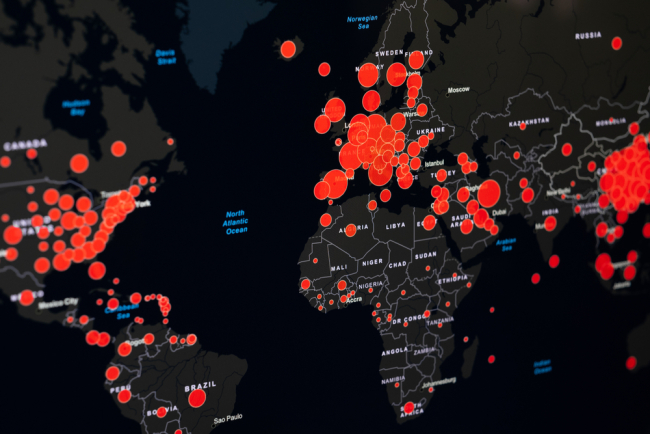
Pandémies et maladies infectieuses : que peut la communauté internationale ?
Tandis que les tensions internationales s’aiguisent et que le monde risque de se fracturer en blocs géopolitiques, pandémies et maladies infectieuses continuent de se développer. Des facteurs comme la multiplication des guerres ou le dérèglement climatique ne font qu’aggraver la situation.
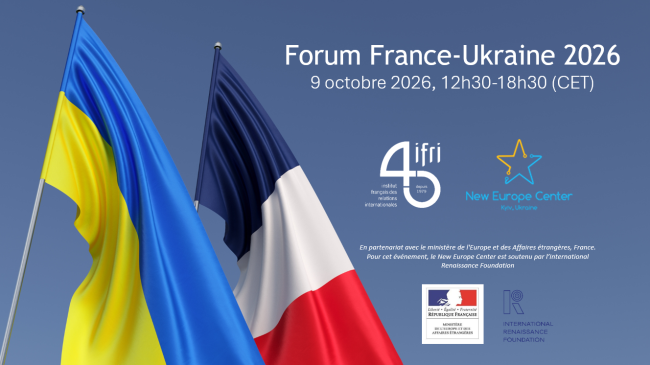
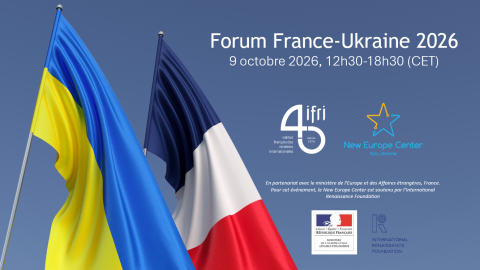
Forum France-Ukraine 2026
Plus de quatre ans et demi après le début de la guerre à grande échelle déclenchée par la Russie contre l’Ukraine, le Forum France-Ukraine 2026 accueillera des responsables politiques, des experts, des universitaires et des représentants de la société civile des deux pays pour échanger autour de trois sujets principaux : les formats et conditions d'un règlement diplomatique durable ; l'intégration euro-atlantique de l'Ukraine, entre processus d'adhésion à l'UE et rapprochement avec l'OTAN ; et les transformations sociétales de l'Ukraine d'après-guerre ainsi que ses perspectives de reconstru
Finance sous tension géopolitique : banques centrales, stablecoins et souveraineté européenne
Les tensions géopolitiques des dernières années bouleversent la donne monétaire et financière internationale, remettant en question des équilibres que l'on croyait stabilisés. Pour comprendre les évolutions en cours, il faut tenir compte de l’imbrication croissante des logiques financières et politiques, des comportements des grands acteurs, mais aussi des évolutions institutionnelles et techniques.