




Practical information
Watch the speakers' talks here.
9:00-11:00 - The New President's Quest
Will the United States manage to overcome its current budgetary and institutional challenges in the coming months? With the midterm and 2016 presidential elections looming, we will examine the political strategies and ideologies developed by each party, as well as the changes in public opinion regarding the main political and social debates.
John ZOGBY, Analyst, Zogby Analytics
How do Americans view Obama's reforms?
Aurélie GODET, Head of Conferences, University of Paris VII Diderot
Will the Republican Party settle on radical or moderate tendencies?
Michael TOMASKY, Director of Writing, Democracy, Regular Contributer, The New York Review of Books
The Democratic Party and Hillary Clinton's probable 2016 presidential run.
Moderator: Laurence NARDON, Head of the United States Program at Ifri
11:30-12:00 - The State of the American Economy :
Florence PISANI, Economist, Dexia Asset Management
15:00-17:00 - Can the U.S. get out of the Middle East ?
How will the second Obama administration respond to the situation in the Middle East? What are the consequences of the recent political chaos regarding Syria? Is there the possibility of normalized relations with Iran and what would be the impact on the region? Will the United States attempt to fix its negative image in the Middle East and North Africa?
Michele DUNNE, Researcher and Middle East Specialist, Carnegie Endowment for International Peace
The United States faces the "Arab Winter."
Jeffrey MANKOFF, Assistant Director, Russia and Eurasia Program, Center for International and Strategic Studies (CSIS)
The evolution of Russo-American relations in light of the Syran crisis.
Alireza NADER, Political Analyst, The Rand Corporation
Toward renewed relations with Iran ?
Moderator: François BUJON de l'ESTANG, French Ambassador, Former Ambassor to Washingtion, President of FBE International Consultants.
17:00-17:30 - Transatlantic Relations and Security :
Leo G. MICHEL, Head of Research, Institute for National Strategic Studies (INSS)
The debates will take place in English and French with transation available from French to English.
Sign Up : [email protected] (indicate your pannel choices)
Other events
A New Moment for Central Europe? Regional Cooperation in a Time of European Strategic Choices
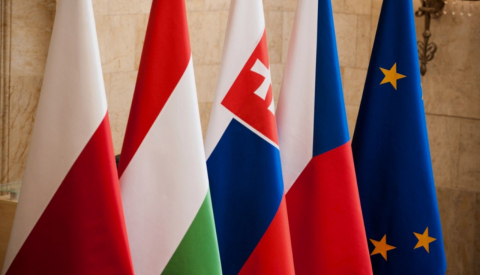
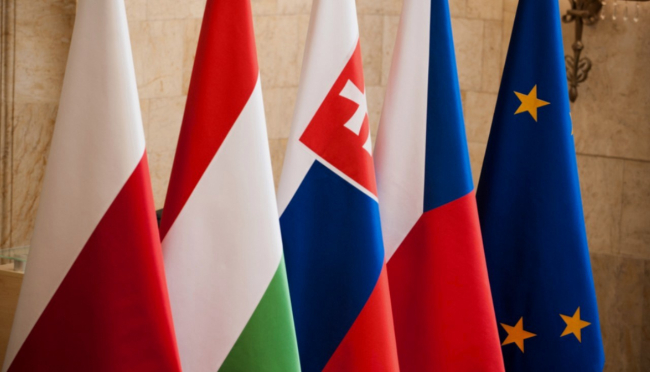
Recent political developments in Central Europe have revived the debate about the future of regional cooperation and the Visegrád Group. Changes in Hungary, Poland, the Czech Republic and Slovakia, together with Austria’s growing interest in closer cooperation with its neighbours, could create new opportunities for dialogue and coordination around shared priorities.
China’s Nuclear Buildup: Developments, Drivers, and Implications for Major-Power Relations and Arms Control
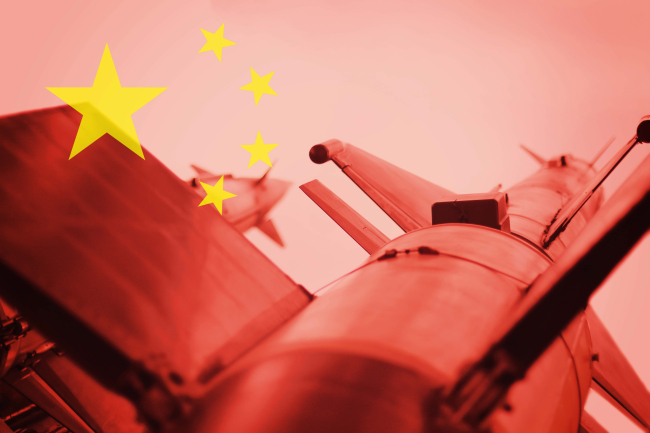
China has been steadily expanding its nuclear arsenal for several years amid levels of geopolitical tension unseen since the end of the Cold War, marked by a resurgence in nuclear proliferation and a broader, global arms race.

Reinventing Coordination in an Age of Fragmentation
The world economy is being reordered. The certainties of the post-Cold War era, open trade, dollar centrality, predictable multilateral coordination, are giving way to a landscape shaped by rivalry between the United States and China, the weaponization of interdependence, and a scramble to secure supply chains, technologies and critical resources. What once looked like a stable architecture now appears fragile, contested, and in places actively being dismantled.