Search on Ifri.org

About Ifri

Frequent searches

Suggestions

Prénom de l'expert
Thomas
Nom de l'expert
GOMART

Intitulé du poste

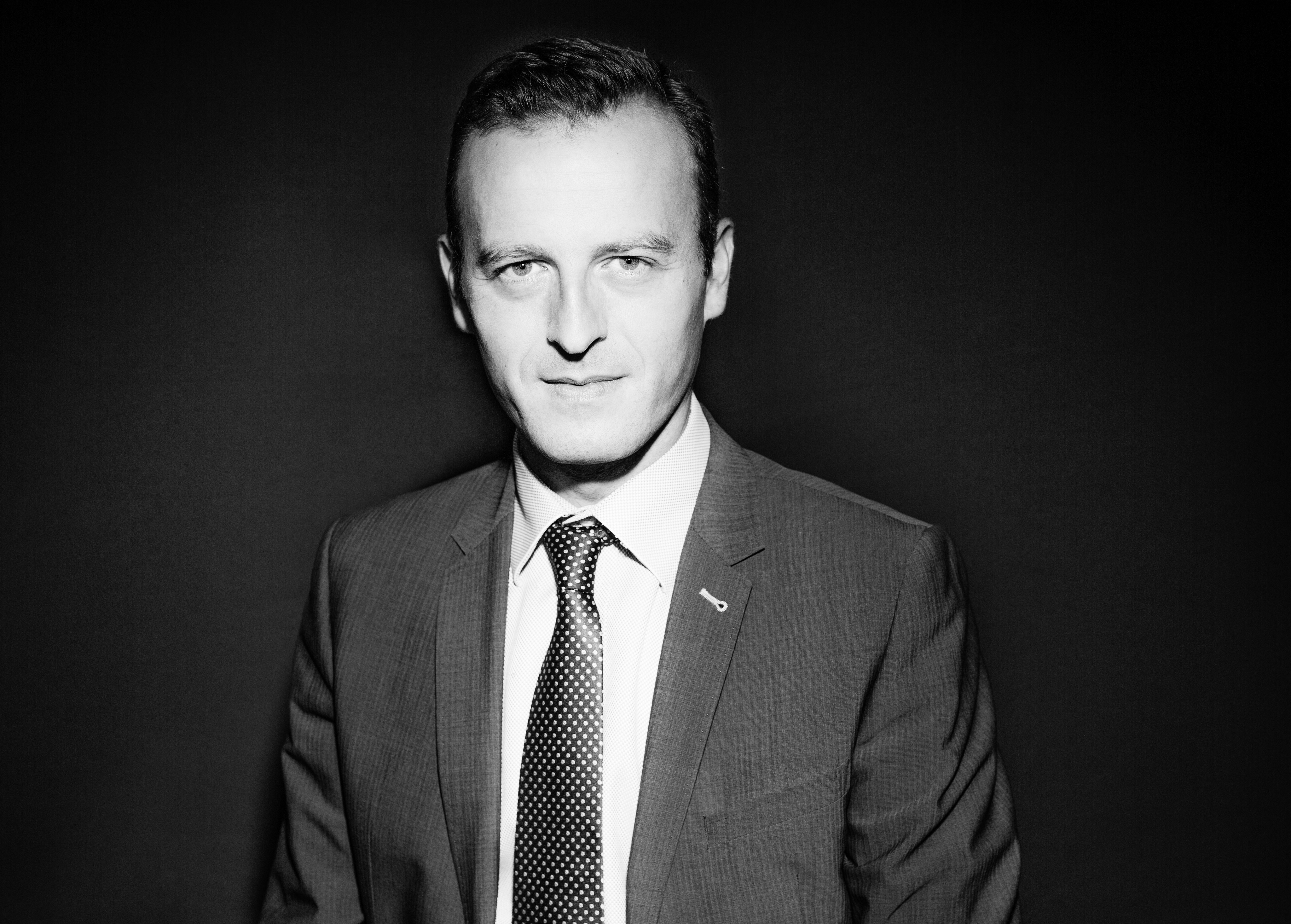
Director of Ifri

Domaine d'expertises En

Research Areas:

  • International Relations
  • Geopolitical Risk
  • Post-Soviet Space
  • French Diplomacy
  • Energy Issues
  • Digital Governance
  • Geopolitics and Security
Biographie En

Dr. Thomas Gomart has been the Director of the French Institute of International Relations (Ifri) since 2015. He is a member of the Institute of Advanced Studies in National Defence’s (IHEDN) scientific committee and on the editorial board of the French journals Politique étrangère and Revue des deux 
mondes. He has a monthly column on international affairs in Études. 

He sits on two advisory boards (private equity and market research). Dr. Gomart has researched extensively on global affairs, energy, digital issues and Russia. 

At Ifri, he created a practice on geopolitical risk for companies. 

In parallel, he has published five award-winning books in the last seven years: Qui contrôle qui ? Les nouveaux rapports de force mondiaux (Tallandier, 2026); L'accélération de l'histoire. Les nœuds géostratégiques d'un monde hors de contrôle (Tallandier, 2024); Les ambitions inavouées. Ce que 
préparent les grandes puissances (Tallandier, 2023); Guerres invisibles (Tallandier, 2021); and L'Affolement du monde (Tallandier, 2019).

Thomas Gomart has been awarded the rank of Knight of the of the French National Order and the Knight's Cross of the Order of Merit of the Republic of Poland. 

He received his EMBA from the École des Hautes Études Commerciales de Paris and his PhD from the Panthéon-Sorbonne University.

See more

Eléments a la une
Decoration
Flagship Publications
Support independent French research

Ifri, a foundation recognized as being of public utility, relies largely on private donors – companies and individuals – to guarantee its sustainability and intellectual independence. Through their funding, donors help maintain the Institute's position among the world's leading think tanks. By benefiting from an internationally recognized network and expertise, donors refine their understanding of geopolitical risk and its consequences on global politics and the economy. In 2026, Ifri partners with over 90 French and international companies and organizations.

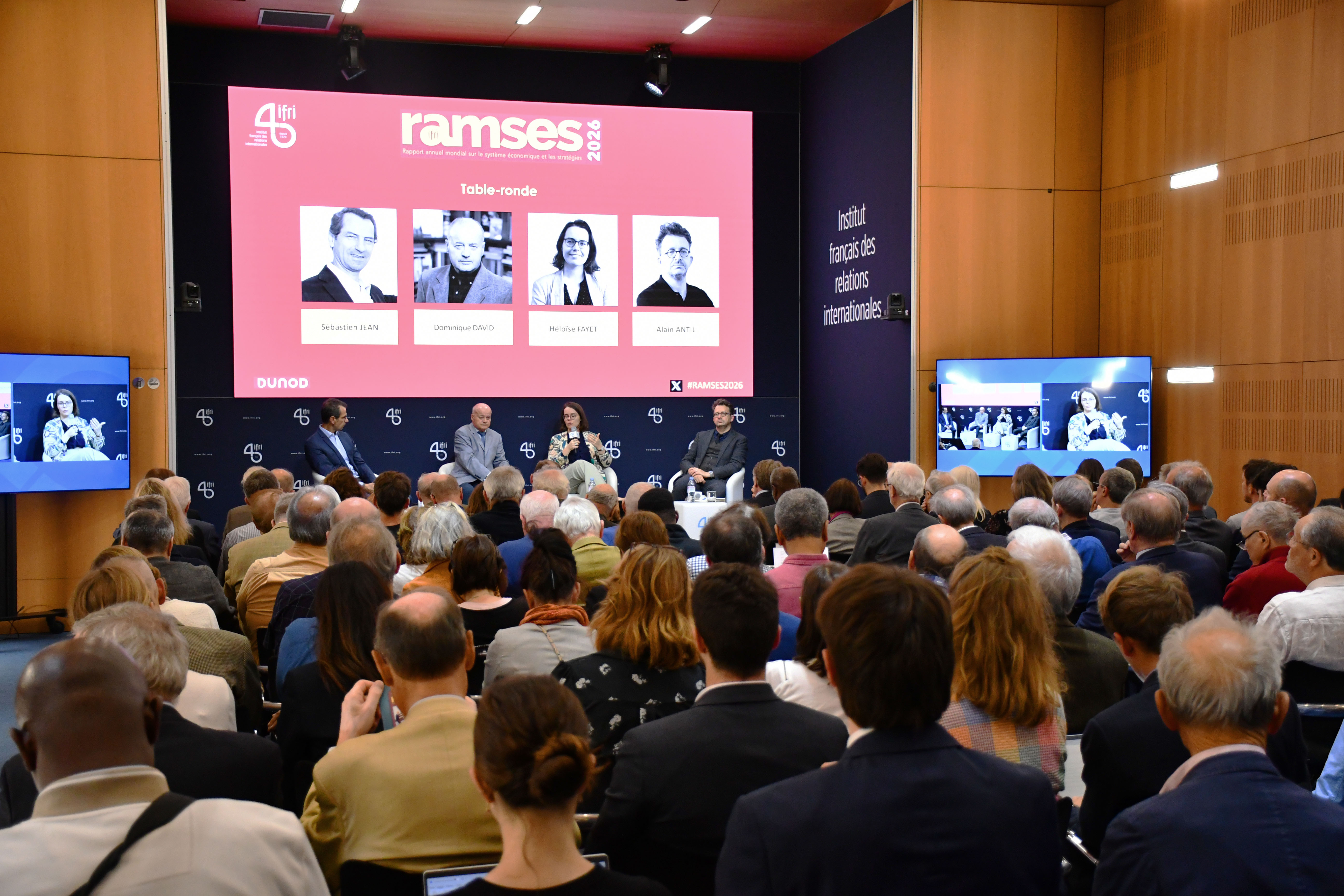
Presentation of Ramses 2026, Ifri, Paris
Analysis from Thomas GOMART
Publications
Press
Watch and listen
Image principale

What Do Companies Fear? The New Geography of Geopolitical Risk

Date de publication
28 May 2026
Accroche

Geopolitical risk has established itself, within the space of a few years, as a central variable in corporate strategy.

Image principale

Manufacturing Risk: Geopolitical Doxa and the Corporate World

Date de publication
02 April 2025
Accroche

The evolving power dynamics between the United States, China, and Russia are creating new geopolitical realities that businesses can no longer evade. Geopolitical risk has become unavoidable, yet many companies remain unprepared to navigate its complexities. Corporate leaders can no longer afford to overlook its implications.

Image principale

Impossible Decoupling, Improbable Cooperation: Economic Interdependencies in the Face of Power Rivalries

Date de publication
02 November 2023
Accroche

Export restrictions, economic and financial sanctions, politicization of monetary and financial choices, screening of inward and outward foreign direct investments, exceptional customs duties, and state interventions in sectors deemed strategic: the political vise is tightening around international economic and financial relations.

Image principale

China/United States: Europe off Balance

Date de publication
01 April 2023
Accroche

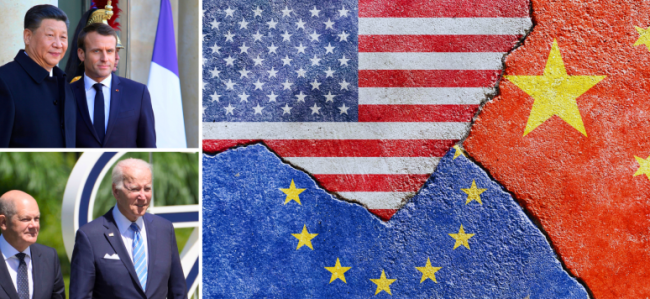
As French President Emmanuel Macron (accompanied by Ursula von der Leyen) is on a state visit to China, some twenty Ifri researchers decipher the stakes of the U.S./China/Europe strategic triangle.

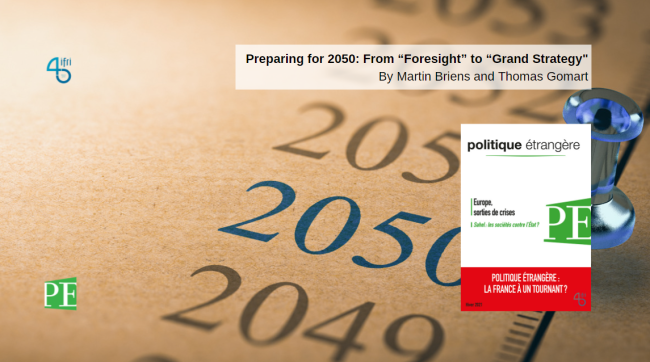
Preparing for 2050: From “Foresight” to “Grand Strategy”

Date de publication
10 December 2021
Accroche

China and the United States both have a “grand strategy”: Beijing aspires to be the world’s leading power in 2049, while Washington plans to remain primus inter pares.

Martin BRIENS Thomas GOMART
Image principale

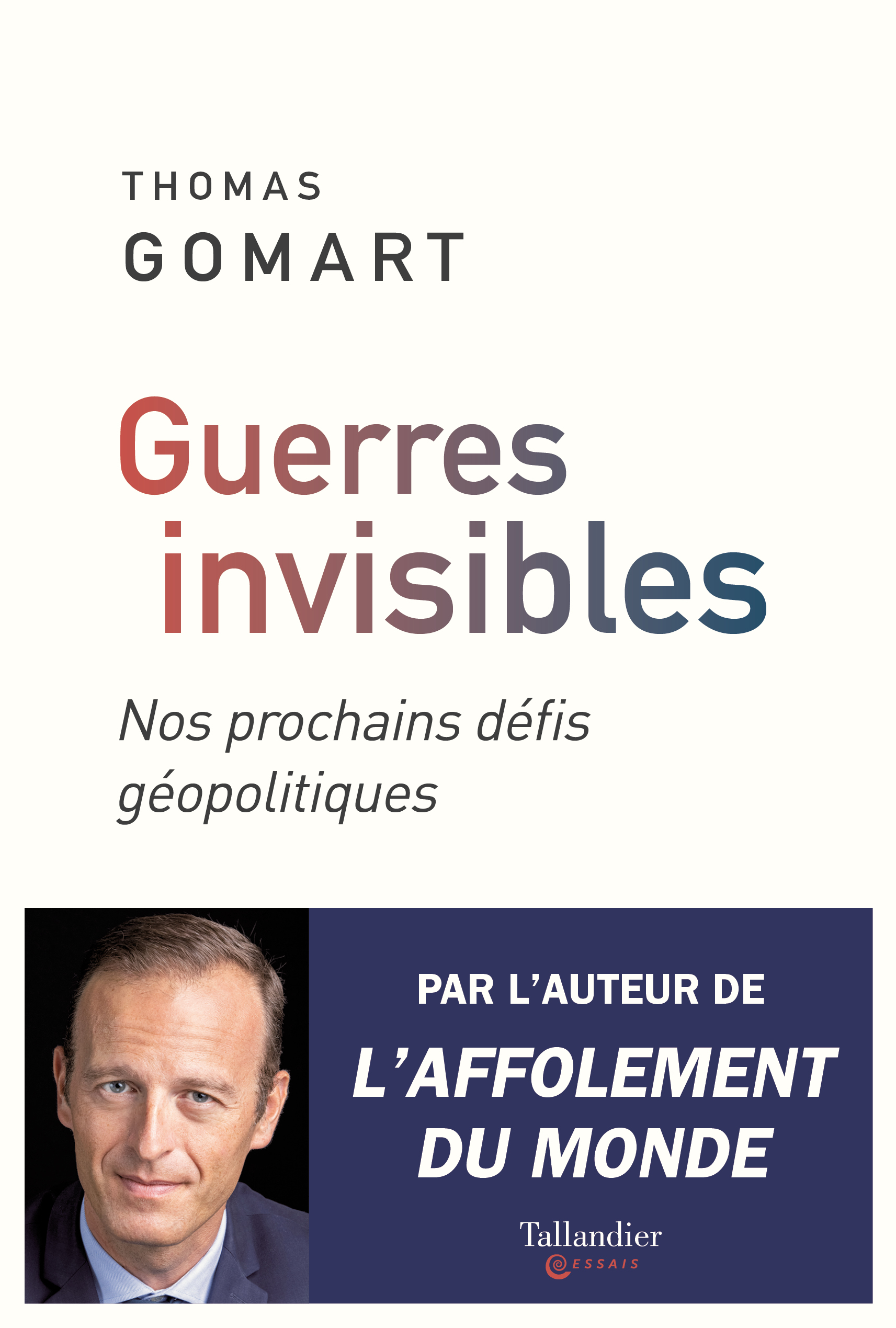
Guerres invisibles - Nos prochains défis géopolitiques

Date de publication
21 January 2021
Accroche

What are the next geopolitical challenges of the century? The global pandemic has altered the equilibrium between Asia and the West and sealed the rift between China and the United States, accentuating the world’s shift towards the East. On this polarized chessboard, two fault lines converge: environmental degradation and technological propagation where the main strategic and economic rivalries are now being played out.

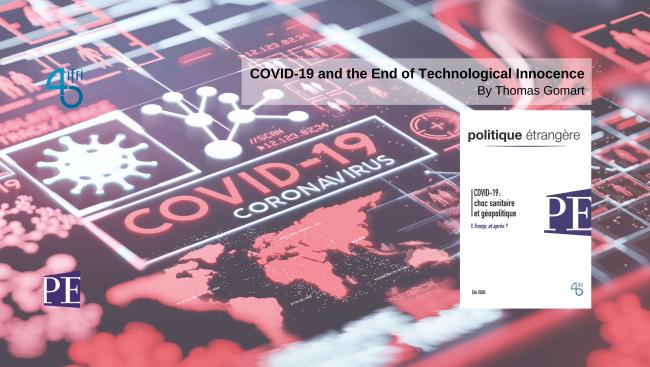
COVID-19 and the End of Technological Innocence

Date de publication
08 June 2020
Accroche

COVID-19 acts as a catalyst in international relations.

Image principale

The Future of Think Tanks

Date de publication
30 December 2019
Accroche

In this special issue of Politique étrangère devoted to the proceedings of the conference organized by Ifri on April 10, 2019, in the Grand Amphitheater of the Sorbonne, on the occasion of its fortieth anniversary, discover the debate moderated by Bassma Kodmani between Thomas Bagger, Thomas Gomart, Robin Niblett, and Daniela Schwarzer.

Thomas GOMART Bassma KODMANI Robin NIBLETT Thomas BAGGER Daniela SCHWARZER
Image principale

The Crucial Challenge of Cyberthreats

Date de publication
30 December 2019
Accroche

In this special issue of Politique étrangère devoted to the proceedings of the conference organized by Ifri on April 10, 2019, in the Grand Amphitheater of the Sorbonne, on the occasion of its fortieth anniversary, discover the debate moderated by Marc Hecker between Thomas Gomart and Jean-Louis Gergorin.

Thomas GOMART Marc HECKER Jean-Louis GERGORIN

What Is a Think Tank?

Date de publication
27 November 2019
Accroche

When I was laying the foundations for the French Institute of International Relations (Ifri)1 in 1978 and 1979, only a select few in France were familiar with the English term “think tank” and had at least an approximate idea of what it covered.

This term has become fashionable but still has no consensual definition.