





Practical information
This one-day conférence will discuss various dimensions of Pakistan's domestic and international politics. In particular, the role of Pakistan in its regional environment, the evolution of its economic situation and trade policy, the energy situation in Pakistan will be tackled.
This conference is jointly organized by the Embassy of Pakistan in France and IFRI, Paris.
Provisionnal Programme
WHITHER PAKISTAN?
NEW PROSPECTS, NEW PERSPECTIVES
9.15 - 9.45 Opening session
His Excellency Ghalib IQBAL, Ambassador of Pakistan in France
Mr. Dominique David, Executive Vice President, Ifri
9.45- 10.55 Pakistan and regional politics: time to move on?
Chairperson: Dr. Isabelle St-Mezard, Senior Analyst, Ifri
“Pakistan"s regional vision under Nawaz Sharif"s government”, Mr. Muhammad Sarwar, Governor Punjab, Former Member of the British Parliament
“A French perspective on Pakistan"s role in the region”, Prof. Jean-Luc Racine, Senior researcher at CNRS
10.40-10.55:Q&A Session
Tea/ coffee break
11.15 - 12.25 Pakistan"s economics: prospects and challenges
Chairperson: Dr. Francoise Nicolas, Director Centre for Asian Studies, Ifri
“The evolution of Pakistan"s socioeconomic situation: an assessment”, Dr. Ishrat Hussain, Dean/Director of International Business Institute, Karachi, Former Governor of the State Bank of Pakistan
“Working in Pakistan: the experience from a French multinational”, French business representative
“A review of Pakistan"s international trade", Mr. Sultan Allana, Chairman Habib Bank Limited
12.10-12.30 : Q&A Session
12.30 - 14.00: Lunch break
14.00 - 15.15 Overcoming the energy crisis
Chairperson: Marie-Claire Aoun, Director, Center for Energy, Ifri
OR John Seaman, Research Fellow, Center for Asian Studies, Ifri
“Pakistan"s National Energy Policy (2013-2018)”, Mirza Hamid Hassan Khan, Former Secretary Ministry of Water and Power
“The energy situation in Pakistan: what needs to be done?”, Nicolas Fornage, Auditor, French Development Agency (AFD), former AFD Country Director for Pakistan (2010-2013)
14.50-15.15: Q&A Session
15.30 - 16.15 Closing Session
Speakers to be confirmed
Other events
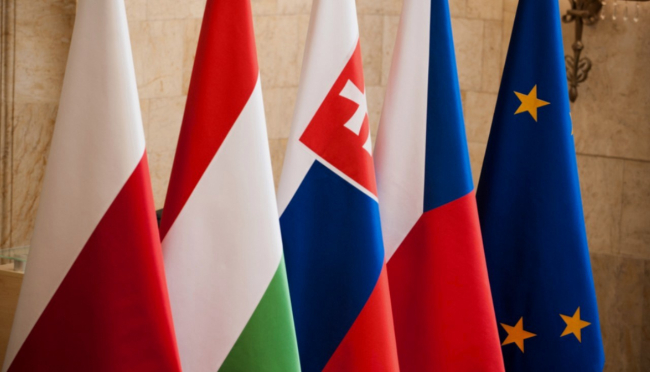
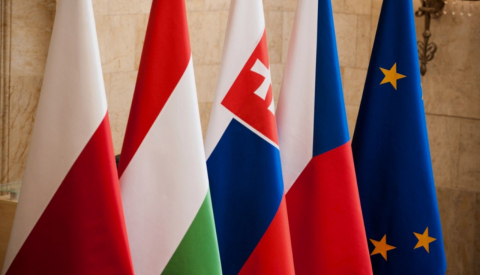
A New Moment for Central Europe? Regional Cooperation in a Time of European Strategic Choices
Recent political developments in Central Europe have revived the debate about the future of regional cooperation and the Visegrád Group. Changes in Hungary, Poland, the Czech Republic and Slovakia, together with Austria’s growing interest in closer cooperation with its neighbours, could create new opportunities for dialogue and coordination around shared priorities.
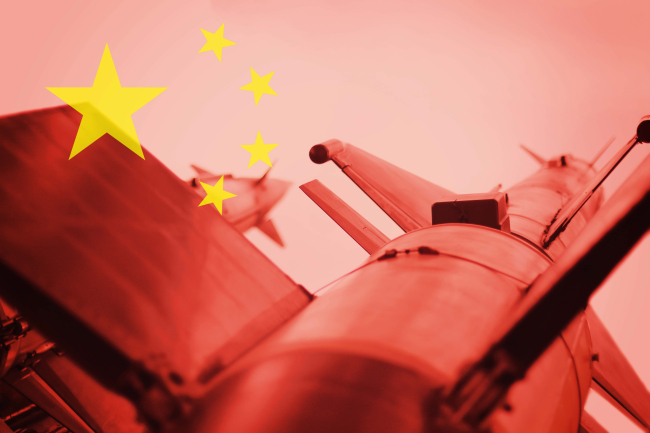
China’s Nuclear Buildup: Developments, Drivers, and Implications for Major-Power Relations and Arms Control
China has been steadily expanding its nuclear arsenal for several years amid levels of geopolitical tension unseen since the end of the Cold War, marked by a resurgence in nuclear proliferation and a broader, global arms race.

Reinventing Coordination in an Age of Fragmentation
The world economy is being reordered. The certainties of the post-Cold War era, open trade, dollar centrality, predictable multilateral coordination, are giving way to a landscape shaped by rivalry between the United States and China, the weaponization of interdependence, and a scramble to secure supply chains, technologies and critical resources. What once looked like a stable architecture now appears fragile, contested, and in places actively being dismantled.