




War and Technology: An Approaching Military Revolution?

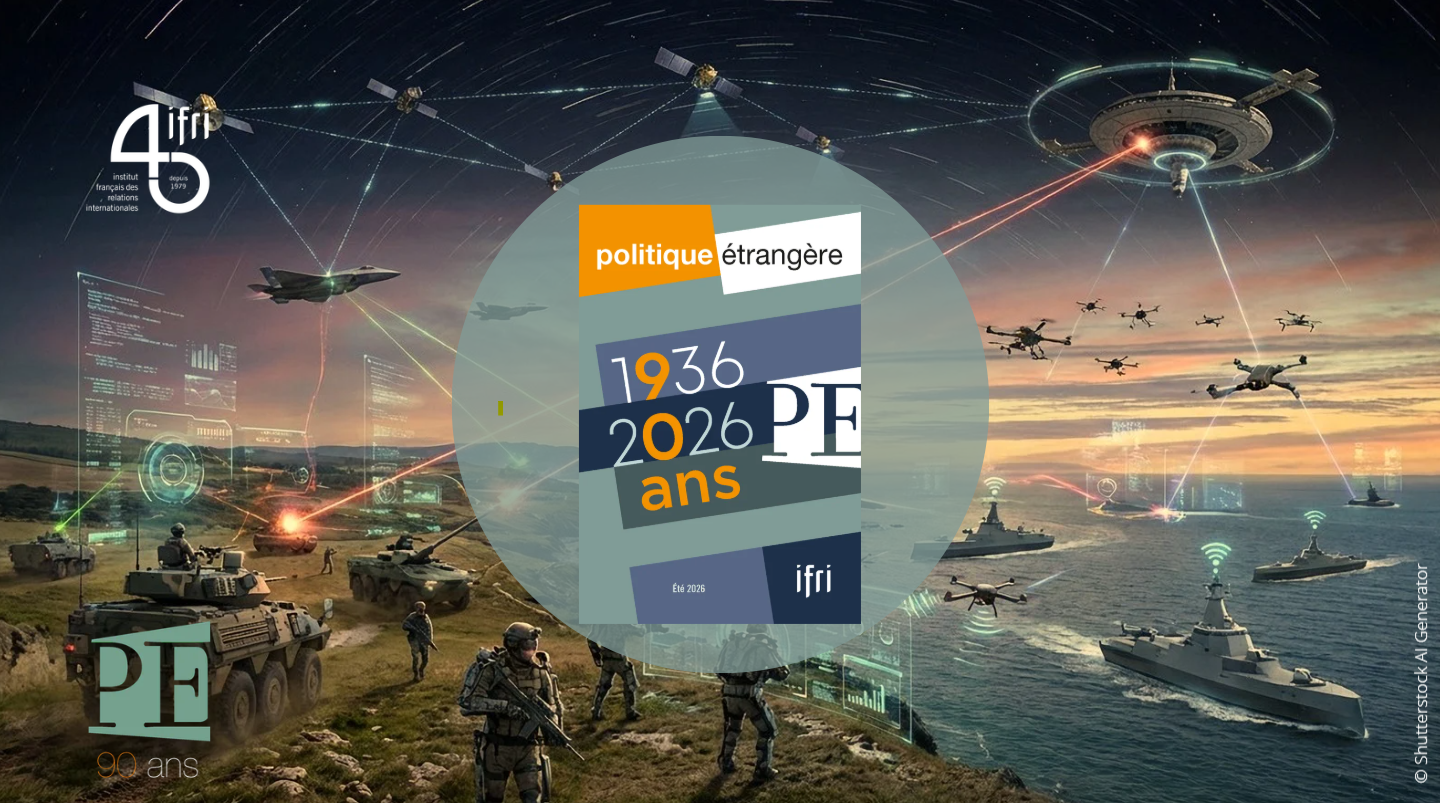
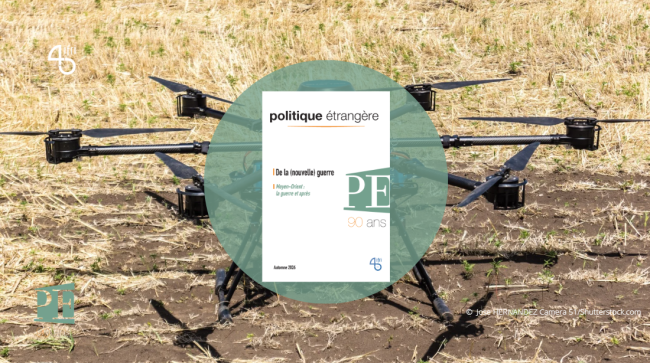
Historically, technological change has altered how battles are fought but has not overturned the fundamental principles of war. However, three considerations may now represent an actual revolution: the recourse to tactical nuclear weapons, the development of software for “multi-domain operations,” and the prospect of general artificial intelligence. The organization of militaries and the use of force need to be rethought in this light.
Since the industrialization of Europe in the mid-19th century, most commentators have shaped their visions of future war through the prism of technological innovation. At first, this trend was modified by strategic thinkers who, while accepting that the development of new weapons and their mass production with precision tools were changing tactics, argued for an underlying continuity in the principles of war and the strategies which shaped it. Before the First World War, Ferdinand Foch cited Napoleon when he taught at the École de guerre and Julian Corbett’s ideas on maritime strategy, propounded at the Royal Naval College in Greenwich, drew their evidence from the age of sail.
The world wars of the first half of the 20th century gave the materialists the edge. New technologies –the airplane and the submarine– took war into new dimensions, in the sky and under the sea, and the internal combustion edge promised revolutionary change on land. Within a decade after 1945, the dropping of the two atomic bombs had convinced most Americans that not even strategy could be exempt from the impact of scientific innovation. For Carl von Clausewitz, writing between 1815 and 1830, the principal precipitants of change in warfare had been social and political; for his post-1945 successors, they were physical and massively destructive.
Perhaps the most extraordinary feature of today’s debates about future warfare is the almost complete absence of nuclear weapons and their effects. The focus is less on weapons and more on their enablers: drones, cyber and electronic warfare, and artificial intelligence (AI). They will deliver real-time intelligence, persistent surveillance, precision targeting, near-instantaneous reaction times, and enhanced lethality. The recurrent principles of “conventional war” (to use the vocabulary of the Cold War) seem about to be upended. Surprise will be impossible; the concentration of force will invite obliteration; the focus on the offensive, taking the initiative and mobility may all be called into question. Land warfare –as in Ukraine’s defense of its territory against Russia’s invasion– looks likely to be protracted and indecisive, with defense enjoying an advantage that will favor positional warfare. Airpower, the instrument for unlocking maneuver in the Second World War and thereafter, looks set to consolidate these trends rather than surmount them. Indeed, in Ukraine, a mix of manned aircraft, unmanned systems and precision-guided ballistic missiles has become the dominant factor leading to stalemate. [...]
Article Outline
- Nuclear Weapons
- Integrated Warfare
- Artificial Intelligence
- Organizational Effects for Armed Forces
- Command and Control
- Increased Lethality
- Attrition
- War at Sea
- The Laws of War
Hew Strachan is a military historian. He was a professor at the universities of Oxford and St Andrews.
Article published in Politique étrangère, Vol. 91, No. 2, 2026.

Available in:
Themes and regions
Share
This page contains only a summary of our work. If you would like to have access to all the information from our research on the subject, you can download the full version in PDF format.
War and Technology: An Approaching Military Revolution?

Iran: Anatomy of a Power at War
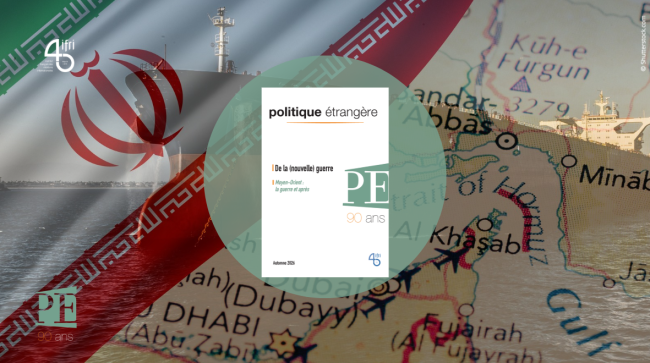
The elimination of Supreme Leader Ali Khamenei and several high-ranking officials at the outset of the 2026 American-Israeli operation did not succeed in bringing down the Iranian regime. The regime had prepared for such a scenario, notably by decentralizing its structures. Moreover, it continues to adapt to war. The power of the Islamic Revolutionary Guard Corps is growing at the expense of the Shiite clergy. The security apparatus defends the country’s sovereignty and justifies its actions in the name of raison d’état.

“Remodeling” the Middle East?
Chaos continues to spread, seemingly without end, across the Middle East. The Israeli-American attack on Iran has resulted in a clear military and diplomatic failure, but it is paving the way for a regional realignment, the consequences of which remain uncertain. New regional groupings are taking shape, either centered around Israel or built on the prospect of coexistence with Tehran, alongside a decline in American influence and the marginalization of Europe, while China maintains a low-key presence.
Silicon Valley and War: Lessons from Ukraine
Over the course of international conflicts, and particularly in Ukraine, major tech companies have emerged as central actors. Initially subject to wartime maneuvering, they have since become decisive actors in their own right, privatizing a significant share of wartime exchanges, shaping the information flows of societies, and presenting themselves as providers of security. This situation raises important questions about states’ autonomy in making decisions and taking action.

Does Artificial Intelligence Change the Nature of War?
From Gaza to Ukraine and Iran, current conflicts are being shaped by the arrival of artificial intelligence and robots on the battlefield. The changes under way are so profound that humans risk rapidly losing control over entire aspects of the conduct of military operations. While these technological developments are altering the character of war, their impact on the very nature of war itself remains a matter of debate.