





Law and the International Order

It is tempting to conclude that international law’s influence is receding in a context where power struggles are in the ascendant, especially between dominant nations. But the law still carries weight: as the ultimate constraint on the use of violence, as a shared language for all human communities, and as a framework for action for those who seek to invoke it. It doubtless needs to be rethought and adapted to changes in international relationships, but without losing sight of its day-to-day importance.
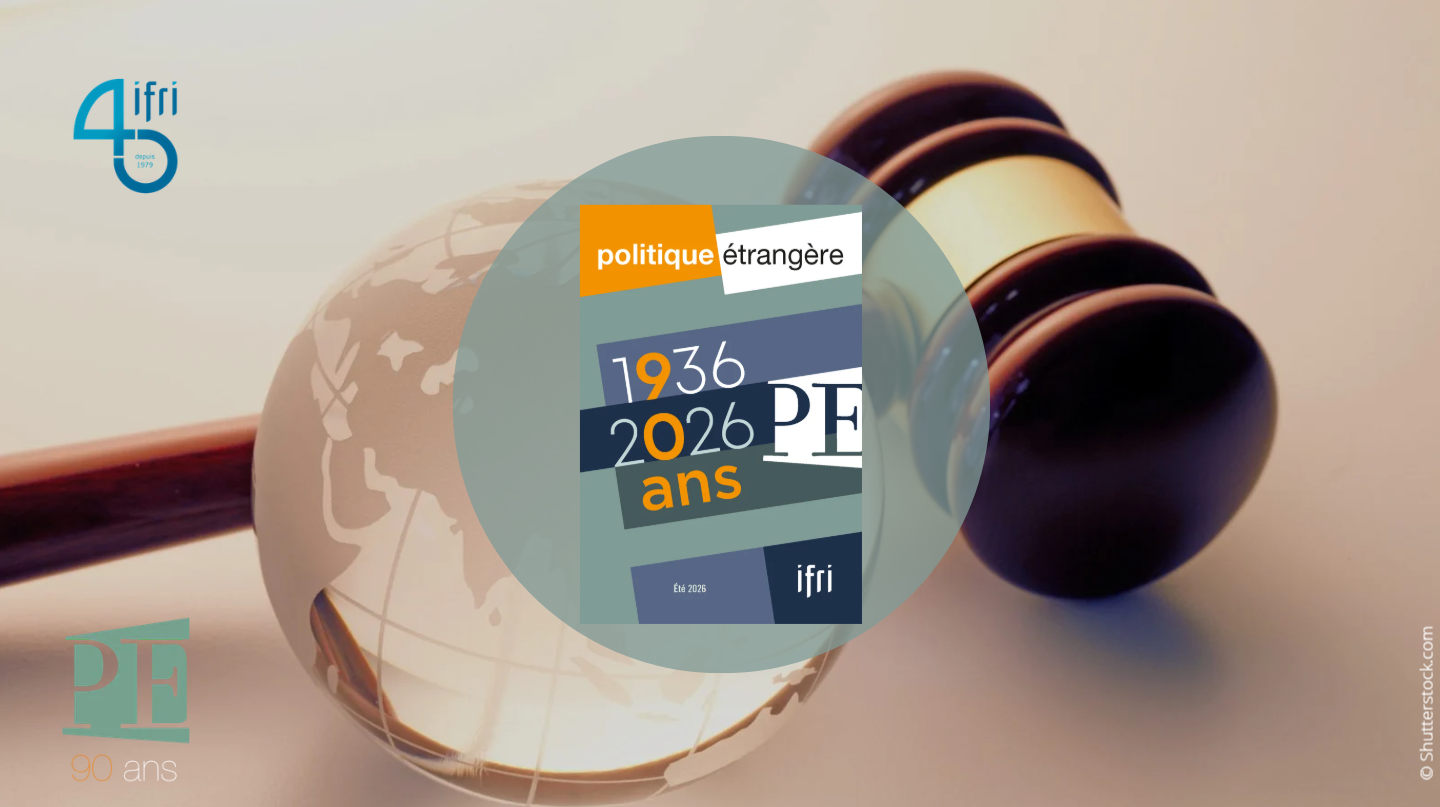
In October 1998, against the backdrop of a decade scarred by the Balkan wars, the Rwandan genocide, and emerging conflicts in Kosovo and the Democratic Republic of Congo (DRC), Judge Rosalyn Higgins observed that: “[c]haos appears to be all around us. It is hard not to share the sentiment that the international order today consists of disorder. And yet that disorder is surely not random, but is rather the consequence and result of the overall international system that obtains today. Chaos is an undeniable part of the international system, but certainly is not a satisfactory description ofthe international system”. She concluded that international law is a facilitating discipline, its purpose being “to assist in the achievement of an international stability that is consistent with justice and the realization of shared values”.
Writing more than a quarter of a century later, it is tempting simply to echo her opening words: chaos appears all around us. Today’s conflicts have multiplied from Ukraine to Gaza, from Sudan to Iran. In 2024, there were 61 active State-based conflicts—the highest number since 1946—and the highest level of conflict-related deaths in 30 years. Amid nuclear threats and a “new normal” of high conflict levels, the Doomsday Clock is at 85 seconds to midnight, the closest it has ever been to catastrophe. In the first three months of 2026 alone, the United States (U.S.) has withdrawn from 66 international organizations; launched a large-scale military operation in Caracas; captured the sitting Venezuelan President Nicolás Maduro and transported him to New York to face trial on narco-terrorism charges; launched a joint military offensive with Israel against Iran; killed Iran’s Supreme Leader Ali Khamenei in airstrikes on Tehran; and launched joint military operations in Ecuador against designated terrorist organizations. [...]
Article Outline
- What International Law Was Designed to Do
- Three Contemporary Challenges
- Incentive: challenging international law as a stabilizing force
- Legitimacy: challenging international law as a common language
- Enforcement: challenging international law as a framework for resolving disputes
- The Future of International Law
Philippa Webb is a professor of public international law at the Blavatnik School of Government at the University of Oxford, an attorney at Twenty Essex, and a co-founder and director of the Oxford Institute of Technology and Justice.
Daisy Peterson is a doctoral student in law at the University of Oxford and a research fellow in international law at the Oxford Institute of Technology and Justice.
Article published in Politique étrangère, Vol. 91, No. 2, 2026.

Available in:
Themes and regions
Share
This page contains only a summary of our work. If you would like to have access to all the information from our research on the subject, you can download the full version in PDF format.
Law and the International Order

Iran: Anatomy of a Power at War
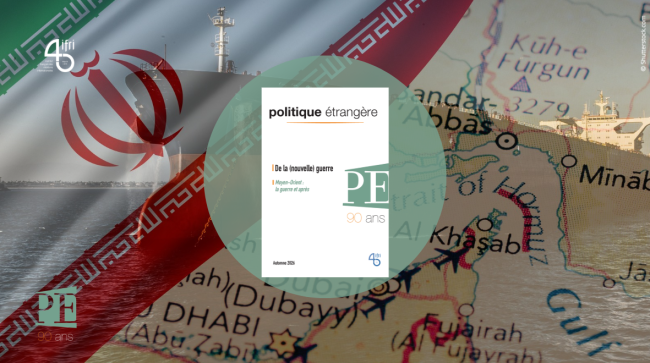
The elimination of Supreme Leader Ali Khamenei and several high-ranking officials at the outset of the 2026 American-Israeli operation did not succeed in bringing down the Iranian regime. The regime had prepared for such a scenario, notably by decentralizing its structures. Moreover, it continues to adapt to war. The power of the Islamic Revolutionary Guard Corps is growing at the expense of the Shiite clergy. The security apparatus defends the country’s sovereignty and justifies its actions in the name of raison d’état.
“Remodeling” the Middle East?
Chaos continues to spread, seemingly without end, across the Middle East. The Israeli-American attack on Iran has resulted in a clear military and diplomatic failure, but it is paving the way for a regional realignment, the consequences of which remain uncertain. New regional groupings are taking shape, either centered around Israel or built on the prospect of coexistence with Tehran, alongside a decline in American influence and the marginalization of Europe, while China maintains a low-key presence.
Silicon Valley and War: Lessons from Ukraine
Over the course of international conflicts, and particularly in Ukraine, major tech companies have emerged as central actors. Initially subject to wartime maneuvering, they have since become decisive actors in their own right, privatizing a significant share of wartime exchanges, shaping the information flows of societies, and presenting themselves as providers of security. This situation raises important questions about states’ autonomy in making decisions and taking action.
Does Artificial Intelligence Change the Nature of War?
From Gaza to Ukraine and Iran, current conflicts are being shaped by the arrival of artificial intelligence and robots on the battlefield. The changes under way are so profound that humans risk rapidly losing control over entire aspects of the conduct of military operations. While these technological developments are altering the character of war, their impact on the very nature of war itself remains a matter of debate.