







China’s New Five Year Plan : Economic and Energy Sector Implications

Practical information
Themes and regions
Related centers and programs
President Xi has surprised both the world and Chinese stakeholders in announcing the carbon neutrality objective by 2060. Yet the first announcements on China’s new Five Year Plan give little hope for a substantial policy adjustment in order to peak greenhouse gas emissions in the coming years, instead of “before 2030”.
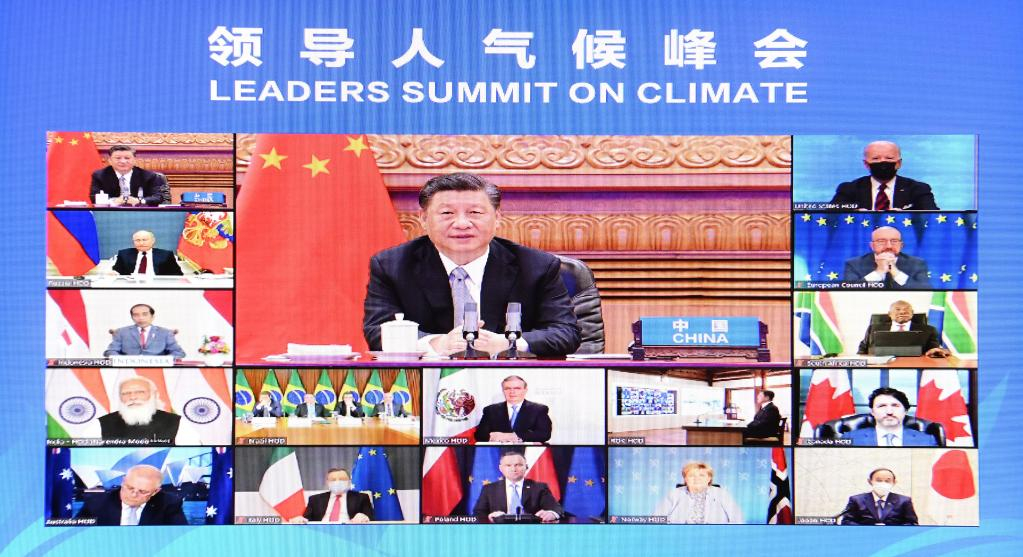
Today, 28% of the world’s CO2 emissions come from China, which registers over 7 tons of GHG/capita (i.e. more than the European Union but two times less than the United States). China can hardly argue for more time in reducing its emissions, in contrast to emerging market emitters such as India. What are the current energy sector trends in China, what policy changes may be expected, and what are the five-year perspectives in the field of electricity, transport and industry?
PROGRAM:
Introduction: Françoise Nicolas, Director, Center for Asian Studies, Ifri
China’s energy and climate policies ahead of COP26: has anything changed? Kevin Tu, Senior Associate Fellow, Ifri
Discussants: Marc-Antoine Eyl-Mazzega, Director, Center for Energy & Climate, Ifri and John Seaman, Research Fellow, Center for Asian Studies, Ifri
Find out more
Addressing the Climate Emergency: Closing 1,000 Gigawatts of Coal Plants by 2035
In order to have any chance of limiting global warming to well below +2°C, there is no choice but to tackle coal-fired power plants head-on, around the world.
Ambitious New Climate Goals Shouldn't Let China off the Hook
Xi Jinping’s announcement of carbon neutrality is impeccably timed, but the hard part lies ahead.

Prospects of a Hydrogen Economy with Chinese Characteristics
This study assesses the prospects of a hydrogen economy with Chinese characteristics. Against the backdrop of an escalating US-China trade war and the ongoing novel coronavirus (COVID-19) pandemic, key Chinese stakeholders become increasingly interested in moving the hydrogen economy agenda forward.
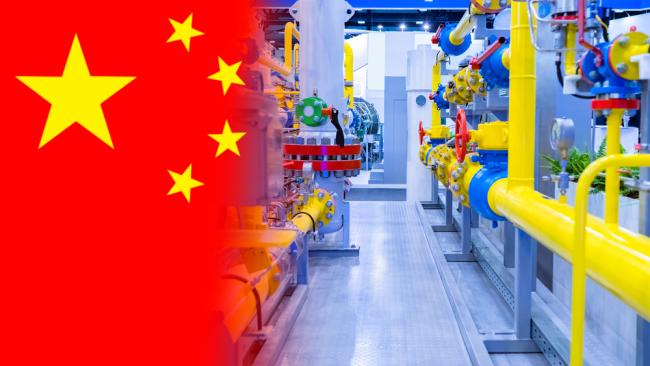
A Review of Recent Trends in China’s Gas Sector and a Glimpse into the 14th Five-Year Plan
China’s economy has rebounded since April 2020 and China is one of the few countries in the world that is expected to avoid a recession in 2020. With low imported gas prices, progress with the gas market liberalization and success in pushing up shale gas production, the window of a golden age for gas has opened up again in China.
Related Subjects
Other events

France-Ukraine Forum 2026
More than four and a half years after the start of the full-scale war launched by Russia against Ukraine, the 2026 France-Ukraine Forum will bring together policymakers, experts, academics, and civil society representatives from both countries to discuss three main topics: the formats and conditions for a lasting diplomatic settlement; Ukraine’s Euro-Atlantic integration, encompassing both the EU accession process and closer ties with NATO; and the societal transformations of postwar Ukraine, as well as its prospects for reconstruction.

The EU in a World of Economic Warfare: Trade, Geopolitics, and the Battle for Economic Sovereignty
The international trading system has become a primary theatre of geopolitical competition. Tariffs, sanctions, and technology controls have replaced dialogue as the default instruments of economic relations.
The Road to 27 Electrification Action Plans: Planning and Investing in Europe’s Electric Future
The European Commission’s Electrification Action Plan places the continent on an electric path to structurally reduce dependence on fossil fuel imports and boost the energy transition in industry, transport and buildings.