






Digitalization in the (post) COVID World: Views from Japan and Europe

Practical information
The COVID-19 crisis has highlighted the importance of accelerating the digital transformation of both the industry and the society.

Digitalization will help companies to ensure a better resilience to disruption and guarantee a continuity of their activities. Digitalization is also necessary to develop new forms of work practices such as working from home (WFH) and develop tele-medicine and other remote services. Finally, digital transformation will also help to achieve a green recovery.
Both Japan and the EU have placed digitalization at the center of their recovery strategy post-COVID. Therefore, this webinar will discuss the Japanese and European approaches to digitalization of industry and society, it will highlight the opportunities and challenges and identify areas of cooperation.
This webinar will be held in English.
PROGRAM
Chair and discussion leader: Françoise NICOLAS, Director, Center for Asian Studies, Ifri
- Motohiro TSUCHIYA, Professor, Keio University
- Digital transformation as a political and industrial priority in Japan
- Digital transformation as a political and industrial priority in Japan
- Reinhilde VEUGELERS, Senior Fellow, Bruegel, Belgium
- The European approach to industrial digitalization: challenges, opportunities and implications.
- The European approach to industrial digitalization: challenges, opportunities and implications.
- Sébastien LECHEVALIER, Professor at Ecole des Hautes Etudes en Sciences Sociales – EHESS (Paris), President of the France-Japan Foundation
- Industry 4.0: a comparison of the European and Japanese strategies
Related Subjects
Other events
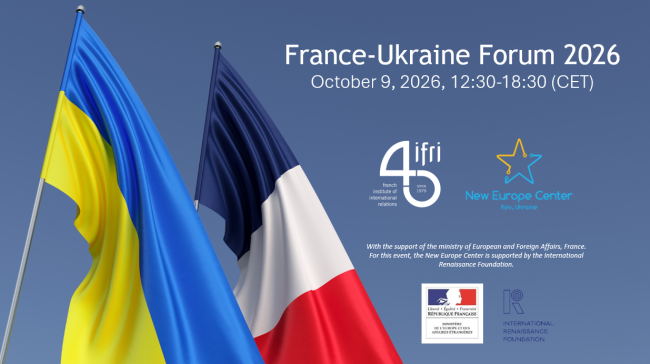
France-Ukraine Forum 2026
More than four and a half years after the start of the full-scale war launched by Russia against Ukraine, the 2026 France-Ukraine Forum will bring together policymakers, experts, academics, and civil society representatives from both countries to discuss three main topics: the formats and conditions for a lasting diplomatic settlement; Ukraine’s Euro-Atlantic integration, encompassing both the EU accession process and closer ties with NATO; and the societal transformations of postwar Ukraine, as well as its prospects for reconstruction.
The EU in a World of Economic Warfare: Trade, Geopolitics, and the Battle for Economic Sovereignty
The international trading system has become a primary theatre of geopolitical competition. Tariffs, sanctions, and technology controls have replaced dialogue as the default instruments of economic relations.
The Road to 27 Electrification Action Plans: Planning and Investing in Europe’s Electric Future
The European Commission’s Electrification Action Plan places the continent on an electric path to structurally reduce dependence on fossil fuel imports and boost the energy transition in industry, transport and buildings.