





Practical information
Data no longer should be understood as a sole commercial or regulatory issue, but rather as an actual stake of international politics. For Europe, in a context of transatlantic tensions, the impact of the digital economy’s center of gravity moving towards China is potentially significant. However, the General Data Protection Regulation (GDPR), adopted in May 2018, seems more of a regulatory, even ethical, answer to a geopolitical challenge. This seminar will examine Europe’s place in the geopolitics of data – dominated by the United States and China –, and highlight its ambitions in all data-related policies.
This seminar will be held in English
9:00 – Welcoming remarks:
Thomas Gomart, Director, IFRI
Patrick Nicolet, Group Chief Technology Officer and Member of the Group Executive Board, Capgemini
9:15-10:30 – Data geopolitics: Europe between the U.S. and China
Toward a transatlantic data war? – Henry Farrell, Professor of International Affairs, George Washington University
How China is envisioning its global strategy for data? – Alice Ekman, Research Fellow and Head of China research, IFRI Center for Asian studies
Debate
10:30-10:45 – Coffee break
10:45-12:15 – Leveraging European data ambitions
Beyond GDPR: Can Europe articulate a ‘data sovereignty’ policy? – Stefan Heumann, Co-Director, Stiftung Neue Verantwortung, Berlin
Artificial Intelligence: a game-changer for Europe’s data-policy ambitions? – Julien Nocetti, Research Fellow, IFRI
Debate
12:15-12:30 – Concluding remarks
12:30-14:00 – Lunch at IFRI
Find out more
Europe: Subject or Object in the Geopolitics of Data?
Data no longer should be understood as a sole commercial or regulatory issue, but rather as an actual stake of international politics. Mastering data is an issue involving different set of actors, with diverging motivations: it is a sovereignty and national security stake for states, a democratic stake for people (personal data), and a fundamental source of value creation for companies.
Related Subjects
Other events
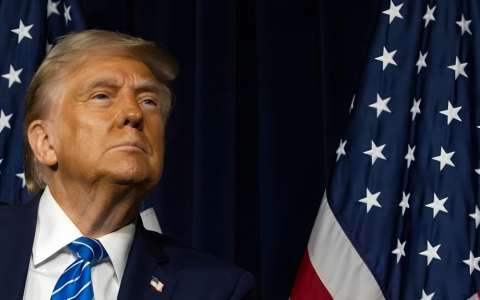
One Month Ahead of the Midterms: Where Is Trump’s America Headed?
The 24th edition of the Ifri Americas Programme Annual Conference will examine the dynamics at play in the United States and their implications for Europe and the transatlantic relationship. will examine the dynamics at play in the United States and their implications for Europe and the transatlantic relationship.
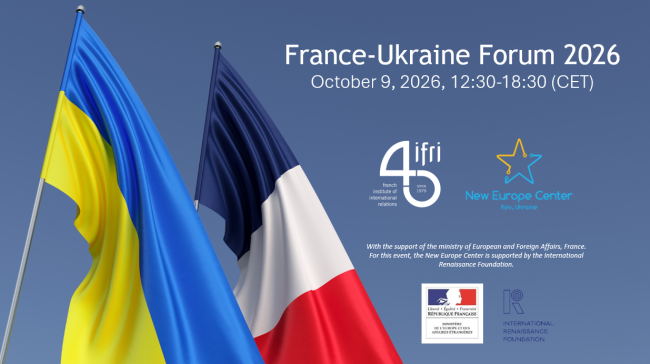
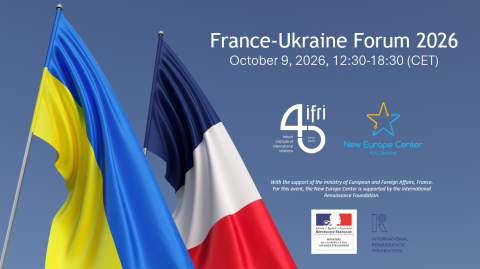
France-Ukraine Forum 2026
More than four and a half years after the start of the full-scale war launched by Russia against Ukraine, the 2026 France-Ukraine Forum will bring together policymakers, experts, academics, and civil society representatives from both countries to discuss three main topics: the formats and conditions for a lasting diplomatic settlement; Ukraine’s Euro-Atlantic integration, encompassing both the EU accession process and closer ties with NATO; and the societal transformations of postwar Ukraine, as well as its prospects for reconstruction.
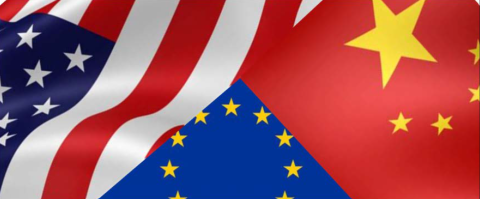
The EU in a World of Economic Warfare: Trade, Geopolitics, and the Battle for Economic Sovereignty
The international trading system has become a primary theatre of geopolitical competition. Tariffs, sanctions, and technology controls have replaced dialogue as the default instruments of economic relations.