



Towards a More Principled European China Policy?
Promoting political values (democracy, human rights and the rule of law) in China is a colossal undertaking, but the EU could be more effective than we think. To do so, it must act strategically, in unity, and in concert with like-minded partners. It must also strengthen its record of upholding political values and reform its procedures for foreign policy decision-making.
French public opinion on China in the age of COVID-19: Political distrust trumps economic opportunities
This report is a result of a wide-scale study of public opinion on China in 13 European countries,1 conducted in September and October 2020, on the research sample representative with respect to gender, age, level of education, country region, and settlement density. Here, we focus on the French portion of the polling, building on the previously published report comparing the results across the 13 countries.
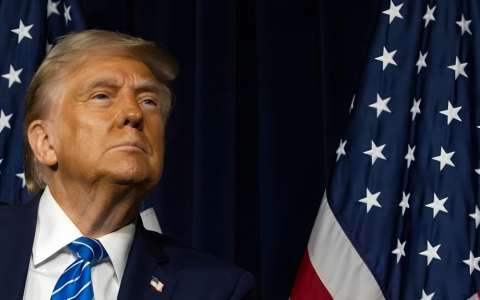
The US-China Trade War: What Is the Outcome after the Trump Presidency?
One of Donald Trump’s campaign promises in 2016 was to end China’s “cheating” on trade and to reduce America's trade deficit by imposing significant tariffs on U.S. imports of Chinese products. This study draws up a first assessment of his policy - and of the "trade war" which stemmed from it.
European public opinion on China in the age of COVID-19: Differences and common ground across the continent
In September and October 2020, the Sinophone Borderlands project at Palacký University Olomouc conducted a wide-scale survey of public opinion on China in 13 European countries. The polled countries include: Czechia, France, Germany, Hungary, Italy, Latvia, Poland, Russia, Serbia, Slovakia, Spain, Sweden, and the United Kingdom. Here, we present the basic findings of the survey, which are a result of a joint analysis of the survey data by the Central European Institute of Asian Studies (CEIAS) and Sinophone Borderlands.
GovTech, The New Frontier in Digital Sovereignty
The COVID-19 crisis has been a catalyst for a surge in the GovTech market, while triggering debate around the use of new technologies in the public health response to the pandemic. More broadly, the health crisis has shed a new light on the strategic importance of some domains relevant to GovTech such as HealthTech, smart cities and EdTech.
A Review of Recent Trends in China’s Gas Sector and a Glimpse into the 14th Five-Year Plan
China’s economy has rebounded since April 2020 and China is one of the few countries in the world that is expected to avoid a recession in 2020. With low imported gas prices, progress with the gas market liberalization and success in pushing up shale gas production, the window of a golden age for gas has opened up again in China.
Trade, Investments, Technology, Climate Change, Human Rights: How should the EU Deal with China?
Ifri, the Austro-French Centre for Rapprochement in Europe and Konrad Adenauer Foundation Multilateral Dialogue organized a videoconference called "Trade, Investments, Technology, Climate Change, Human Rights: How should the EU Deal with China? " on October 27, 2020.
France’s incoherent China policy confuses partners
On 21 July 2020, French Minister of Economy and Finance Bruno Le Maire participated remotely in the High Level Economic and Financial Dialogue with Chinese Vice Premier Hu Chunhua.
Prospects of a Hydrogen Economy with Chinese Characteristics
This study assesses the prospects of a hydrogen economy with Chinese characteristics. Against the backdrop of an escalating US-China trade war and the ongoing novel coronavirus (COVID-19) pandemic, key Chinese stakeholders become increasingly interested in moving the hydrogen economy agenda forward.
Turkey-China Relations: Ambitions and Limits of the Economic Cooperation
At first glance, China and Turkey have many interests to cooperate. The deployment of the Chinese Belt and Road Initiative (BRI), Turkey's colossal investment and financing needs, as well as President Erdogan's mistrust of the West, appear as many converging interests. Yet economic cooperation between the two countries is struggling to achieve its full potential. Political differences persist, particularly the question of the Uyghurs.
Support independent French research
Ifri, a foundation recognized as being of public utility, relies largely on private donors – companies and individuals – to guarantee its sustainability and intellectual independence. Through their funding, donors help maintain the Institute's position among the world's leading think tanks. By benefiting from an internationally recognized network and expertise, donors refine their understanding of geopolitical risk and its consequences on global politics and the economy. In 2026, Ifri partners with over 90 French and international companies and organizations.
