



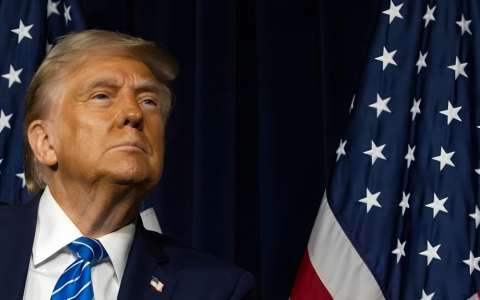
The China dilemma from Trump to Biden: one consensus and three worldviews
The United States underwent a fundamental transformation in its stance on China during the Trump presidency.
Hypersonic Weapons: What Are the Challenges for the Armed Forces?
Hypersonic systems are becoming attributes of power for the states that design and implement them, at the risk of reviving an arms race.
Health Data Governance: Lessons Learned from the COVID-19 Pandemic in Europe, China, and the United States
The health crisis has triggered a tectonic movement in the recomposition of health data governance and protection models around the world, while accelerating the investment of large digital companies in the field of e-health.
Xi Jinping’s Conquest of China’s National Security Apparatus
One indisputable trend of Xi Jinping’s leadership since taking up the reins of government in 2012 has been the reaffirming of the Party’s control over the state, the army, society, and the economy. To this aim, establishing heightened control over the national security apparatus has been his means as much as an end. Xi has thus strengthened the Party’s overall security authority through major institutional and legal reforms.
China Space Station First Step in Country's Plans to Colonize Space
China's far-reaching ambition for a permanent presence in outer space began in earnest on Thursday with the launch of its first crew bound for a new space station.
Can the Biggest Emitters Set Up a Climate Club? A Review of International Carbon Pricing Debates
The world’s largest emitting countries are reconsidering the role of carbon pricing instruments and increasingly looking at carbon border adjustment mechanisms (CBAMs) to address leakage concerns. This renewed momentum should trigger a broader discussion on how to make trade policies compatible with the climate agenda.
China/Japan: Redefining Coexistence
When dealing with China, Japan has assumed a position that protects its economic cooperation with Beijing, ensures Chinese aggressive strategies are deterred and guarantees its overall economic security: security of supply, autonomy in technological development, etc.
Beijing: Taiwan's Worst and Greatest Enemy
In recent years, the People's Republic of China's policy towards Taiwan has become increasingly aggressive.
China and South-East Asia: Has the Die Been Cast?
China is exerting pressure on its surrounding area in South-East Asia to implement its concept of a “community with a shared destiny”.
East Asia Confronted with China
China is now an undeniable heavyweight on the international scene, wielding a remarkable range of political strategies. Studying its position in the surrounding area of Southeast Asia in relation to Japan, Korea, Taiwan, and the Association of Southeast Asian Nations (ASEAN) countries, as well as Australia, gives us an understanding of both the strength and the limits of such a diverse range of actions.
Support independent French research
Ifri, a foundation recognized as being of public utility, relies largely on private donors – companies and individuals – to guarantee its sustainability and intellectual independence. Through their funding, donors help maintain the Institute's position among the world's leading think tanks. By benefiting from an internationally recognized network and expertise, donors refine their understanding of geopolitical risk and its consequences on global politics and the economy. In 2026, Ifri partners with over 90 French and international companies and organizations.
