



Search on Ifri.org

About Ifri

Frequent searches

Suggestions

Iran

The joint military operations led by the United States and Israel of February 28, 2026 resulted in the death of Iranian Supreme Leader Ali Khamenei and triggered massive reprisals across the Gulf. Ifri analyzes the strategic implications of this shift: while the regime is faltering, lasting change would require ground support and popular mobilization backed by part of the security apparatus. Between military escalation, the threat of blocking the Strait of Hormuz, and international terrorist risk, the Middle East faces unprecedented instability that threatens the balance of the entire Arabian Peninsula and the Near East.

Related Subjects

Sujets associés thématiques et régions
Image Taxonomie
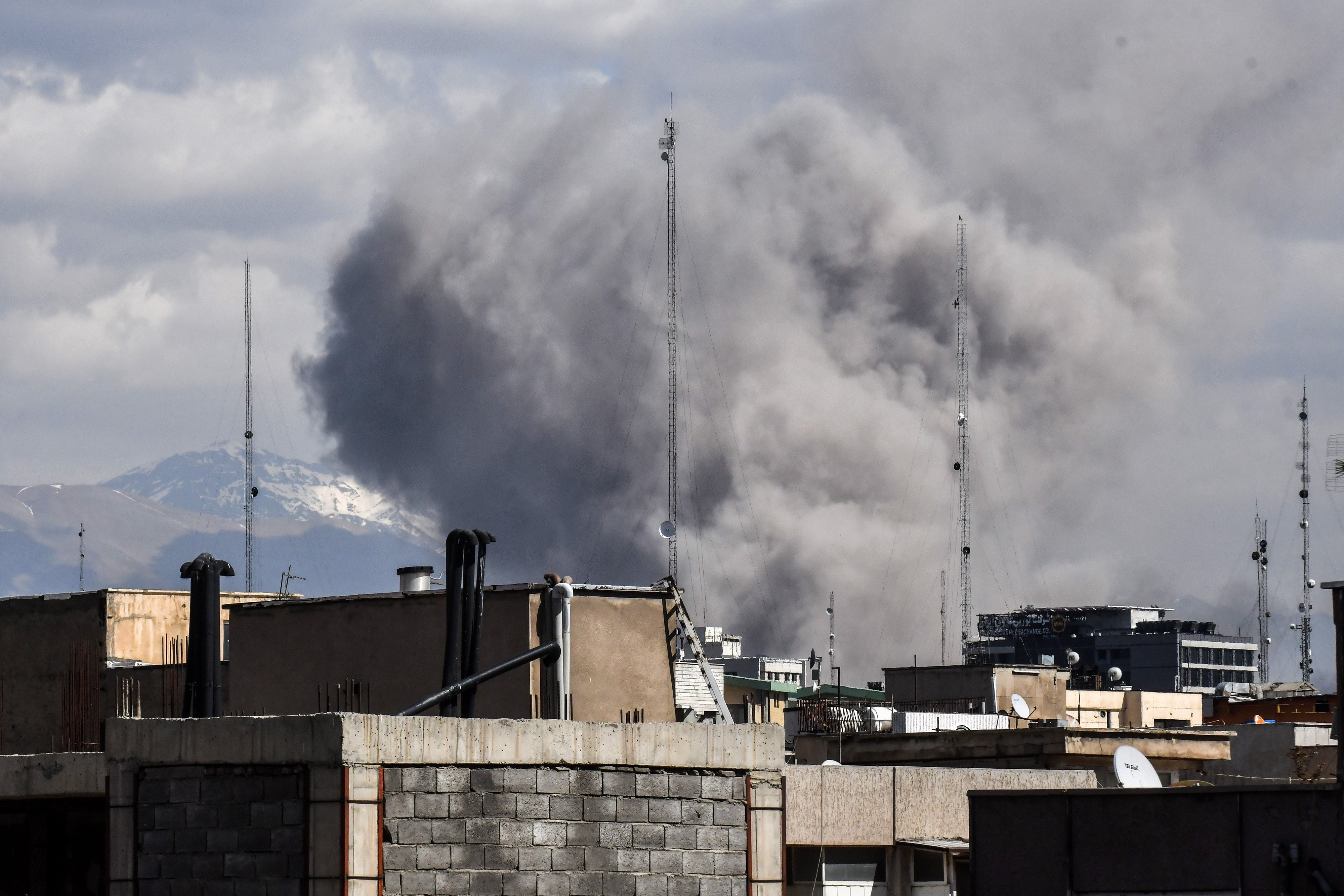
Frappes aériennes américano-israéliennes à Téhéran, 1er mars 2026
See all
Publications
Image principale

Understanding the Resilience of the Islamic Republic of Iran

Date de publication
10 September 2018
Accroche

The leaders of Iran nurture regional ambitions, and are conscious of the limits of their country’s power.

Pierre PAHLAVI

Transitions from War to Peace

Date de publication
10 September 2018
Accroche

How do we get out of wars? One hundred years after 1918, Politique étrangère’s special report takes up this question from different perspectives in relation to the conflicts in which Western armies, willingly or otherwise, are embroiled.

Image principale

Navigating the Storm: ‘OPEC+’ Producers Facing Lower Oil Prices

Date de publication
18 June 2018
Accroche

On 22 June 2018, “OPEC+” oil Ministers (Organisation of Petroleum Exporting Countries members and an ad hoc alliance with several non-OPEC producers, notably with Russia, Kazakhstan and Azerbaijan) will gather in Vienna to discuss the status and future of their production limitation agreement which was initiated in November 2016 and runs until the end of December 2018.

Marc-Antoine EYL-MAZZEGA Carole MATHIEU Elodie BERNARD Philippe COPINSCHI Saïd NACHET Isabelle ROUSSEAU

America Is More Than Trump. Europe Should Defend the Iran Deal without Burning Bridges to the US

Date de publication
18 May 2018
Accroche

US President Donald Trump’s decision to withdraw from the 2015 Iran nuclear deal, known as the Joint Comprehensive Plan of Action (JCPOA), will severely degrade regional and global security. His decision has increased the risk of war and a nuclear arms race in the Middle East and beyond. 

Thomas GOMART Robin NIBLETT Daniela SCHWARZER Nathalie TOCCI
Image principale

Saving Transatlantic Cooperation and the Iran Nuclear Deal. A View from Europe and the United States

Date de publication
16 February 2018
Accroche

Transatlantic differences over the future of the Iran nuclear deal – or the Joint Comprehensive Plan of Action (JCPOA) of July 2015 – are damaging a nuclear accord that all parties, except the United States, see as delivering on its purpose. They also increase the risk of Washington and European capitals working at cross-purposes vis-à-vis Iran and broader regional policies. To avoid such a scenario, the E3 (France, Germany, United Kingdom)/European Union (EU) and the United States need to set up new channels of communication to avoid a transatlantic rift, to attempt – if at all possible – to preserve the Iran deal, and to secure its benefits for regional and global security.

Corentin BRUSTLEIN James DOBBINS Dalia DASSA Olivier MEIER Marco OVERHAUS Neil QUILLIAM Charles RIES Dorothée SCHMID Sanam VAKIL Azadeh ZAMIRIRAD

Iraq after Daesh

Date de publication
29 November 2017
Accroche

Going beyond the numerous claims of rupture, is Trump overturning the international order and the place occupied in it by the United States?

Image de couverture de la publication
image_couverture_ramses_2017.png

RAMSES 2017. A Fragmented World

Date de publication
07 September 2016
Accroche

RAMSES 2017. A Fragmented World, prepared by IFRI’s research team and selected external experts, offers an in-depth and up to date analysis of global geopolitics.

This 35th edition focuses on three key issues: the spread of jihadist terrorism, the Middle East’s disintegration, and doubts about the European project. With the world’s balance of power and economic foundations shifting, the next few months are likely to be decisive for our future. The growing diversity and complexity of our world is startling, which is why it is important to rethink our analyses and means of action.

Latin America's Dashed Hopes

Date de publication
05 September 2016
Accroche

Only recently, Latin America seemed to embody an inexorable movement towards political democratization, towards a decrease in stark inequalities as well as greater involvement in the global economy. But the dream remains unrealized.

Image principale

Cyber Attacks: A New Threat to the Energy Industry

Date de publication
12 July 2016
Accroche

The Network and Information Security (NIS) Directive has been adopted on July 6th, 2016 by the European Parliament, three years after the initial proposal by the European Commission. It paves the way for a much needed common cyber security strategy within the EU. This Edito explains the reasons why the energy industry is particularly vulnerable to cyber attacks, and what tools this new directive brings about to protect European critical infrastructures.

Middle East, the new "Great Game"

Date de publication
06 June 2016
Accroche

Will a divided Middle East become the center of a new “Great Game”? The world’s global powers are aligned in it: the United States, falsely tempted by retraction; Russia, establishing its position in an unexpected state of play, France, destabilized by the contradictions of its own policy… In addition are tussles for regional hegemony between Iran, Turkey, and Saudi Arabia.

A New Era of Oil Abundance?

Date de publication
01 December 2015
Accroche

From 2014 to 2015, the price of oil fell. 

RAMSES 2016. Climat : une nouvelle chance ?

Date de publication
08 September 2015
Accroche

Written by Ifri's research team and its network of associates, the new RAMSES 2016 analyses geopolitics on a worldwide scale. The major theme of this 34th edition is Climate: A new chance? In addition, RAMSES 2016 tackles the insertion of Africa in globalization and the uncertainties of democracy today in post-industrial societies, but also in the South.

Syria: Ankara versus Tehran?

Date de publication
01 September 2014
Accroche

Turkish leaders would like to turn their country into the leader of the Middle East. However, they are in competition with another of the region’s key players: Iran.

Özcan YILMAZ

John Kerry in the Middle East: from Weak to Hopeful Diplomacy?

Date de publication
01 September 2014
Accroche

In 2013, Barak Obama and John Kerry managed, not without difficulty, to steer Israeli and Palestinian leaders back to peace negotiations. At the same time, Washington re-established dialogue with Tehran in talks aimed at finding a solution to the Iranian nuclear problem.

Antoine COPPOLANI

Reading Rouhani Right

Date de publication
05 March 2014
Accroche

Poll numbers are the life blood of politics these days. Anything expressed in digits has a claim to truth that assertions without digits cannot make. They inspire confidence - especially among those aspiring to public office - that they actually understand what public sentiment is. If you lived between nuclear-armed Israel and Pakistan and had as many world class enemies as Iran has accumulated - would you give up your pursuit of a nuclear weapon?

William C. RAMSAY

Iran's Presidential Election: a Distorted Western Perspective?

Date de publication
27 June 2013
Accroche

The election of a religious leader at the presidency of the Islamic Republic of Iran contradicts many of the analyses of western media and experts on Iranian politics.

Clément THERME

Command and Control in a Nuclear-Armed Iran

Date de publication
04 February 2013
Accroche

In the long standoff regarding its nuclear ambition, Iran has cultivated ambiguity and been loath to reliably assure the international community of its ultimate intentions, complicating Western efforts to understand, let alone constrain, Tehran’s endeavors.

Shahram CHUBIN

Support independent French research

Ifri, a foundation recognized as being of public utility, relies largely on private donors – companies and individuals – to guarantee its sustainability and intellectual independence. Through their funding, donors help maintain the Institute's position among the world's leading think tanks. By benefiting from an internationally recognized network and expertise, donors refine their understanding of geopolitical risk and its consequences on global politics and the economy. In 2026, Ifri partners with over 90 French and international companies and organizations.
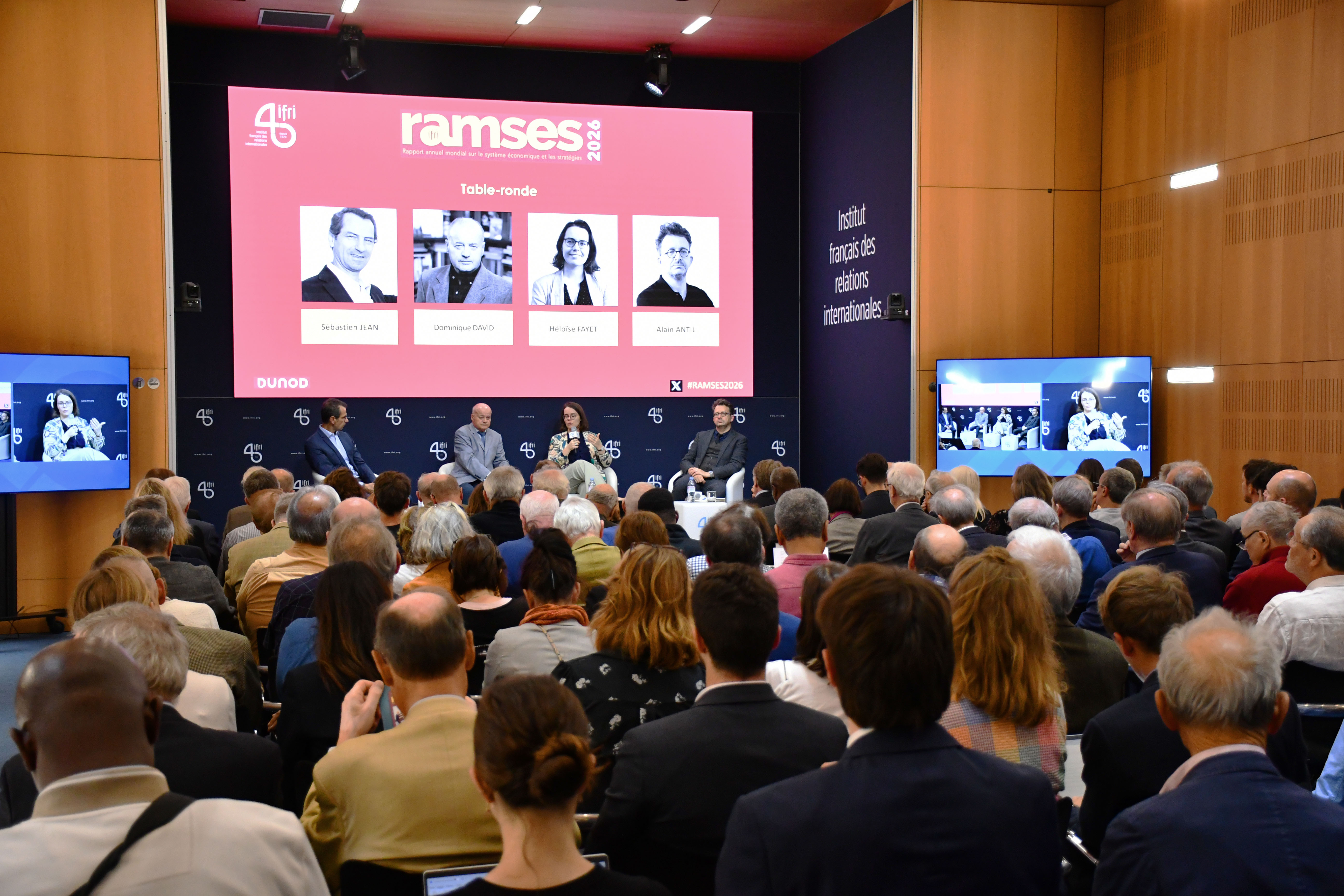
Presentation of Ramses 2026, Ifri, Paris
Related Subjects
Sujets associés thématiques et régions
Page image credits
Frappes aériennes américano-israéliennes à Téhéran, 1er mars 2026
Hossein Esmaeili/UPI/Shutterstock