



Malawi: The Road to the 2019 Tripartite Elections. Reflections on Corruption, Land and Multiparty Politics
On May 21st 2019, Malawi will hold its tripartite elections, where voters will vote for the President, Members of Parliament and local Councillors. 2019 will also mark the 25 years of multiparty politics in Malawi since the one-party regime presided by Hastings Kamuzu Banda came to an end in 1994.
Of Walls and Men: Securing African Borders in the 21st Century
African borders are well-known for their porosity. Although they are crucial economic interfaces, they also crystallize political and security tensions, in both inter-state wars and intra-state conflicts involving rebels or autonomist groups.

Corruption, Ethnicity and Violence as a Triple Political Strategy. The Changing Face of Politics in Zambia
Recently, Zambian politics have been changing in a pretty checkered manner. The threat of corruption, political violence and ethnic-politics has been growing since the ruling Patriotic Front Party (PF) assumed power in 2011.
Conceptualizing the middle class in a developmental state: Narratives and expectations in Ethiopia
The category ‘middle class’ was used increasingly throughout the 2010s to identify social changes occurring in African countries, including Ethiopia. However, the category itself is hard to define and has been employed to describe very diverse socio-economic dynamics.
Japan's Revived African Policy
By organising TICAD (Tokyo International Conference on African Development) for the first time in Africa in August 2016, Japan intended to accelerate and deepen its relationship with the continent.

What Role for Japan in Africa's Security After Withdrawal from South Sudan?
There is still a big gap between the discourse and the reality of what Japan wants - and what it can achieve in Africa.
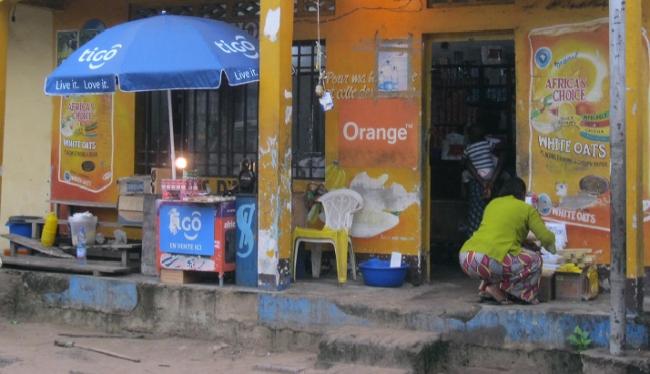
Are African Middle Classes Coming Together? The Case of Telecommunications Employees in Kinshasa
For many observers, a change in perception of the African continent occurred in the 2010s. Attention has focused on the relatively high rates of economic growth and a high population growth associated with urban expansion; both indicators interpreted as promises of economic “emergence” leading to potential new markets.
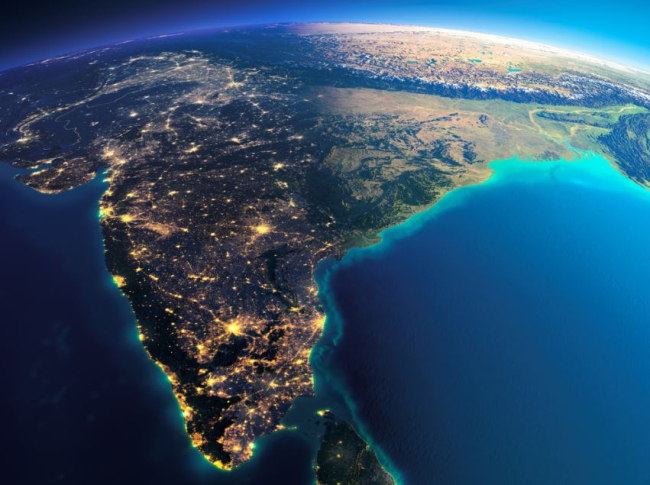
Sustainable Electrification for Asia and Africa
Complementary solutions to national grid extensions let hope for significant improvements in the field of energy access, consistent with current economic and environmental challenges. This Note explores the regulatory and economic prerequisites that must be enhanced in order to support the emergence of mini-grid and off-grid technologies.
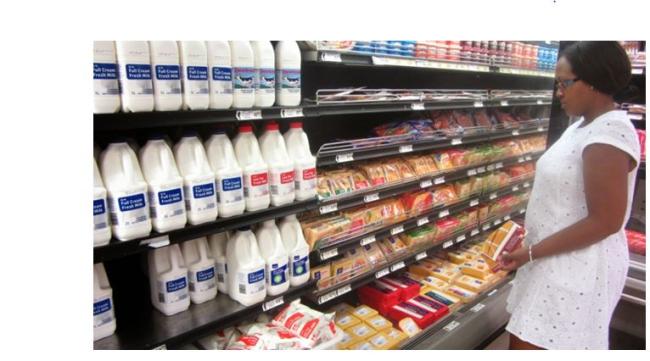
Identifying the Middle Classes: Diversity, Specificities and Consumption Practices Under Pressure
The international viewpoint on the African continent has profoundly changed in the last decade. Images advertised by the media drifted from afro-pessimism - the sad fate of Africa (wars and poverty) - to afro-optimism - a brighter future for the continent.
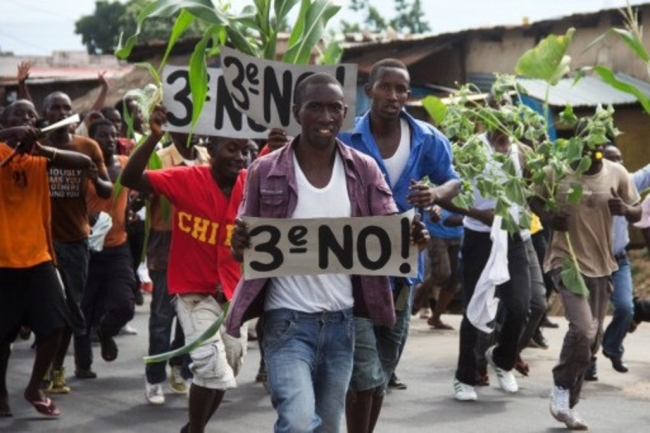
Burundi: Unravelling the Peace
Since achieving independence in 1962, Burundi has experienced several episodes of civil war, the last of which came to end when the Arusha Accord was signed in 2000. The gradual return to peace in the wake of the Arusha Accord has been jeopardised by Pierre Nkurunziza’s announcement on 25th April 2015 that he would stand as a candidate for the presidency.
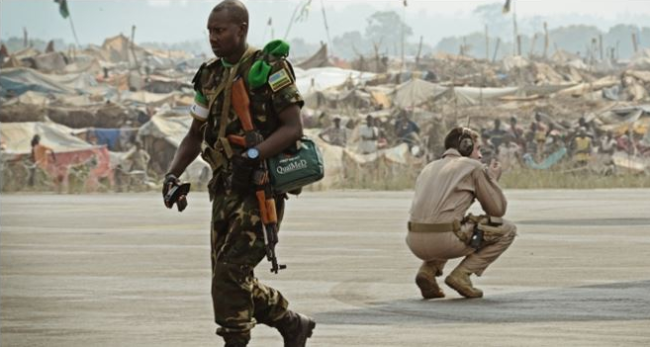
Thinking and Anticipating the Socio-Economic Impacts of the Humanitarian Response in the Central African Republic
Nowadays, the Central African Republic (CAR) is a country dependent on international aid.

DRC’S Regional Positioning, in Between the African Great Lakes and Southern Africa
How transparent are the Democratic Republic of Congo’s regional strategies?


The European Union's Development Aid : from Development to Security, the Example of the European Development Fund
In the course of its institutional development and the expansion of its activities, the European Union (EU) has tended to pile up rather than to rationalize its policies, creating a financial tool per objective. As a result, the European funds have become a labyrinth, for which management costs are high.
Fake medicines trafficking in West Africa: Supply chains and distribution networks (Nigeria, Benin, Togo, Ghana)
On December 13, 2013, in response to an Interpol initiative, the first ever African Conference on pharmaceutical crime was held in Addis Ababa, Ethiopia. Its final communiqué declared the intention of 20 countries to reinforce the struggle against the production of counterfeit drugs.
The Mining Boom in the Sahel Region: Will the Development Last?
The Sahel, often discussed on account of its problems and crises – in particular recently, in view of the crisis in Mali – is in actual fact experiencing a new positive economic era, like the rest of the African continent. For the five countries of the Sahel region we shall be examining – Mauritania, Senegal, Mali, Burkina Faso and Niger – this favourable evolution, although it varies from country to country, is based on booming extractive industries.
Consumption in an Uncertain Environment: The Paradox of the African Middle Classes
Three hundred million people belonging to the middle classes of Africa; three hundred million of potential consumers: an image of this kind is enough to make many an entrepreneur start dreaming. In fact, whereas for many years Afro-pessimism has dominated public opinion in the West, what seems to be the new trend in fashion, in both the media and economic circles, is now an exaggerated Afro-optimism.
The Architect and Fragile States: Development Assistance's Contribution to Global Security
Up to Europe’s threshold in the middle of Sahara and Sahel region, a growing insecurity led beyond mere reconsideration of field practice to a whole change of paradigm for multilateral and bilateral aid institutions.
Trafficking in the Sahel-Saharan Zone: Features and Stakes
On November 5th 2009, a cocaine-loaded Boeing 727 aircraft arriving from Venezuela was discovered torched and emptied on a makeshift airstrip in the Malian desert (Gao region). The Sahel-Saharan area is clearly a contact zone between very distant worlds.
Maghreb Countries' Economic Projection on Sub-Saharan Africa
While largely interrupted by the colonial period premise, trade relations between the Maghreb and sub-Saharan Africa have enjoyed a new boom with the independence era. However, until the end of the 1990s, the African policy of the three Maghreb countries significantly impacted their economic projection.
Ifri, a foundation recognized as being of public utility, relies largely on private donors – companies and individuals – to guarantee its sustainability and intellectual independence. Through their funding, donors help maintain the Institute's position among the world's leading think tanks. By benefiting from an internationally recognized network and expertise, donors refine their understanding of geopolitical risk and its consequences on global politics and the economy. In 2026, Ifri partners with over 90 French and international companies and organizations.